

Transforming: the first school for LGBT people in Paraguay
The LGBTI+ school will function as a place of preparation and empowerment to face the barriers of traditional education.

Share

By Juliana Quintana
Photos: Jess Insfrán
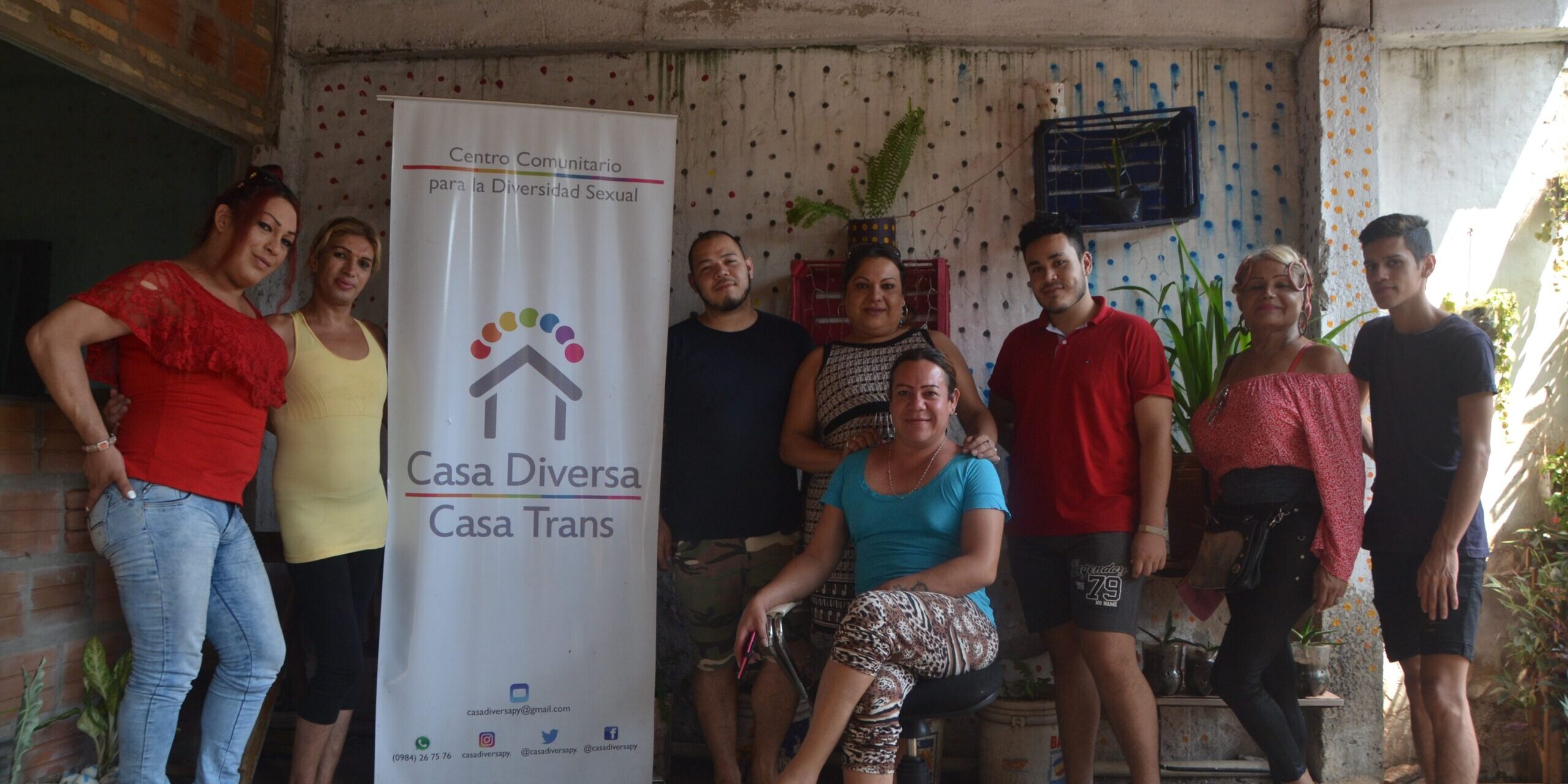
Upon assuming their identities, they all stopped going to school. Some never even started. From within Casa Diversa , the shelter for LGBTI+ people who are victims of violence, and through the initiative of the residents, Escuela Transformando was born, a space where Mathematics, Science and Communication are studied, but also Human Rights and Comprehensive Sexual Education for trans people.
At Transforming School, the teachers are volunteers. There are no uniforms, homophobic teachers, or gender-segregated bathrooms. Subjects are chosen based on each student's interests and availability. Although the initial goal is for students to eventually integrate into the formal education system, the LGBTQ+ school will function as a place of preparation and empowerment to overcome the barriers of traditional education.
“We’ve been pushing for a continuing education program for older adults because we wanted to have an educational space, thinking about girls like Araceli or Moria who can’t read or write. We don’t want teenagers to reach adulthood without first becoming literate. Last year we had a teacher named Wilfrida, who started giving classes to some girls. That’s when we said, ‘Well, since there’s no education or a safe place for us, let’s educate ourselves first,’” says Yren Rotela, a trans rights activist with Panambi.
Last year, the residents of Casa Diversa, located in San Lorenzo, a city 13 kilometers from Asunción, participated in workshops on visual arts, theater, makeup, and hairdressing. Through conversation, they realized they all wanted to learn more and came up with the idea of opening a school to help them regain their faith in education. They then launched a social media campaign to collect books, notebooks, and school supplies.
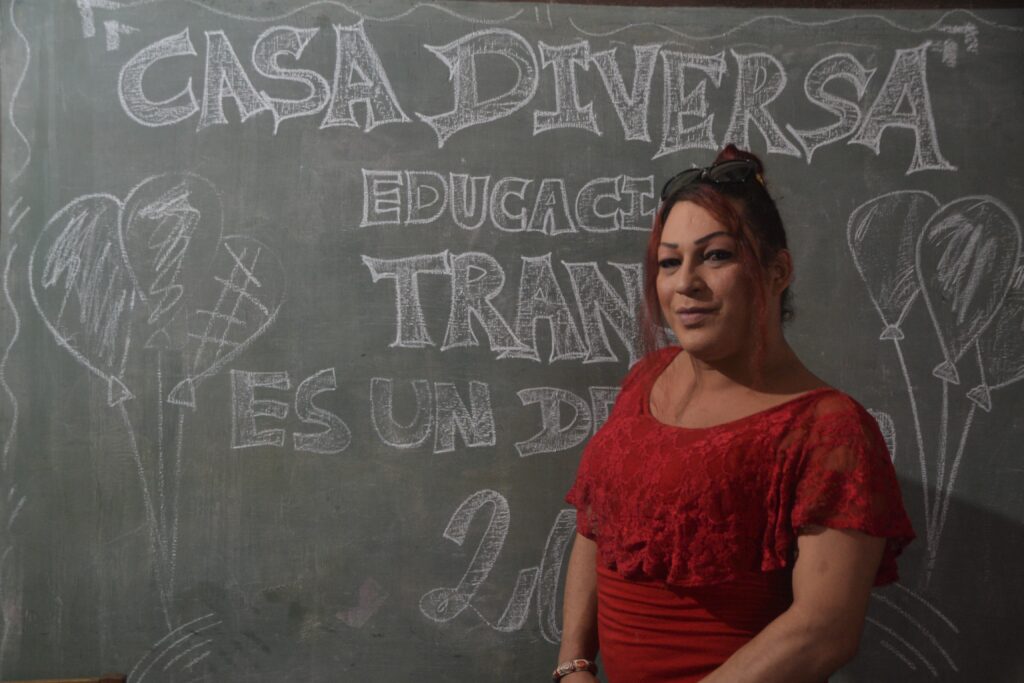
The organization Mil Solidarios del Bañado Sur , led by Pa'i Oliva (father, in Guaraní), donated desks, a blackboard, and a writing desk to the Escuela Transformando (Transforming School). “He is a great ally and companion. He was the only person who never rejected me. He spoke to me with kindness and supported me from the moment I met him,” said Yren.
Transformando is a self-managed initiative that seeks to destigmatize subjects culturally associated with trans girls. Therefore, students have the opportunity to attend classes in photography, cooking, public speaking, writing, and spelling, among others . Currently, the school has a capacity of 30 people, most of whom are trans people from diverse backgrounds. Four of them need to finish high school, and the rest need to start primary school. Those who live in Casa Diversa will have the convenience of attending classes at home.
A system that is not prepared
Yren explains that bullying is a determining factor in school dropout and a fear of education. “We know that today violence against us is extremely high in this system, and if you're not empowered, you won't be able to resist it . That's why I still make spelling mistakes. Sometimes I forget to use an 's,' a comma, a period. There are things I didn't learn because of an educational model that doesn't respect people's identities and preferences,” she maintains.
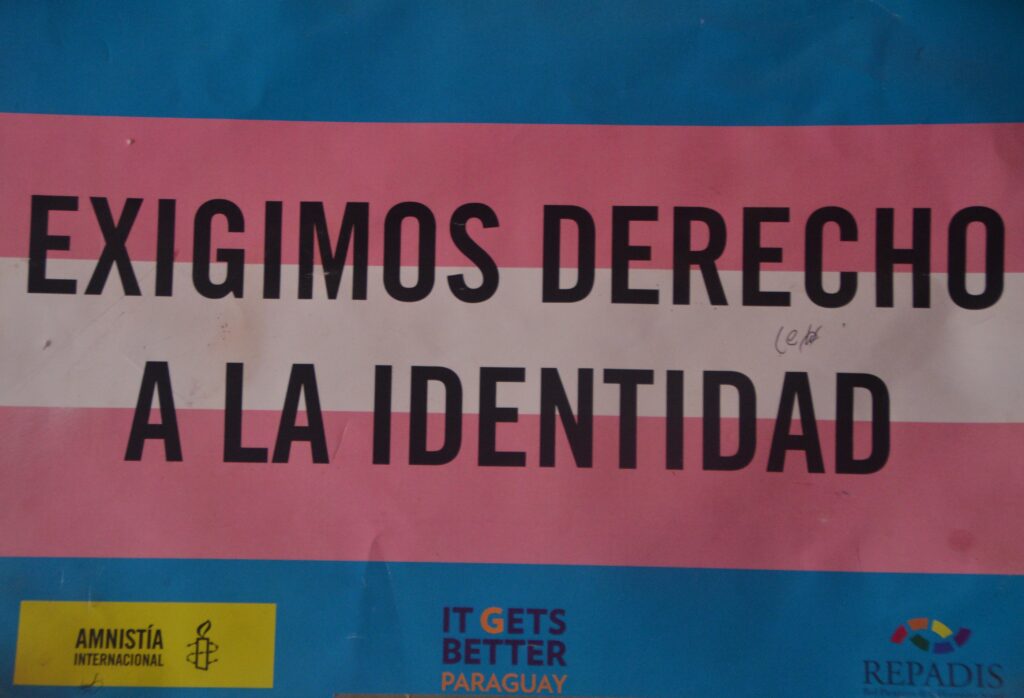
The Paraguayan education system does not offer transgender people the conditions of inclusion enshrined in the national constitution. The Inclusive Education Law aims to remove barriers that limit learning and participation, as well as guarantee accessibility for students with specific educational support needs through qualified personnel, adaptive technologies, and universal design.
Last year, Casa Diversa met with representatives from the Ministry of Education and Culture, but they were offered spaces that are not equipped for LGBT people. “ We want to be included in the education system, but they don't respect our identity. What do they call inclusive education? Are there any safety protocols? What guarantees of security do they offer us? Sometimes it's the teachers, sometimes the school infrastructure, and sometimes the other students. How are we supposed to put up with all that? It's incredibly frustrating to have to endure it all inside instead of going to learn,” the human rights advocate asks.
Owners of their future
Sex work is the main economic activity for trans people in Paraguay. According to Rotela, 99% of them are involved in prostitution. The spiral of violence begins within families, when they are expelled from their homes while still of school age. From that moment on, their gender identity becomes a reason for exclusion from all other aspects of their lives, including the job market. And on the streets, they experience all kinds of abuse.
“What worries me most is the issue of street work. I’m not against sex work, but I am against the way we do it in this climate of insecurity. The police come, harass you, extort bribes, and abuse you. There are also people who yell at us, insult us, and throw bottles at us. The highest percentage of murders of trans people occurred on the street. And it’s difficult to get older people out of it, but I’m worried about teenagers, that they might once again see it as their only option,” Yren says.
Moria is from Villa Hayes, she's 32 years old, and she never went to school. Her mother had many children and didn't have the means to send them to school. “When I was 12, they already realized I was different from the boys, because of my gestures, how I behaved. They kicked me out of my house, and I started working as a gardener at the house of a woman named Isabel. She taught me everything I know: how to speak, rules of behavior, how to sit at the table, how to treat people, everything. Her name was Isabel,” Moria recounts.
Isabel wanted to send her to night school, but it ended late and she was afraid of her going alone. When Moria turned 15, her caregiver died, and she had to start "working the streets," as she calls it. Four months ago, she joined Casa Diversa, and since then she's made new friends, communicates more with others, participates in talks, and, above all, she says, feels better. She loves everything related to sewing because it calms her, but she also wants to learn to read so she doesn't have to go back to prostitution.
Isabel Moreno is 39, president of the Escalando Association, and a founding member of Panambi. When she was 15, she began her transition, and because her father didn't accept her, she decided to leave home and drop out of school. “ When I left my neighborhood, I had to start working the streets. For me, it's important to finish high school because I want to pursue a career and leave sex work. There are many girls who are destroyed on the streets; we experience a lot of violence,” she says.
Today, after years of activism, she was able to return to live with her father, with whom she maintains a good relationship. “I really want to improve myself in life. I feel safe studying here; I feel like I’ll be in my element, comfortable, at ease,” Isa explains.
In addition to Panambi, Escalando has joined as a support organization for the school. After setting up their office, they will begin teaching students sublimation printing techniques using machines to make mugs, pins, stickers, t-shirts, flags, and bags, thus enabling them to launch their own micro-businesses. These initiatives offer alternative perspectives on the reality to which they are usually subjected.
“We discovered that, in addition to all of this and taking care of the girls’ mental health, a hug can be very calming. Sometimes we don’t want people to hug us or kiss us on the cheek because we never experienced that affection . I try to take care of every detail at school so they want to stay. So they fall in love with it, find what they like, and decide to see it through to the end,” Yren said.
Distance learning and public library
The start of the mandatory quarantine forced Escuela Transformando to postpone several of its in-person classes. Last week, the literacy program for transgender people living at Casa Diversa resumed, with the appropriate health and safety measures in place. Photography students attend classes remotely on Wednesdays from 3:00 to 5:00 p.m.; drama therapy with Paraguayan theater professional Omar Mareco takes place on Mondays and Thursdays from 5:00 to 7:00 p.m., and some urgent subjects, such as first aid, have been added.
Among the initiatives that emerged during the lockdown was the Casa Diversa community library. Through a series of donations of school supplies and books, the residents of the LGBT shelter built a library from scratch, creating a space for the community to gather, read, and exchange books. Wooden crates were transformed into colorful shelves filled with books and potted plants.
According to the organizers, the goal is to encourage people of diverse sexual orientations and gender identities to read and, when the pandemic allows, to have a literary café. With the support of friends, allies, and collaborators, the Transforming School is on its way to changing the history of LGBTI+ people in Paraguay.
We are present
We are committed to journalism that delves into the territories and conducts thorough investigations, combined with new technologies and narrative formats. We want the protagonists, their stories, and their struggles to be present.
SUPPORT US

FOLLOW US
Related notes
We are present
This and other stories are not usually on the media agenda. Together we can bring them to light.