

Workplace discrimination: they stopped paying her salary when she began her gender transition
Natal Delfino hasn't received her salary for two months. This coincides with the time she began hormone therapy for her gender transition.

Share

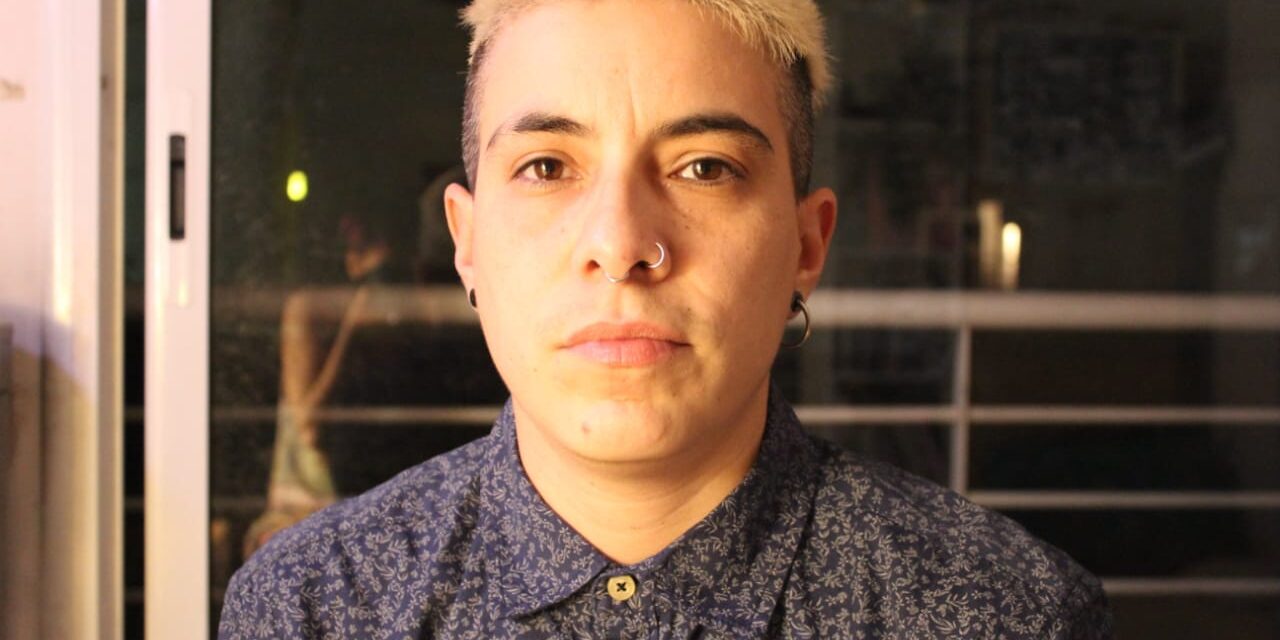
Photo: Dano Sosa
Natal Delfino had been working at invertirOnline for ten years when she began her transition. Before legally changing her gender, Natal identified as a lesbian, for which she had already been ridiculed at work. When she started hormone therapy, she informed the company so she could take medical leave for the treatment and so they could update her information in her personnel file. She hasn't received her salary for two months.
Natal is a certified public accountant and was a senior in the financial prevention department. A few months ago, he began experiencing family problems that sometimes forced him to interrupt his workday to care for his ailing grandmother. “At one point, I reached my breaking point and started psychiatric treatment. My psychiatrist recommended I take a leave of absence,” Natal told Presentes. “In the meantime, I decided to start hormone therapy, and I informed the company.”
But when her six-month psychiatric leave expired, InvertirOnline informed her that they would not pay her wages for the medical leave for hormone treatment that was coming into effect, and that her job would be held for her without pay. “They responded to a formal letter saying they were withdrawing the request, claiming it wasn't warranted. My lawyer and I sent two more, and they never replied again,” she added.
For their part, invertirOnline.com stated, “Natal Delfino exhausted his paid legal leave period under Article 208 of the Employment Contract Law last April, and we notified him that his job was reserved at that time. The company decided to support him with the benefit of a prestigious private health insurance plan, which all employees have, and invited him to return to the company when he feels ready to do so. Furthermore, when Natal Delfino informed us of his gender identity transition, we immediately updated all his documentation to reflect his new identity. At invertirOnline, we are committed to respecting the rights of each of our employees to choose freely and valuing the individual and collective contributions that diversity brings to the company and society as a whole.”
However, Gastón Llopart, Natal's lawyer, told Presentes that "what the company is saying is false. Natal began with a mental health condition, and it was only after that condition ended that she began hormone therapy because she is transitioning. The current leave she is claiming is a consequence of starting hormone therapy, not because of the mental health condition." Furthermore, the "prestigious health insurance" they are referring to is the same one that all the company's employees have. Llopart asserts that Natal has not been paid her salary for two months; that is, the period during which she is undergoing this treatment. Therefore, she should be considered to be in a situation of informal dismissal.
The legal action they will take begins with an injunction to compel the company to pay her salary during her medical leave. “This is nothing less than an act of discrimination based on gender identity,” Llopart asserts. “We want to denounce the lack of protection from her employer when they learned that Natalia is Natal. In fact, the company made no contact whatsoever to try to accommodate her.”
On this last point, Natal emphasizes that the change to his information was made with the Workers' Compensation Insurance company and his name on the payroll, but that the work emails he receives are still addressed to his former identity, and that the occupational health doctor who received his certificates continued to refer to him using female pronouns throughout the consultation. "Even the professionals they sent me to weren't prepared to have a conversation," he commented. "I didn't want it to come to this in a place where I worked for so long and went through so much."
Discrimination related to gender identity in the workplace
According to a report published by Fundación Huésped , “more than 70% of trans people are self-employed; only 1 in 10 participants said they were employed.” Furthermore, less than 10% of working trans women receive pension contributions. More than 40% of those interviewed reported experiencing discrimination or rejection from clients, while 25% stated that this discrimination came from their bosses and coworkers. “We know that trans people have problems accessing employment and that those who do have jobs can lose them because of this,” Llopart emphasized. Natal, for her part, said she prefers that this situation be made visible because it is a much larger problem. “It can happen to anyone. Most workplaces are not prepared to accommodate a transition, but they should be. If this is to set a precedent for other colleagues, I prefer that this be known.”
All our content is freely accessible. To continue producing independent, inclusive, and rigorous journalism, we need your help. You can contribute here .
]]>We are present
We are committed to journalism that delves into the territories and conducts thorough investigations, combined with new technologies and narrative formats. We want the protagonists, their stories, and their struggles to be present.
SUPPORT US

FOLLOW US
Related notes



We are present
This and other stories are not usually on the media agenda. Together we can bring them to light.