

A trans woman was found dead in a ditch in Malvinas Argentinas.
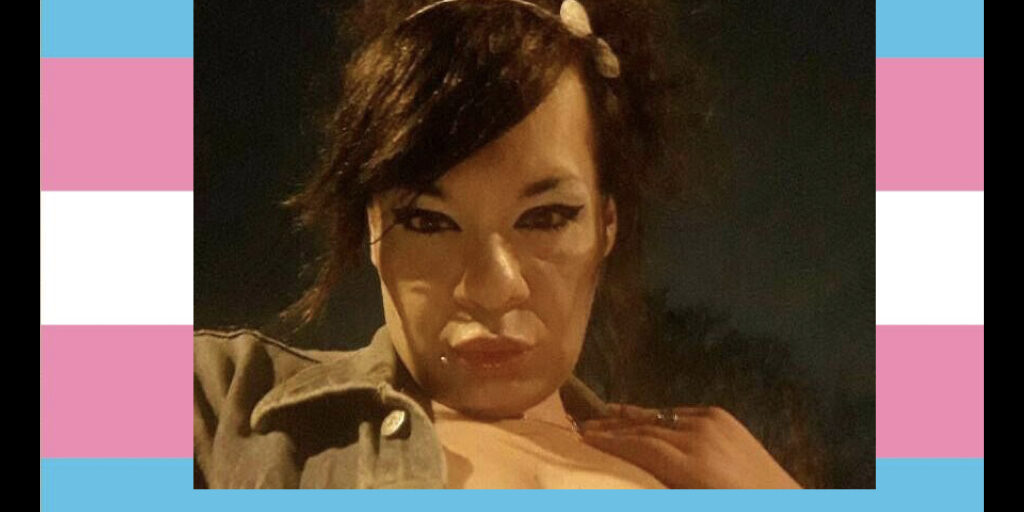
Tamara Denis Morales was 36 years old and lived with her mother. She had been admitted to the emergency room of the Malvinas Argentinas hospital on Saturday and disappeared on Sunday.

Share

By María Eugenia Ludueña
[News updated on April 29]
On Saturday, April 25, at dusk, Tamara Denise Morales—a 36-year-old trans woman—was taken by ambulance from her home in Villa de Mayo, where she lived with her family, to the emergency room at Malvinas Argentinas Hospital. She was feeling very ill, and her family said she was going to undergo several tests, including a coronavirus test. She was at the hospital between 8 p.m. and 3 a.m., when—according to the hospital—she requested to be discharged and left. Her family and friends heard nothing more from her, and on Sunday they desperately appealed on social media for anyone who had seen her to contact them. Police later found her dead.
Tamara lay in a ditch, partially submerged in water, in Pablo Nogués on April 27. The investigation, officially titled “Investigation into the Causes of Death,” is being handled by the Malvinas Argentinas Prosecutor's Office No. 23, headed by Silvia Bassani. Although forensic experts determined the body showed no signs of explicit violence, judicial sources told Presentes that “Security camera footage from the area was requested, and samples were collected for the relevant analyses. No hypothesis has been ruled out.”
On April 29, the prosecutor's office reported that "the autopsy showed that the death was not traumatic, but we are awaiting the other expert reports."
For a year now, Tamara had returned to her family home in Villa de Mayo (Malvinas Argentinas), after living with other trans friends who, like her, worked as prostitutes.
“They took her to the hospital because she was feeling very ill, with loss of consciousness, stomach pain, and vomiting. I don’t know why they let her leave the hospital,” the mother tells Presentes, as she returns to Buenos Aires, having traveled to Catamarca to care for a relative who passed away.
At the hospital, she underwent various tests, including a Covid-19 test, which came back negative. Due to the quarantine, none of her sisters could stay there with her. They left their phone number so they could be notified if they could pick her up. When they didn't hear anything, they called in the early hours of the morning to check on her and learned that Tamara had signed her discharge papers.
“She was undergoing treatment for other illnesses and ran out of medication for a few days because, due to the coronavirus, we hadn't been able to get it. But despite all her ailments, she had been doing well recently. Abandoning her the way the hospital did is discriminatory. How could they let her leave alone at 3 a.m. when all she had was her ID in her pocket? They still haven't explained what happened or why they let her leave. I'm not going to stand idly by,” says the mother, her voice breaking. The whole family is wondering why they weren't notified of her release, as had been agreed.
"Our deaths are always tragic."
Tamara, her friends say, strictly observed the quarantine. She didn't go out to "work." "We don't understand what happened. Where was she on Sunday? Because she was somewhere. How did she get there?" her acquaintances from Villa de Mayo wonder. "She was a very good friend, sensitive, an excellent person, never conflicted. When she was little, her family gave her a good education. She went to an Adventist school. But she always told us that she had been expelled from school. Her family eventually accepted her. She was a girl who suffered a lot," they told Presentes.
A year ago, Tamara had a mild case of pneumonia. That's why she was very careful about the coronavirus. She had been in treatment for substance abuse, something very common among trans people who are sex workers or work in prostitution. “She wanted to study. But you know how our lives are. Our deaths are always tragic,” says one of her friends.
“My daughter had struggled with addiction. She had undergone treatment and had already quit everything. Even the doctor had congratulated her because she looked very well,” says her mother. And she says that Tamara had dreamed of being a forensic doctor when she was a girl.
[READ ALSO: Are there privileged trans people? ]
Tamara had told them she wanted to leave prostitution. “But it’s a very difficult profession to leave. You have to live it to know what it’s like to quit. We also have to go out to work, get dressed, eat, pay taxes. For me, it’s not a disgrace, but you have to be clear-headed and attentive to everything. I tell my colleagues off because I say you can’t be high or drunk, because there are people who come with bad intentions.”
From the Diversity Department of Malvinas Argentinas, Patricia Vitale told Presentes that they are following the case. “We still don't know what happened; we are waiting for the autopsy results,” she said. She added that “the municipality is providing food assistance to other trans women, friends of Tamara, through the Social Development department.”
An attempted transvesticide in the same municipality
Just a few days ago, in the same municipality, another trans woman, Gabriela Homman, was stabbed. Today she is recovering at home. But her attacker, who is wanted on an arrest warrant, has not yet been found. Gabriela cannot leave her house except to receive treatment for her wounds. And in the meantime, she is unable to go to a police station to request a restraining order or a panic button. The investigation in her case is being handled by the Malvinas Argentinas Decentralized Functional Instruction Unit (UFI) 21, under the direction of prosecutor Lorena Carpovich, but so far there has been very little progress.
READ MORE: Trans woman attacked with knives in Malvinas Argentinas: “It wasn’t a crime of passion”
In response to the pandemic, the Inter-American Commission on Human Rights (IACHR) called on States a week ago “to guarantee the rights to equality and non-discrimination for lesbian, gay, bisexual, trans, and intersex (LGBTI) people in the care and containment measures adopted, particularly ensuring their access to health services and social care programs with a comprehensive human security perspective.” This is not only due to COVID-19, but also because the pandemic, as various organizations have pointed out, requires differentiated and intersectional approaches. In the case of transvestites and trans people, this is due to the historical debt governments owe to their human rights.
In Argentina, patriarchal violence worsened during the pandemic. The Ministry of Women, Gender and Diversity reported today that calls to the 144 hotline, which addresses gender-based violence , increased by 40 percent during the first month of mandatory quarantine.
And then there are the other types of violence: structural violence (many transvestites and trans people are desperately asking for food aid and building networks to survive) and media violence. Neither of these showed Tamara any consideration. Local media outlets referred to her using male pronouns and even gave her former name, which violates the Gender Identity Law.
"Trans deaths around here don't even elicit any emotion."
Violeta Alegre, a trans activist, lived in Malvinas Argentinas until recently. “There is no response or respect for trans people. For the Municipality, we were never a population to be taken into account, but rather one to be exterminated. The media continues to masculinize, making jokes and reporting atrocities so that everything is justifiable and insensitive. Trans deaths here don't even manage to move anyone.” A few weeks ago, Gabriela Alejandra Homann told me, “I'm alive by chance.” And today we received this heartbreaking news from another acquaintance. In the midst of this despair, they are exterminating us. The sectors that control feminist media don't mention our news either; they don't care about us. They want the stories of feminist stars analyzing the pandemic and its consequences for women, the femicides—and that's fine—but it's not enough. I've been saying this for years: For feminist media, we aren't even considered valid deaths, and that makes them complicit.”
All our content is freely accessible. To continue producing inclusive and rigorous journalism, we need your help. You can contribute here .
We are present
We are committed to journalism that delves into the territories and conducts thorough investigations, combined with new technologies and narrative formats. We want the protagonists, their stories, and their struggles to be present.
SUPPORT US

FOLLOW US
Related notes

We are present
This and other stories are not usually on the media agenda. Together we can bring them to light.