

Three police officers on trial for the transfemicide of Camila Díaz
A court has ordered three police officers to stand trial for the murder of Camila Díaz Córdova. However, they will not be tried for hate crimes.

Share

By Paula Rosales, from San Salvador
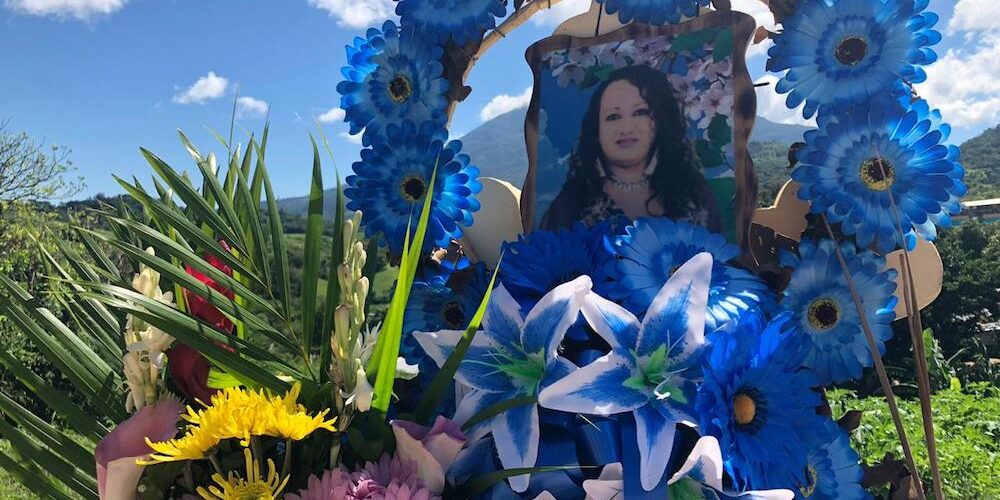
The 5th Court of Instruction of El Salvador decreed on Wednesday, March 11, that three police officers will stand trial for the aggravated homicide of Camila Díaz, a trans person, in January 2019. Camila had been deported from the United States after being denied humanitarian asylum, and had been repeatedly threatened with death by violent gangs operating in Central America.
The investigating judge in San Salvador, Sidney Blanco, determined that there is ample evidence incriminating the three officers in the death of Camila Díaz Córdova, a 29-year-old sex worker. If found guilty, they could face sentences of between 20 and 30 years in prison.
READ MORE: Camila's last night, a trans woman persecuted by gangs and murdered by the police

Who are the accused police officers?
The police officers accused of Camila's murder are three:
Officer Luis Alfredo Avelar, 35, studied religious studies at the Catholic University of the West. He immigrated to the United States illegally and was deported on April 26, 2019. He resigned from the police force in 2008 and rejoined in 2012. His record shows that he has committed minor offenses: being absent from work and abandoning his post.
The second defendant is Officer Carlos Valentín Rosales Carpio, 37 years old. He was the highest-ranking officer in the group that responded to the emergency call. On the entrance exam, he received a score of four out of ten points in the human rights section.
The third defendant is Jaime Geovany Mendoza Rivas, 28 years old. His record shows no disciplinary infractions, and he received an award for police excellence.
Without aggravating circumstances for hate crime
The case initially involved three charges: deprivation of liberty, aggravated homicide motivated by hatred based on gender identity, orientation, and expression. However, only one charge was upheld. “The judge has already issued a ruling against the three defendants and ordered them to remain in pretrial detention and proceed to trial, but only on the charge of aggravated homicide,” a court press officer told Presentes.
“Regarding the crime of deprivation of liberty, according to all the evidence presented, it could not be established that this crime occurred because when the agents arrived and arrested Camila, they were fulfilling their duty as police officers, and the law states that when someone is causing public disturbances, the police have the duty to take them away. They were acquitted of this charge,” the court employee told Presentes.
READ MORE: Calls for justice for Camila, trans woman murdered after being deported from the US
According to the prosecution, in the early morning of January 31, 2019, the police officers involved arrived to attend to an emergency on a street in the north of the capital, where they had a report that Díaz was causing disturbances in the public way, so she was arrested and taken away in a patrol car.
“The aggravating circumstance of hate crime was not taken into account because it was not established, only the aggravating circumstance of superiority because they were police officers,” the employee stated.
During the journey, evidence suggests that the trans woman was beaten by the officers and then thrown onto a road, where she was rescued alive hours later by an ambulance. Camila Díaz Córdova died in a hospital on February 3, 2019.
“It’s regrettable. I think this could be the first case to go to trial with the aggravating circumstance of a hate crime. Unfortunately, in El Salvador, crimes against LGBTI people, and specifically against the trans population, had never reached a public hearing or sentencing,” Virginia Flores, a friend of Camila, told Presentes.
Since 1992, more than 600 trans women have been murdered in El Salvador.
“I’m going to wait and see what happens during the sentencing phase, whether they are convicted or not. I would ask the judge that it’s not fair for them to be released; there is evidence, and it would be unjust for them to go free, mocking the justice system and perhaps committing the same crimes against other people.”
Camila Díaz Córdova had fled and requested asylum in the United States in 2017 due to constant threats from gangs; however, her asylum request was rejected by the authorities and she was deported to the Central American country that same year.
We are present
We are committed to journalism that delves into the territories and conducts thorough investigations, combined with new technologies and narrative formats. We want the protagonists, their stories, and their struggles to be present.
SUPPORT US

FOLLOW US
Related notes



We are present
This and other stories are not usually on the media agenda. Together we can bring them to light.