

This is how the first trans house in Jujuy works
The first trans house in northern Argentina operates in Palpalá, 15 minutes from San Salvador de Jujuy, and is managed by activists.

Share

By Rosario Marina, from Palpalá
Photos: Matías Adhemar
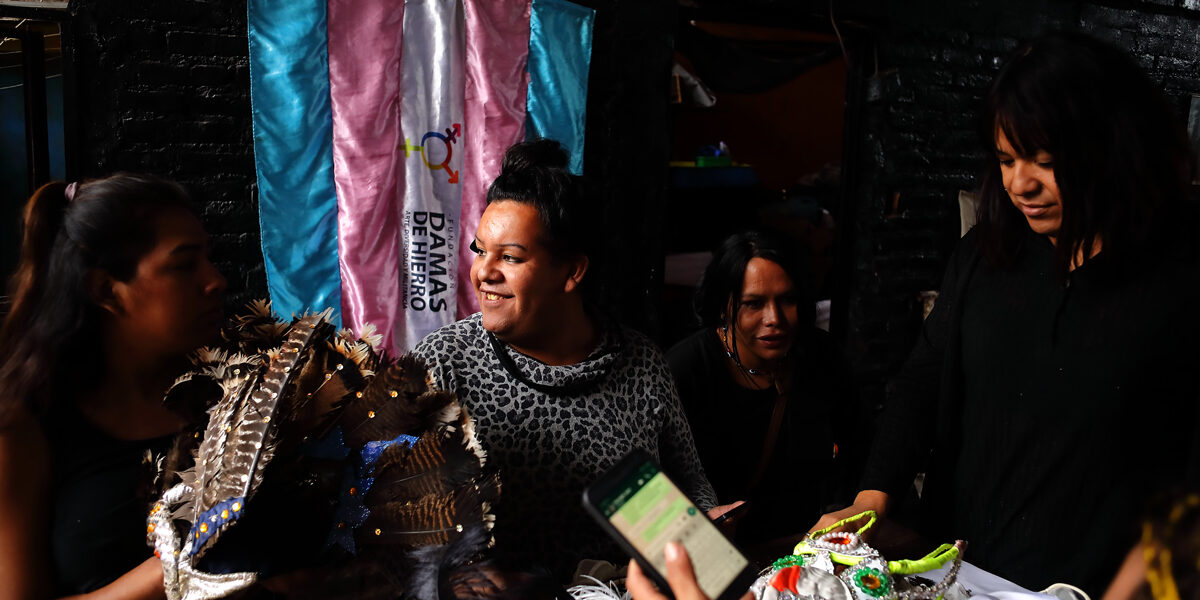
Just 15 minutes from San Salvador de Jujuy, the first transgender house in the northern Argentine province opened its doors. “Free condoms distributed here,” reads the sign on a door in a neighborhood of Palpalá. Inside, there’s a portrait of Eva Perón, a banner from the K Rumbay carnival group, and colorful pennants. They stayed there in February, when Presentes visited the house days after its opening, and the women arrived from different towns and villages across the province to celebrate carnival.

Lourdes Ibarra is 35 years old and the institutional coordinator of the Iron Ladies Foundation. She organizes, makes calls, provides information, and conducts rapid HIV tests. In the lead-up to Carnival, she spent several days sewing for her comparsa, K Rumbay.

Workshops and accommodation
This house isn't the first space the Iron Ladies Foundation has established for trans women in the province. They already have offices in San Pedro, Tilcara, and San Salvador de Jujuy. But this place is special: it's the first trans house in Jujuy. Here, within these black walls adorned with light blue, pink, and white flags and carnival banners, there's not just a present of activities and courses. There's a future of rooms, accommodation designed so that women from the interior can stay.

One of those rooms already exists, with mattresses and a television, and another is being prepared. They are raising money to build the bathroom: each will contribute 200 pesos per month, so that those arriving from different towns can have access to more amenities.

Iron Ladies
Daira, Sol, and Lourdes were inseparable. Until Sol died from a hormone overdose. Then they decided that their activism had to be stronger, that the foundation they had created had to grow to support all the trans women in the province who needed a helping hand.

In one of the rooms of this house, Daira braids Lourdes' hair with a yellow thread while they tell Presentes how Damas de Hierro came about and what led them to create this space.
The Iron Ladies Foundation is named as such because most of its members work in prostitution, they explain. They came up with a play on words, alluding to the idea of being escorts. Palpalá, the city where the house is located and where the foundation was founded, is the country's leading steelmaking center. Hence the iron theme.

What the first trans census said
In 2017, the first census of the transgender female population was conducted in the province of Jujuy. 163 transgender women from various cities, towns, and rural areas were surveyed. This was done in partnership with the Provincial Directorate of Statistics and Censuses of Jujuy (DIPEC).
READ MORE: Trans census with trans census takers in Jujuy: it's the first in Latin America
According to data from that organization's website, "the collection of data was made possible by the commitment and support of the Iron Ladies Foundation, and was carried out between the months of December, January and February, using the 'snowball' methodology, where each person interviewed referred three others; DIPEC providing logistical and technical support for the Census operation."

With funding from the Southern Women's Fund, the trans census takers were paid. “We started in the larger cities and then moved on to the rural areas. We know each other and can refer others. We interviewed 163 people. But we know there are more: we reached 65% of the trans people in the province. Because when the census phase ended, we had to stop, but there were several others who had been recommended but whom we never got to speak with,” says Lourdes.
Among the findings, they discovered that 72% had socially expressed their identity before turning 18. Seven out of ten lacked health insurance, private medical coverage, or a state-run plan, and most had experienced discrimination both at school and within their families. Nothing new for them, but certainly for the legislators they later approached to request a trans job quota.

Access to healthcare: a serious problem
“When we asked for the quota, they always asked us for other numbers. ‘ But how many are there? There are no trans people here ,’ they told us. ‘ Where do you get the idea that they die at 35? Because you say so .’ That’s why we started looking for each other and did the census,” explains Sara Correa, a trans leader from San Pedro.

Access to healthcare was the main problem revealed by the census. They realized there was a lot of discrimination from nursing staff at health centers. This discouraged people living with HIV from getting treatment.
“Because when our colleagues had their first contact, that contact was met with resistance, and they didn’t want to return. The use of masculine pronouns is common; we continue to experience this in the healthcare system, even with our IDs changed. They use terms like ‘dad,’ ‘daddy,’ when addressing us. Derogatory terms that persist. This leads to our colleagues arriving at the healthcare system to die ,” Sara explains.
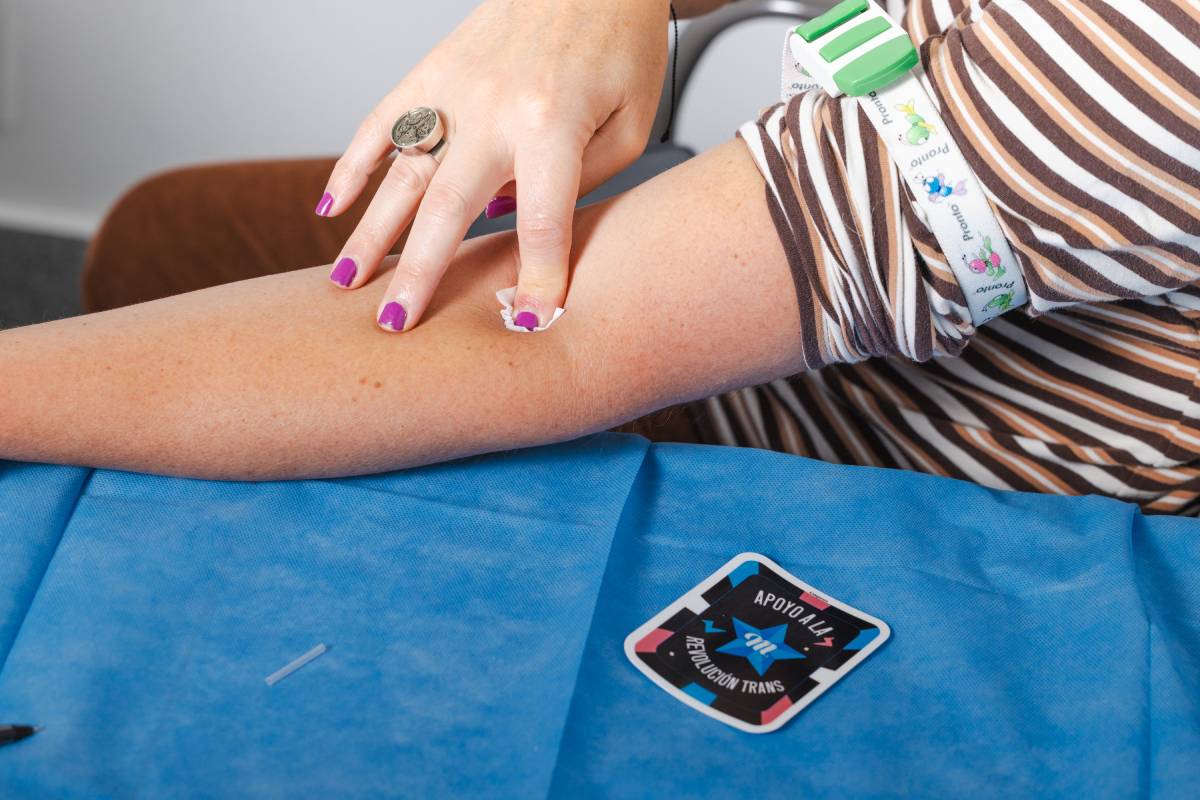
Based on this reality, they decided to establish themselves as CEPAT (Center for Promotion, Counseling, and Testing) No. 9: an HIV testing center. With the consent of the girl who comes to the house, they can tell her the result in less than 15 minutes, without her diagnosis circulating by word of mouth in hospitals and outskirts of town (the law states that the result is confidential, but in practice this is not always respected).
The house of the trans in Palpalá

Although it was officially inaugurated on February 5, 2020, trans women from all over the villages have been coming to that house for some time now. Lourdes's house has always been the village house. Her family accepted her identity from the very beginning, she says.
“It was just a matter of making the name official,” says Lourdes, waving to her mother as she finishes sewing a red tulle dress for the evening. Her family lives in the back, and the Damas de Hierro trans house is in the front. There are girls in the room facing the street; laughter can be heard.

Since its founding, the organization has participated in community center activities and provides milk for neighborhood children on Tuesdays and Thursdays. Furthermore, through the national Hacemos Futuro program, those enrolled are required to attend school.

“Thanks to a project we did with the women from Santiago del Estero, with Divas, through the trans activist Luisa Paz, we held a regional cooking workshop here geared towards tourism . It was to fulfill the 128-hour requirement. We also have a textile workshop; we do sublimation printing,” they explain. The machine for printing the t-shirts is on a board in the patio. They have an order pending to make t-shirts for a carnival group.

“ Sometimes we are our own only connection . Helping each other is building a different future for those who come after us. Because even we aren't taught to love each other,” says Lourdes. And Diana sums it up: “It's like a family.”
We are present
We are committed to journalism that delves into the territories and conducts thorough investigations, combined with new technologies and narrative formats. We want the protagonists, their stories, and their struggles to be present.
SUPPORT US

FOLLOW US
Related notes


We are present
This and other stories are not usually on the media agenda. Together we can bring them to light.