

The protocol for detaining LGBT+ people has been revoked.
Security Minister Sabina Frederic revoked the protocol approved in 2017 by Patricia Bullrich.

Share

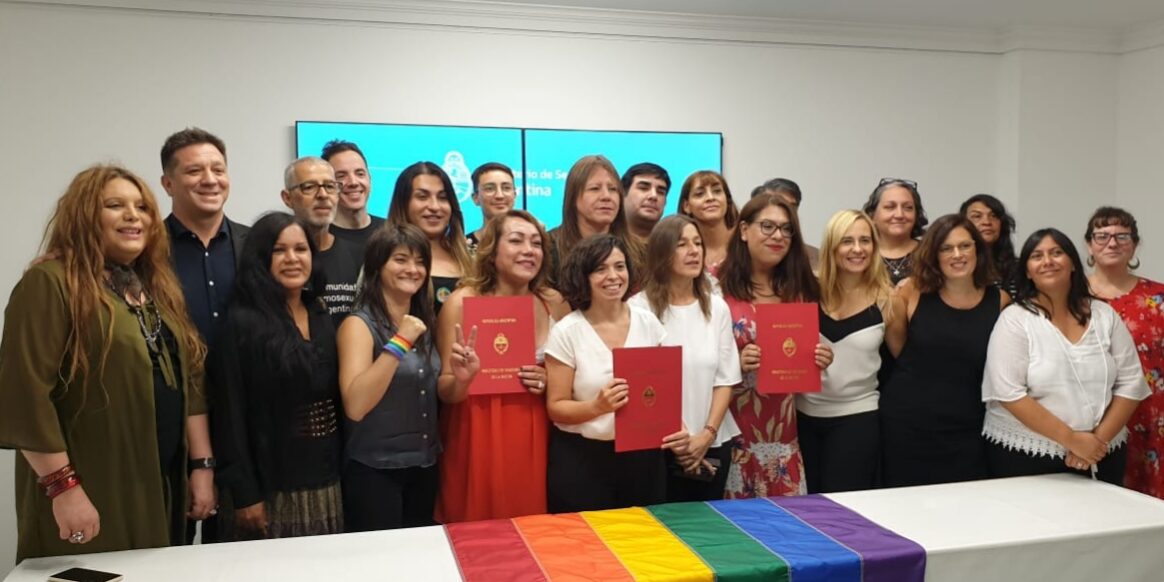
Security Minister Sabina Frederic signed the revocation of the "General Protocol of Action for Personal Searches and Detention for People Belonging to the LGBT Collective" which had been approved on October 30, 2017 by the then minister Patricia Bullrich.
Resolution 1149-E/2017 , which was revoked today, authorized federal police and security forces to subject LGBT+ people to special detention conditions. For this reason, it had been strongly condemned by human rights and LGBTQ+ organizations, who considered it more of a warning than a guarantee of rights.
READ MORE: Organizations and activists condemned the detention protocol for LGBT people
The resolution of the revocation, along with the reinstatement of 1141, will be published in the Official Gazette next Monday.
Minister Frederic met with LGBTI+ organizations at the Ministry of Security. "She signed the repeal of the repressive protocol and issued a new regulation focused on guaranteeing the rights of LGBTI+ people, both within and outside the federal and security forces. 100% Diversity and Rights and the Argentine Homosexual Community (CHA), among other organizations, participated in its drafting process," the organization 100% reported in a statement.
"The repressive law, which was issued under the pretext of adapting the protocols of action of the Police and Security Forces to international Human Rights standards, had as its main objective to expand the police powers to carry out searches and arrests without a judicial order and oriented towards the contraventional the police action against a sexual group historically persecuted, which far from being persecuted should be protected," said 100% Diversity and Rights.
Trans activist Marcela Tobaldi, president of Rosa Naranja and member of the National Network 100% Diversity and Rights, stated: “The trans community celebrates Minister Frederic’s decision to repeal the law that was used to persecute the trans population, who are in a situation of social vulnerability exacerbated by the violence imposed by the prostitution system. Far from criminalization, they require public policies to access education, employment, and housing.” Tobaldi also asserted that “it is necessary to develop robust training for federal security forces and for the provinces and the City of Buenos Aires to adopt this new protocol so that respect for the identity and dignity of the entire LGBTI+ population becomes a reality.”
Bullrich's protocol replaced the one that had been developed since 2011 in consensus with human rights groups and movements. "That is why we hope that this work will be resumed, bringing together all sexual diversity organizations, so that we can all draft an effective protocol to monitor and educate security forces regarding sexual diversity," the Argentine Federation of Lesbians, Gays, Bisexuals and Trans (FALGBT) stated in a press release.
Greta Pena, Executive Director of 100% Diversity and Rights, celebrated the measure: “Patricia Bullrich’s Protocol materialized all the stigmas that historically and structurally criminalize LGBTI+ identities. This decision to revoke it and enact a law respecting and preventing violence based on gender identity and sexual orientation is a step forward in the democratization of the security forces.”
“We see this as an important step, a debt the State owed to our community, and one that clearly marks the difference between a security policy designed to serve the people and one designed to serve the powerful. We know there is still a long way to go, that LGBT+ people, but particularly the trans community, are exposed to profound institutional violence, persecution, and stigma that prevents them from fully exercising their rights. In recent years there has been a huge setback, but this type of decision convinces us that we can count on the State to build true equality, and that is fundamental for everyone,” said Flavia Massenzio, president of the Argentine LGBT Federation, in a statement.
We are present
We are committed to journalism that delves into the territories and conducts thorough investigations, combined with new technologies and narrative formats. We want the protagonists, their stories, and their struggles to be present.
SUPPORT US

FOLLOW US
Related notes


We are present
This and other stories are not usually on the media agenda. Together we can bring them to light.