

The Mocha Celis Trans High School cannot start classes due to lack of funds
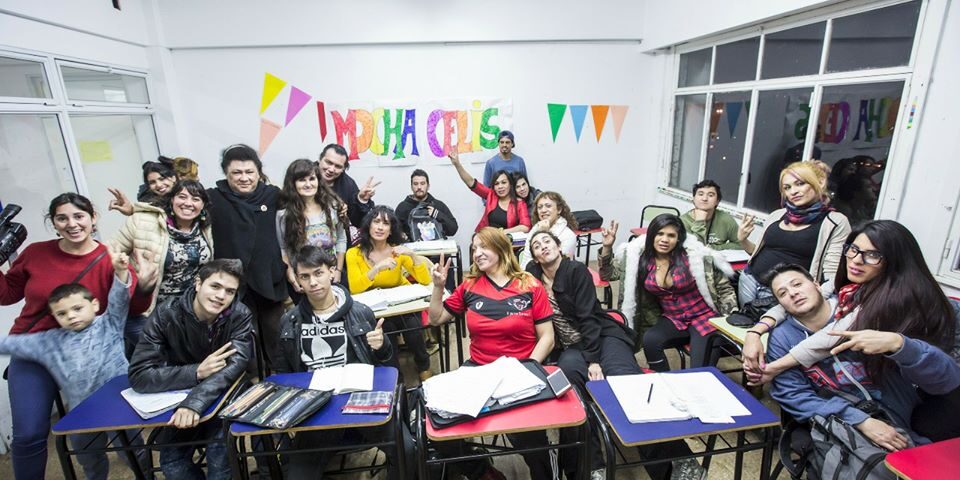
The Mocha Celis Popular High School is the first educational space aimed at enabling trans people to complete their secondary education.

Share

By Lucas Gutiérrez
The Mocha Celis Popular High School is the first educational space designed to help transgender people complete their secondary education. However, this year "Mocha" will not be able to start classes because it cannot cover the costs of the facilities at the Mutual Sarmiento.
[READ ALSO: Mocha Celis, the first transvestite-trans Popular High School in Latin America ]
The school year was supposed to begin on February 17th, but the start date remains unconfirmed. “Expenses at the Mutual Sentimiento building have increased significantly. While they've always been patient with us because we used to hold events like MochaFest to help pay, they can no longer prorate these costs since we have over 120 people using the facilities every day,” explains Francisco Quiñones, the high school principal. This public, tuition-free secondary school offers a three-year curriculum leading to the official title of “High School Graduate with a Technical Diploma in Community Development” and also provides an articulation program to complete primary education.
“We have spoken with various ministries. We are demanding that the Ministry of Education of the City of Buenos Aires, specifically the adult and adolescent education department coordinated by Jaquelina Cichero, provide us with the necessary support. They tell us that because we are a self-managed space, they are not obligated to give us financial support. Mocha Celis is the only educational space of its kind and the first in the world (Paraguay is opening another school with this model). We have been a point of reference, and this year marks nine years of our work, with extensive experience in issues related to transgender people, the LGBT+ community, migrant populations, single mothers, and more,” Quiñones continues.
[READ ALSO: Students from the Mocha Celis trans high school become activists ]
Quimey Ramos is a trans activist and former high school teacher: “It deeply concerns me. It’s paradoxical that while the national government is making an unprecedented gesture internationally—like personally delivering ID card number 9000 and embracing a trans person—one of the few spaces that has guaranteed access to education for a population that lacks it is in danger. We hope that state aid will arrive soon so that Mocha can continue to exist with a fixed budget and, even more importantly, its own physical space.”
Viviana González, the outgoing student council president, said: “My experience with Mocha Celis was completely empowering; it helped me see and recognize myself. I learned to accept the present but to seek change, to take my name and make it my greatest pride, and to use my identity as a banner, a flag.”
[READ ALSO: The day Hollywood visited the trans high school Mocha Celis ]
The Mocha Celis Popular High School is in its ninth year. In 2018, as a result of the work of students and teachers, they premiered a documentary sharing how the school operates.
“Unlike other high schools that offer evening classes, those who attend also work other jobs and save up for teacher salaries and other costs. That model doesn't work for us because we also promote trans employment, so we can't take money away from our colleagues or the education workers. We don't have other jobs because we operate in the afternoon, catering to the trans and travesti population, many of whom still rely on sex work for income. In many cases, some consider themselves sex workers, and others are in situations of prostitution and don't have other employment, so this schedule is what we've designed,” Quiñones explains. The City government only covers 75 teaching hours.
Without further government support and having to pay for the high school space immediately, it's impossible to begin this new school year. "It's unfair not only to us but also to the students who can't start their classes or would have to move to an uncertain location right before the start of classes because we have nowhere to go," Quiñones concludes as they continue their protest.
Viviana shares how her life changed after being in this space: “Being a trans woman, reduced to a child poet, dreaming of becoming a doctor or a teacher, being excluded and forced onto dark streets, searching for coins to survive. Time couldn't kill me, but it had ravaged my emotions and my appearance, leaving me with no option but to want to die. But after my time at La Mocha, all that changed. I was not only able to resume my goals because they weren't dead, just dormant. Today I am a writer and a poet. Today I am going after everything that those others made me believe I had already lost.” And regarding the current situation, she adds: “Sometimes the school's closure is in my worst nightmares, and that gives me no peace.”
We are present
We are committed to journalism that delves into the territories and conducts thorough investigations, combined with new technologies and narrative formats. We want the protagonists, their stories, and their struggles to be present.
SUPPORT US

FOLLOW US
Related notes
We are present
This and other stories are not usually on the media agenda. Together we can bring them to light.