

Protesters protest kissing outside a lesbophobic nightclub in Asunción
The activity was organized on social media by five girls who were kicked out of the club for kissing a week ago.

Share

By Juliana Quintana
Photos: Jess Insfrán
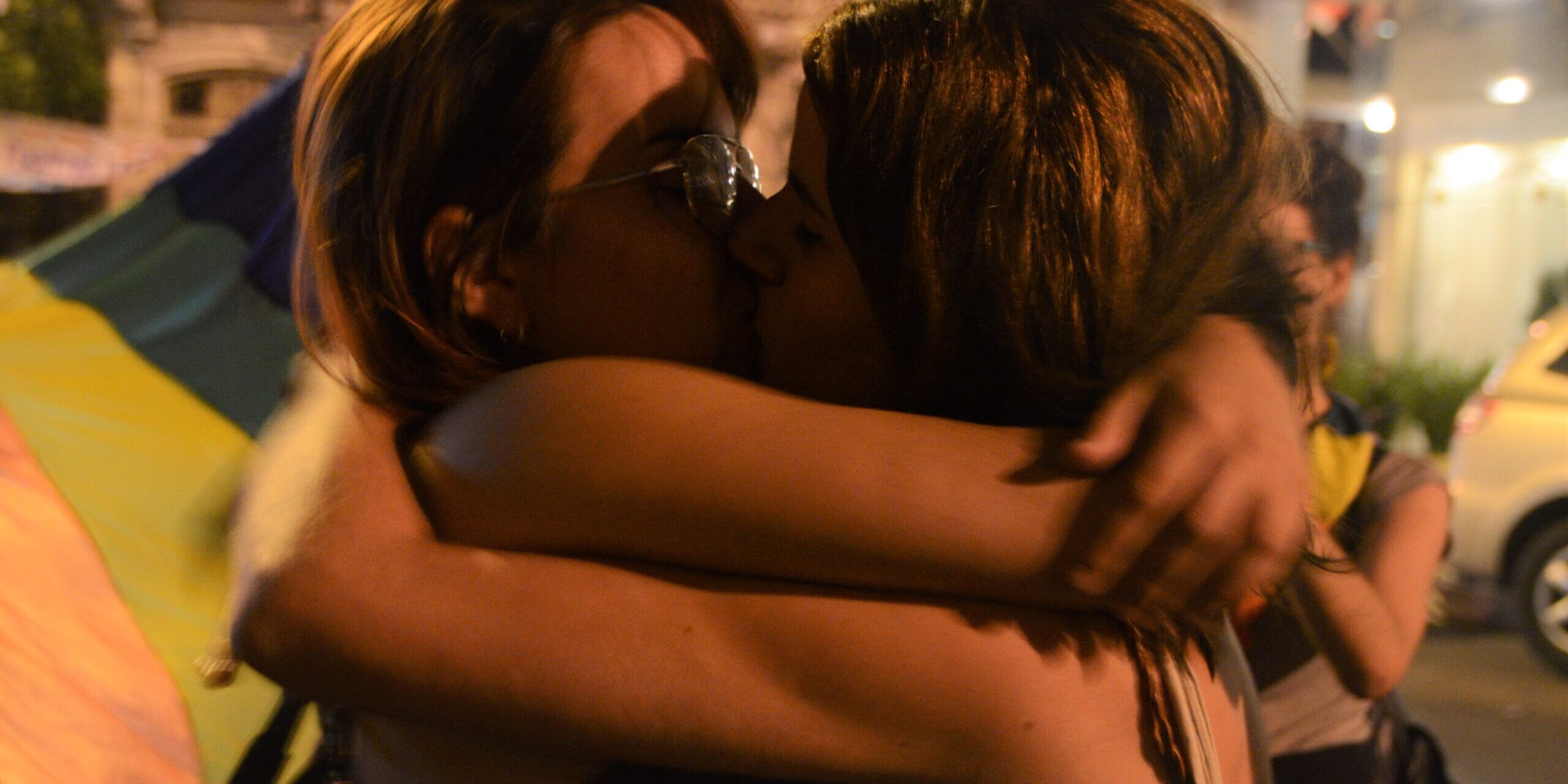
More than one hundred people from the LGBTQ+ community in downtown Asunción participated in a kiss-in against discrimination based on sexual orientation and gender identity on Saturday in front of the Toc Toc (Avda. Colón 320 near Palma). The gathering took place at the La Chispa at 8 p.m., where participants displayed signs with slogans such as: “Kissing is my right,” “Love us free,” “Toc, toxic,” and “Right of admission is discrimination.”

The protest was organized on social media by five women who had been kicked out of a club a week earlier for kissing. “We’re here to love each other and demand to be allowed to express our affection in public,” said Cecilia Zaldívar, one of the women who were expelled from the club. Around 10 p.m., they set off for the nightclub with music, colorful flags, and chants.
Lesbians, gay men, non-binary people, and transgender people kissed in front of the bar for five minutes straight, echoing the same act that led to the girls' initial expulsion. David Amado attended the kiss-in with his boyfriend because he believes what happened was a fascist response to two adults expressing their desires for their own lives. He thinks the right of admission is just an excuse to continue allowing violent behavior toward anything that deviates from heteronormativity.
Bisexual activist Miliki Chaves told Presentes that bars should question their right of admission because it enables a great deal of violence not only against LGBTQ+ people but also against rural and Indigenous people. “We have to stop normalizing violence against LGBT people who express their desires and affections in different ways. It is unacceptable that security guards disrespect and physically assault them. I think we need to start implementing protocols to prevent this type of discrimination,” he said.

A woman who refused to be identified appeared in front of the bar and began shouting for everyone to disperse and that homosexuality was immoral . Niqo Martínez, who was leading the protest, exclaimed, “No matter how much they attack us, we will always be here.” The woman started pulling his hair and tore his shirt. She had been there from the beginning of the protest, but faced with the public's outrage, she eventually left.
“Two people of the same sex cannot kiss”
On Saturday, February 15, a group of five friends went dancing at the Toc Toc club. At one point, Deb Axé kissed one of them, and three security guards approached, lifted her up between them, and pushed them all down a corridor that led to the emergency exit and out of the club.
“It all happened so fast. While we were asking them what was going on and trying to get them to let Debby go, they opened an emergency door that was almost next to us and they shoved us into that little hallway. I don't know how I reacted, but I started filming. They pushed us and Sigrid fell to the floor. That's when we got even more scared and I started screaming for them not to touch me,” Cecilia recounted.

“I remember getting between the security guard and one of the girls, and in the struggle, they hurt my whole arm. They grabbed me tightly and pushed me against the wall,” Carolina Rodríguez recounted. Once outside, the manager told them that it was a private place and that two people of the same sex couldn't kiss.
After demanding their tickets back, they called the police, but when they arrived, they were told they couldn't enter a private space. “This isn't the first time I've been discriminated against in Paraguay. At the very least, I would have liked them to approach me and tell me they don't accept LGBT people in their establishment, but the way they removed us is outrageous and devastating,” Deb continued.
The next day, Caro and Sigrid went to the Barrio Obrero hospital to file a medical report documenting the physical assault they had suffered. They consulted with lawyers from the lesbian rights group Aireana and began organizing a kiss-in on social media. They said they received messages from many people reporting similar incidents at other locations across the country: Shamrock, Bolsi, Britania, shopping malls, bars, and restaurants. The names kept coming up.
They demand a law against all forms of discrimination
Although Paraguay does not yet have a law against all forms of discrimination, there are legal elements that protect the rights of all people. Article 46 of the National Constitution stipulates that all inhabitants of the Republic are equal in dignity and rights. “Discrimination is not permitted. The State shall remove obstacles and prevent factors that maintain or promote it.” Similarly, Article 25 states: “Every person has the right to the free expression of their personality, to creativity, and to the formation of their own identity.”
Regarding the lack of an anti-discrimination law, Carol stated: “The law is supposed to be the voice of the State. If there isn't even a voice we can appeal to, it's as if we don't exist or matter, and in the end, it grants people like that manager the right to discriminate against whomever they want.” Sigrid believes it's essential to show affection and love toward friends or romantic partners in any setting.
“The capitalist and heteronormative political model, through various institutions such as the church, punishes or stigmatizes people with dissident gender identities and sexual orientations. Manifestations of affection are always attacked, which is why it is so symbolically important that the kiss be positioned as a political gesture in the face of so much violence. The kiss is a political manifesto in itself,” Miliki stated.
The kiss-in outside the bowling alley turned into a diverse and empowering dance party. “I’m a sinner and I confess it, let’s slowly devour each other with kisses,” chanted the protesters to the rhythm of Ms. Nina, on their way back to La Chispa, where kissing is free and unrestricted.
We are present
We are committed to journalism that delves into the territories and conducts thorough investigations, combined with new technologies and narrative formats. We want the protagonists, their stories, and their struggles to be present.
SUPPORT US

FOLLOW US
Related notes


We are present
This and other stories are not usually on the media agenda. Together we can bring them to light.