

They are non-binary, changed their birth certificate, and are fighting for their ID card.
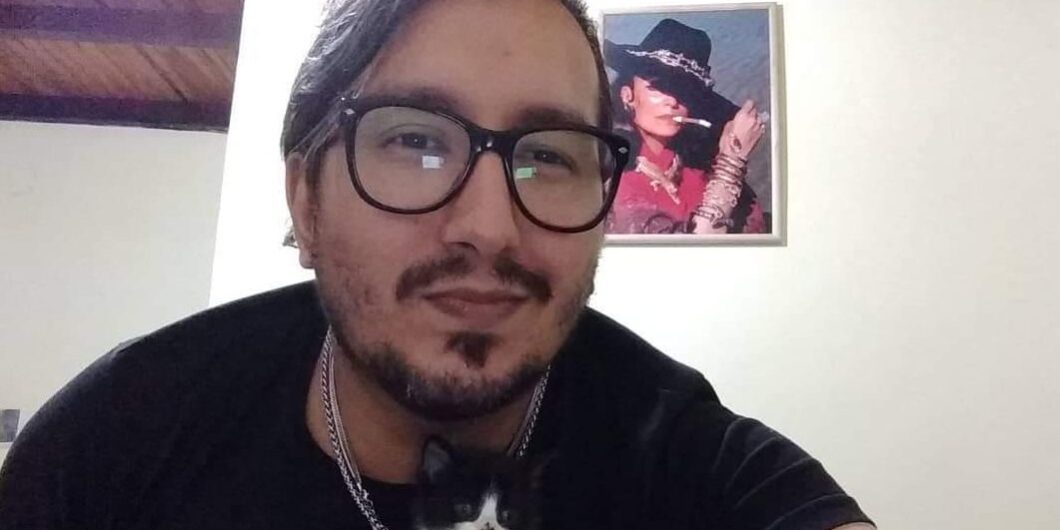
Lisandro is 34 years old, non-binary, and lives in Misiones. Like many others, he is fighting to obtain his national identity document (DNI) that reflects his self-perceived gender identity.

Share

Photos: Courtesy of Lisandro Lombardi
Lisandro Lombardi is a human rights activist and literature student at the National University of Misiones. On February 5th, they became the first non-binary person to legally change their gender marker in that province. They are still waiting for their national identity document (DNI), as are other non-binary people in Tierra del Fuego and Mendoza who are experiencing similar yet different situations.
READ MORE: Appeal filed in court against the non-recognition of transvestite femininity on ID cards
Although the Gender Identity Law allows adults to change their name based on their self-perceived gender identity, the classification for official records remains limited to two options: male and female. This is the obstacle faced by non-binary people and trans and gender-diverse individuals when attempting to correct their birth certificates and other documents in Argentina. However, since 2018, there have been cases where self-perceived gender identity has been officially recognized on official documents. While these cases are still few and insufficient, they are crucial for making progress in addressing this outstanding issue.
Background: Tierra del Fuego and Mendoza
One such victory occurred in Tierra del Fuego in 2019. Following a legal appeal filed in the provincial courts, a ruling authorized Shanick Sosa Battisti to register as “non-binary .” It was the first court ruling of its kind in Tierra del Fuego and one of the first nationwide. The ruling mandated that the section of the birth certificate corresponding to sex be changed to “non-binary/egalitarian.” It also ordered the Civil Registry to amend the birth certificate of Sosa Battisti’s child to reflect the parent’s new name and gender identity.
A year earlier, the Civil Registry of Mendoza modified, without any legal action, the birth certificates of two non-binary people who requested that their new documentation not indicate a sex. In that field, they wrote " none, as permitted by Article 2 of Law 26.743 ."
Being non-binary in Misiones

Being the first non-binary person in the province of Misiones to try to obtain their national identity document (DNI) reflecting their self-identified gender was not easy for Lisandro Lombardi, a literature student at the National University of Misiones in Posadas. The Civil Registry did not provide immediate solutions to their right to identity. It required the advice and support of the Misiones Feminist Lawyers Network, the political commitment of various individuals, and media pressure that brought Lisandro's name to the forefront of the news and social media.
READ MORE: Gender is being rewritten: Is the future non-binary?
“I happened to be the first, the first person, the first one,” the 34-year-old activist, who identifies as “non-binary” and works in the municipal legislature of Posadas, told Presentes. “It means that I don’t identify with the heteronormative gender binary; I’m neither male nor female,” he explained.
“Lisandro is my identity, Lisandro is my name. That's how practically everyone knows me, or at least my loved ones, my closest circle, my friends and family. That's how they know me; to that world, I am Lisandro.”
"I've perceived myself this way for as long as I can remember."
Non-binary self-identification has been present in the life of this Posadas native since early childhood. “I’ve identified this way for as long as I can remember. Since I was 4 years old, I never identified as male, but I did feel a sense of comfort/security when I was among women,” he says.
She says she has almost no relationship with her blood relatives. “The only person I keep in touch with is my older brother, from whom I received tremendous support.” “Likewise, my close circle of loved ones, whom I consider my family, has always given me not only support but also a great deal of acceptance and motivation to live in harmony with my self-perception. They also understand my gender expression exactly as I experience it,” she explains.
The fight for the rectification of the starting point

On Tuesday, February 4, accompanied by Florencia González of the Feminist Lawyers Network and provincial deputy Anazul Centeno, Lisandro completed the legal rectification process in Posadas. The following day, he received his birth certificate reflecting his gender identity.
The woman from Posadas thanked everyone on her social media who supported and accompanied her on this journey toward identity. “I am beyond happy. Today, not only do I have a guaranteed right that recognizes my dignity as a person, but in a province like Misiones, where ignorance and religious fundamentalism reign, fueling hate speech, it is good to bring a word of encouragement, of hope,” she told Presentes.
Reaching that day took not only several years, but also activism, support, and patience. “For me, Macri's administration meant waiting a long time; it was four years of waiting. Back in 2015, I wanted to do it at one point, but often the process happens at times that aren't ideal, so it was a matter of waiting. It just so happened that in December I lost my ID. I asked at the Civil Registry, and they told me exactly the same thing: that they didn't have the capacity to interpret the law, that it had to be done through a writ of amparo,” he says.
The kitchen of the registry change
With the Network of Women Lawyers, they began to study the background and search for “a political decision” and “not a judicial one.” In this endeavor, they spoke with the Director of the Registry, the Undersecretary of Security and Justice of the Province, and the Minister of Government. The latter was the one who enabled “the administrative process to make that change, to register. That was the crux of the matter.”
Florencia González, from the Feminist Lawyers Network, highlighted: “We managed to implement a tool to guarantee that both Lisandro and all people who consider themselves non-binary within the province, can carry out their procedure without having to resort to the Justice system to change their gender and establish their non-binary self-perception.”
The birth certificate is there, but not the ID card yet.
“What’s missing is the ID card process. It’s another issue, which again shows that administrative processes are discriminatory,” says Lisandro, who is still waiting. “The digital form only gives you two options: male and female. I’m in contact with the other cases, the one in Mendoza and the one in Tierra del Fuego. They also don’t have ID cards because it was supposed to be available starting in December—before the Macri administration leaves—which didn’t happen. My case is stirring up this hornet’s nest again.”
In the absence of that document, he points out: “Even though the State does not recognize my existence in the ID card, I already exist. But having the recognition reinforces that, it enables you and it is a political action, purely a state public policy that promotes an act of acceptance, inclusion.”
According to Lisandro, if "the State does not promote these actions socially, it will take a very long time to achieve real equality, because that is also something else; the law assures us of one thing, but reality is another."
On the other hand, she confesses: “I tried to make it visible, but not from such a media-driven and furious perspective as it was at times. But once it became public, I said, 'We have to fight for this.' It's about shouldering the burden of activism and carrying it forward. I received the most adverse and absurd comments on social media, as well as comments from within the community itself and from other activists, ranging from 'she wants a handout,' to 'I want to be a congresswoman,' to 'I want fame.' But as I always say, if it doesn't benefit me, then move on.”
]]>We are present
We are committed to journalism that delves into the territories and conducts thorough investigations, combined with new technologies and narrative formats. We want the protagonists, their stories, and their struggles to be present.
SUPPORT US

FOLLOW US
Related notes

We are present
This and other stories are not usually on the media agenda. Together we can bring them to light.