

LGBTI organizations warn of “authoritarianism” in President Bukele
The LGBTI population of El Salvador is concerned about the signs of “authoritarianism” shown by President Nayib Bukele.

Share

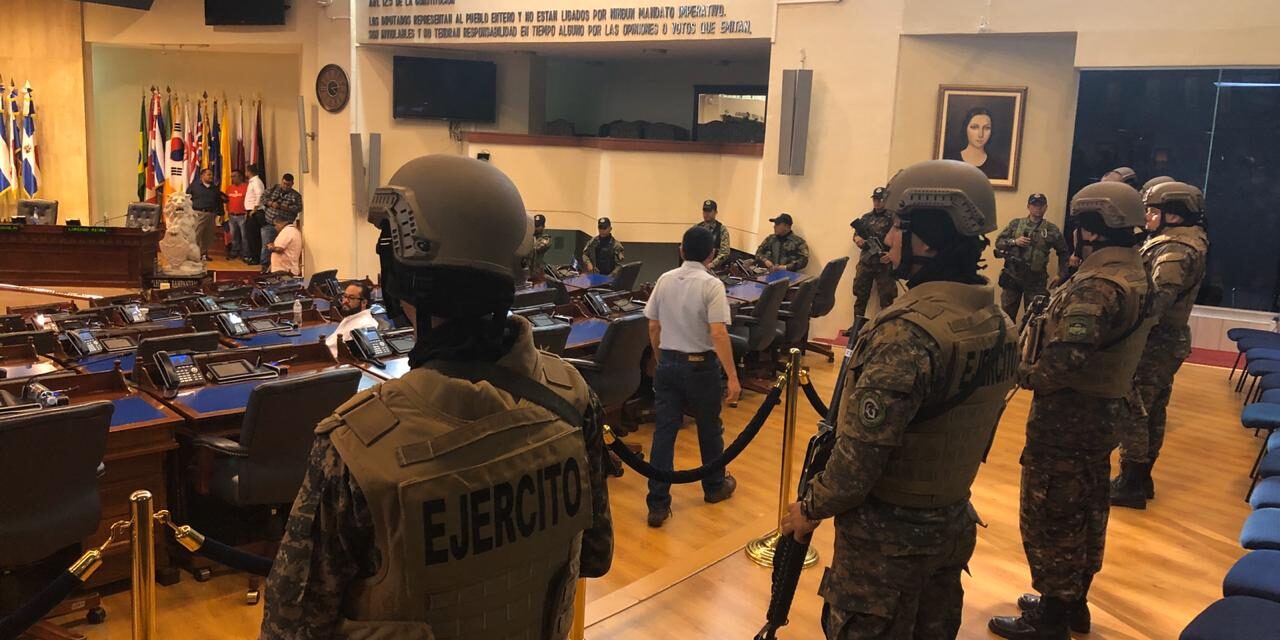
The LGBTI community in El Salvador is concerned about the signs of “authoritarianism” displayed by President Nayib Bukele when he stormed into the Legislative Assembly chamber on Sunday, February 9, accompanied by armed soldiers and police. His intention was to pressure lawmakers into approving a $109 million loan to finance his security plans.
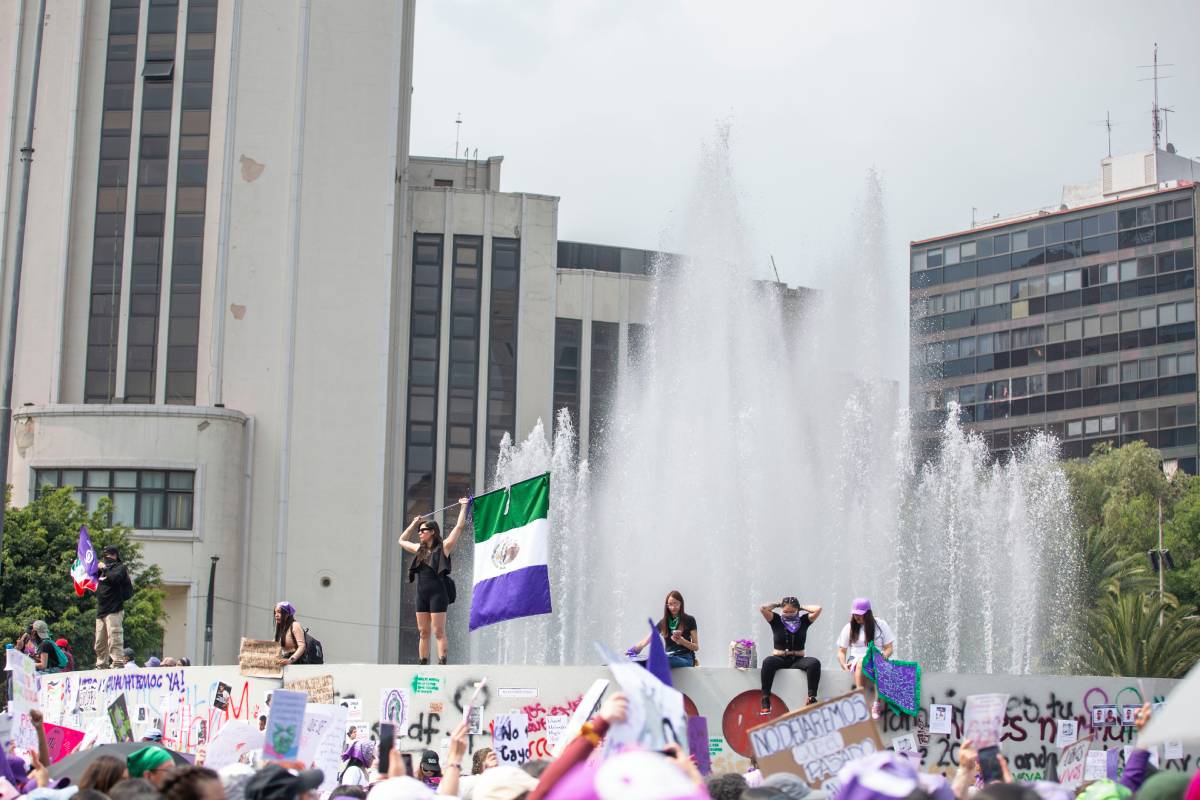
Feminist and LGBTI organizations gathered at the Plaza del Monumento al Salvador del Mundo to protest the advance of the militarization of the State and the threat to destroy the democratic system of the Central American country.
Bukele, who assumed his mandate on June 1, 2019, has been questioned for his censorship of the press, violations of citizens' right to information, numerous dismissals in different state institutions, and nepotism.
[READ ALSO: Government of El Salvador fires LGBTI staff ]
The 38-year-old leader has also spoken out against same-sex marriage and only agrees with abortion when the mother's life is in danger.

At the beginning of his term, Bukele eliminated the Secretariat of Social Inclusion, the institution in charge of safeguarding the rights and enforcing the presidential decree that established the eradication of discrimination throughout the State against the LGBTI population.
“The LGBTI community is very concerned about these recent signs of authoritarianism shown by President Bukele. Whenever there are policies that militarize public life, the LGBTI community is one of the groups most vulnerable to abuse by the military ,” Roberto Zapata of the AMATE association told Presentes.
The report “Stop Trans Genocide”, prepared by the Solidarity Association to Promote Human Development (ASPIDH Arcoiris Trans) and the Latin American and Caribbean Network of Trans People (REDLACTRANS), shows how in El Salvador trans women are violated by State institutions, specifically by the security forces; of the total complaints received, 36% were attacked by the Police and 6% by the Armed Forces.
[READ ALSO: Trans woman attacked in El Salvador and police refused to take her report ]
“These systems of repression only increase levels of vulnerability. We have repeatedly insisted that these militarized contexts have done nothing to reduce violence; violence is only reflected, or they try to classify it, as gang violence and not as other types of violence such as gender violence. We know that women and the LGBTI population are immersed in these conditions of vulnerability,” Yanilet Mejía, a lesbian feminist activist and member of the organization Daughters of Sappho, told Presentes.
From January to December 2019, eight transgender women and one gay man were murdered, according to cases registered by human rights organizations. Only the cases of Camila Díaz, allegedly murdered by police, and Anahy Miranda are currently being prosecuted. The man accused of murdering Anahy was released on $10,000 bail to continue the legal process while free.

October and November 2019 were the most difficult months; in one month and three days, four crimes against the trans population of the Central American country were reported.
A dark episode
After storming the building, Bukele sat in the chair of the presiding deputy and said a prayer to ask for "divided counsel" for the decision to eliminate the Legislative Assembly with its 84 deputies.
The president left the legislative palace and incited the population that had come to support him outside the building, motivating them to apply article 87 of the National Constitution, which refers to the right to insurrection.
“When officials break the constitutional order, the Salvadoran people have the right to insurrection to remove those officials and restore constitutional order. I asked God, and He told me: ‘Patience.’ In a few months, we will have this assembly, because we are going to take it by force,” Bukele declared.
For various sectors of the country and international organizations, the young Salvadoran leader provoked one of the darkest episodes since the signing of the Peace Agreement that ended twelve years of armed conflict (1980-1992).
“I think this is putting all women, girls, adolescents, trans women, and the LGBTI population in a dangerous situation. We are all being left in a vulnerable state with the militarization because we are being governed by uniformed personnel. I think El Salvador must change its tactics and our leaders must be peacemakers,” Mónica Linares, director of the Solidarity Association to Promote Human Development - ASPIDH Arcoíris Trans, told Presentes.
Human rights defenders and activists consider the measure a clear usurpation of power, a setback in rights, and one that would turn the Central American country into a country without constitutional guarantees.
[READ ALSO: Camila's last night, a trans woman persecuted by gangs and murdered by the police ]
“We view with deep concern the events that occurred this Sunday, February 9, 2020, as they constitute a setback in human rights and interference in the independence of state bodies,” the LGBTI organizations said in a statement.
Since 2009, El Salvador has allowed the Armed Forces to become involved in the country's public security, a decision that has been questioned by human rights organizations due to high levels of repression and the increase in reports of extrajudicial executions, rapes, and beatings.
]]>Share
We are present
We are committed to journalism that delves into the territories and conducts thorough investigations, combined with new technologies and narrative formats. We want the protagonists, their stories, and their struggles to be present.
SUPPORT US

FOLLOW US
Related notes

We are present
This and other stories are not usually on the media agenda. Together we can bring them to light.