

They denounce that the Santojanni hospital denied surgery to a person who is HIV positive.
A young man with HIV who was supposed to have surgery following an accident reported that medical staff at Santojanni Hospital denied him care.

Share

By Mariana Leder Kremer
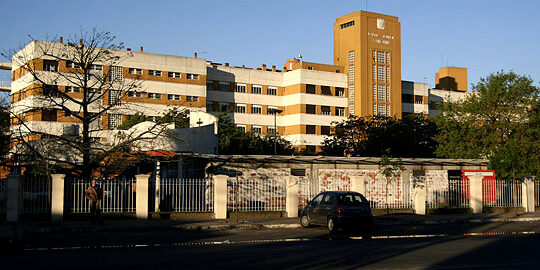
Photo: Government of the City of Buenos Aires/ Wikimedia Commons
A young man living with HIV, who was scheduled for surgery following an accident, publicly denounced the medical staff at Santojanni Hospital in Buenos Aires for denying him care on Thursday, February 6. The young man—whose identity is being protected to ensure his confidentiality—reported that upon entering the operating room, the anesthesiologists and the orthopedic surgeon refused to treat him, even though he had already undergone pre-surgical tests and provided his HIV status. The Argentine Network of Young People and Adolescents Living with HIV (RAJAP) condemned the act of discrimination in a statement . This afternoon, RAJAP will meet with the National Institute Against Discrimination and Xenophobia (INADI) to address the issue. To date, Santojanni Hospital has not issued an official statement nor responded to repeated calls from Presentes seeking clarification on the situation.
“We’ve already contacted the National Front for the Health of People with HIV, which includes more than 60 organizations. We’re waiting to hear from our colleague’s family and to see if he’ll be available. Our plan is to mobilize at the hospital to demand answers,” says Emir Franco, national coordinator of Rajap.
"The patient has a surgery date. And the mechanisms have been activated to review all the actions that led to the complaint," sources from the Ministry of Health of the Government of the City of Buenos Aires reported this afternoon.
Discrimination and breach of confidentiality
“The fact that he was already entering the operating room and they were about to anesthetize him, and that they told him they were not going to continue with the procedure, when he had already informed them of his serology beforehand, and that in addition to criticizing and judging him, they publicly exposed his privacy, saying we are not going to operate on him because he has HIV , in a waiting room where his family and other patients were, was a violation of the right to confidentiality of his diagnosis,” says the Rajap coordinator.
READ MORE: Let's Talk About HIV: Do I Have to Say I'm Living with HIV?
Franco adds that this is the first case of discrimination at Santojanni Hospital that the network is aware of. They want to contact the hospital to find out what measures they will take, but so far they have been unable to get through. Franco says that the young man's mother was able to speak with Sergio Maulen, the current director of the National Directorate of AIDS, STIs, Hepatitis, and Tuberculosis, who informed her that the protocol that the Santojanni professionals claimed to have to use for a person living with HIV is outdated.
“We don’t have the special protective suits to treat people with HIV,” was—according to the complaint—the argument of Guido Flores Flores, the trauma surgeon who refused to fulfill his duties, along with the anesthesiologists. The patient’s mother explained to them that many people don’t know their HIV status or don’t disclose it, and that safety measures should be the same for everyone. “Nevertheless, the professionals decided to cancel the surgery,” Franco recounts. He adds that the hospital administration approached the family to tell them that the protective clothing protocol was in effect and that the hospital lacked the necessary resources. The intervention of the head of Infectious Diseases was also ignored; he came to explain that the patient had a strong immune system, that his HIV was undetectable (and therefore untransmissible), and that the operation had to be performed.
READ MORE: Let's talk about HIV: Undetectable = untransmittable
“Biosecurity is the same”
In response to the incident, José María Di Bello, President of the Positive Effect Group (GEP) Foundation, stated: “The situation is truly unacceptable. Biosafety is the same for people with HIV as for anyone else, whether in an operating room or in any medical setting. We are talking about basic principles that have been established for a long time. It is absolutely unacceptable and deserves our strongest condemnation. Furthermore, it speaks to the lack of training of these professionals, who, if they are not properly trained, cannot continue providing care, at least not for the time being.”
He admitted that these types of situations occur frequently in both public and private healthcare. “From a public policy perspective, we must deepen training, education, and awareness programs for all healthcare professionals and those working in hospital administration, because discrimination also occurs there.”
The fundamentalist barrier that still needs to be broken
Regarding training and education, Mariana Iácono, National Representative of the Argentine Community of Women with HIV (ICW Argentina) and co-founder of Rajap, commented: “There’s something that has more to do with people’s mindset and preconceptions, which can’t be solved simply with education, more information, and training courses. There are plenty of HIV guidelines from the World Health Organization (WHO), the Pan American Health Organization of the United Nations, and updated guidelines from the Ministry of Health, but a surgeon comes along and says they won’t operate because they don’t have a protective suit, even though the person is undetectable and poses no risk. So, I think it’s more about a fundamentalist barrier that we can’t seem to break down.”
“People with HIV suffer discrimination in healthcare”
Matías Muñoz, a lawyer and president of the Positive Cycle Association, reflected: “What happened is neither new nor an isolated incident. People living with HIV constantly suffer discrimination from various healthcare services: dentistry, gynecology, and in this case, traumatology. We believe the focus should be on biosafety protocols, which apply equally to everyone. We urge the Buenos Aires City Government to repeal all outdated and obsolete regulations that only serve to favor or facilitate these discriminatory acts,” he stated. He emphasized the importance of collaboration among organizations in these cases and that the association is supporting the family of the victim.
This week, Rajap reported another case of discrimination: the complaint of a mother who took her 11-year-old son to the Vicente López y Planes Hospital in General Rodríguez (Buenos Aires Province). After suffering mistreatment in the emergency room, the woman decided to go to the Garrahan Hospital, where her son received proper care.
Emir Franco says that since the release of the statement regarding Santojanni Hospital, they have received several messages and complaints about other cases of discrimination within the healthcare system: “As an organization, we expect our demands to be heard, that they apologize to our colleague, and that both the hospital and the professionals who were about to perform the procedure receive training on how to handle these cases. We are people living with HIV, and our serological status will not affect the health of any professional; they must take the same health precautions they take with any patient .” He also explained that many people remain silent or stop seeking healthcare services because of these situations: “So we will continue with our complaints, because if we stay silent, these things will keep happening.”
Meanwhile, the young man's surgery was rescheduled for this week, and the head of surgery at Santojanni Hospital promised to be present since Dr. Flores Flores is not involved.
]]>We are present
We are committed to journalism that delves into the territories and conducts thorough investigations, combined with new technologies and narrative formats. We want the protagonists, their stories, and their struggles to be present.
SUPPORT US

FOLLOW US
Related notes


We are present
This and other stories are not usually on the media agenda. Together we can bring them to light.