

Controversy and violence over the “gay Zapata”: Who came out on top?
The rejection of a female Zapata is clearly hate speech. Ultimately, it's a battle between masculinities, serving as a reminder of the current state of affairs: machismo mobilizes people, and Mexico City is not as inclusive as it's portrayed.

Share

By Lenny López*
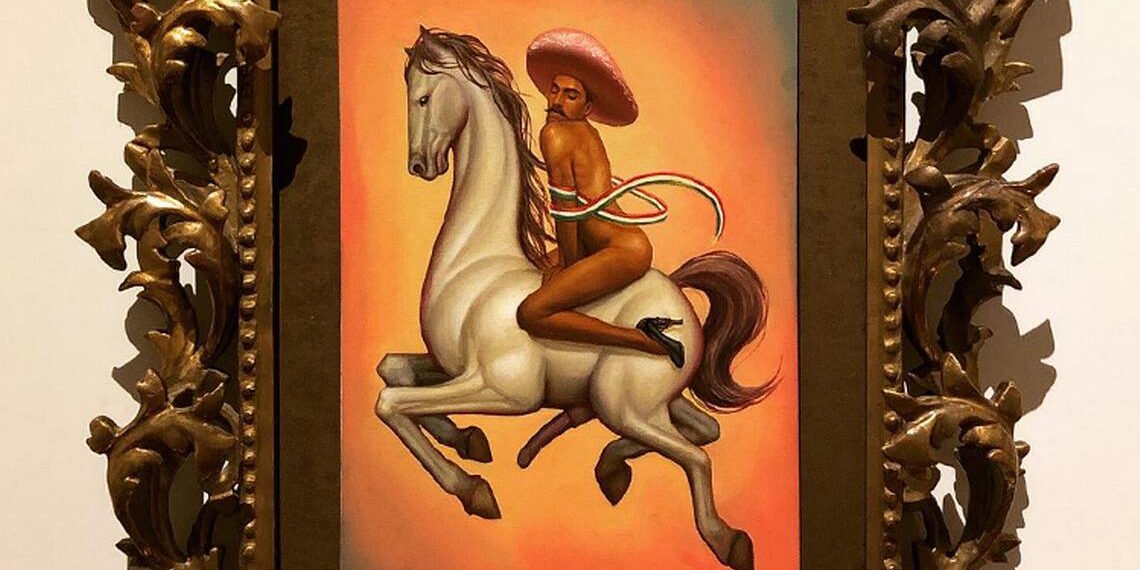
To commemorate the 100th anniversary of the assassination of Emiliano Zapata, revolutionary leader and symbol of the agrarian struggle in Mexico, the National Museum of Fine Arts inaugurated "Emiliano. Zapata after Zapata," an exhibition exploring the iconographic evolution of the so-called Caudillo of the South. One of the pieces, however, is the subject of controversy for portraying the revolutionary naked, wearing high heels, and with feminine features, on a horse with an erect penis.
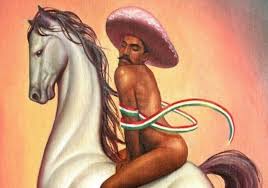
The oil painting titled "The Revolution" by artist Fabián Cháirez, which has now gone viral as "The Gay Zapata," sparked outrage from the UNTA (National Union of Agricultural Workers), whose members stormed the doors of the Palace of Fine Arts on Tuesday demanding it be burned. There were even clashes with LGBT activists. For their part, the museum, and President Andrés Manuel López Obrador himself, have defended the right to free expression and remain firm in their decision to leave the piece on display until the exhibition concludes in February.
Emiliano Zapata's grandson, Jorge Zapata, joined the chorus of outrage, threatening to sue both Cháirez and the museum for "degrading" his grandfather's image. Responses for and against the decision are proliferating on social media, and the LGBT community has even called for several protests in support of Fabián Cháirez at the Palace of Fine Arts esplanade under the banner " If Zapata were alive, he'd be wearing heels!"
The rejection of a female Zapata is clearly hate speech. Ultimately, it's a battle between masculinities, serving as a reminder of the current state of affairs: machismo mobilizes people, and Mexico City is not as inclusive as it's portrayed. Nevertheless, the scandal has generated discussion about homophobia, misogyny, and machismo in the mainstream media, and the "gay Zapata" has become a symbol of dissent and rebellion. There's no going back on that.
Until now, the Zapatas' struggle has been between peasants and the LGBT community (mostly gay) of the capital; however, this antagonism obscures the fact that the common enemy is the State and capital. These are the entities that have repressed and continue to repress both groups every day. And while this is an art exhibition, nothing that comes from institutions is innocent. The government is adept at glorifying the heroes of the past, whether indigenous peoples or revolutionaries, while keeping those of the present marginalized.
Amidst all this commotion, the museum and the president are portrayed as progressive guardians of freedom, Fabián Cháirez as the victim, and the farmers (and the outraged) as the villains. Is it really that simple? While the management of the National Museum of Fine Arts has been exemplary, the megaprojects in the southeast of the country and the religious leanings the current administration is taking are not in the best interest of people living in rural areas, nor of sexual minorities. They primarily benefit capital and the conservative agenda.
The artist isn't the victim; we are all victims of sexism, and even if we don't like to admit it, men are victims too. If anything, Fabián Cháirez is the winner, since his work has gained recognition and its value will likely increase. Not to mention that his work doesn't necessarily reflect his life experiences; it's more about personal concerns. As he himself has said, "You can always find something interesting in the marginalized."
And what about the peasants? Are they really just a horde of violent people? A bunch of hicks? Wasn't the Revolution? Wasn't NAFTA? The truth is, Zapata isn't as important to anyone today as he is to them. Their homophobia isn't justified, but we can't ignore the fact that they too have been structurally victimized. Is it utopian for them to understand that a feminine, docile, and sensual Zapata is just as worthy as they are? Is it utopian to criticize the peasant movement without racist and classist sentiments?
Ironically, those figures Cháirez seeks to bring to light—rural, Indigenous, and working-class men who also challenge traditional masculinity—are precisely the ones we know nothing about. They exist, some leading hidden lives, others openly so, but we don't know who they are, what their names are, what they think about all this, whether it affected them, whether they feel represented by the "gay Zapata," or even if they care.
And who says that gays, lesbians, bisexuals, non-binary people, trans people, and asexuals aren't defending their territory today? Because yes, they are.
*Member of the Prietologies collective
We are present
We are committed to journalism that delves into the territories and conducts thorough investigations, combined with new technologies and narrative formats. We want the protagonists, their stories, and their struggles to be present.
SUPPORT US

FOLLOW US
Related notes

We are present
This and other stories are not usually on the media agenda. Together we can bring them to light.