

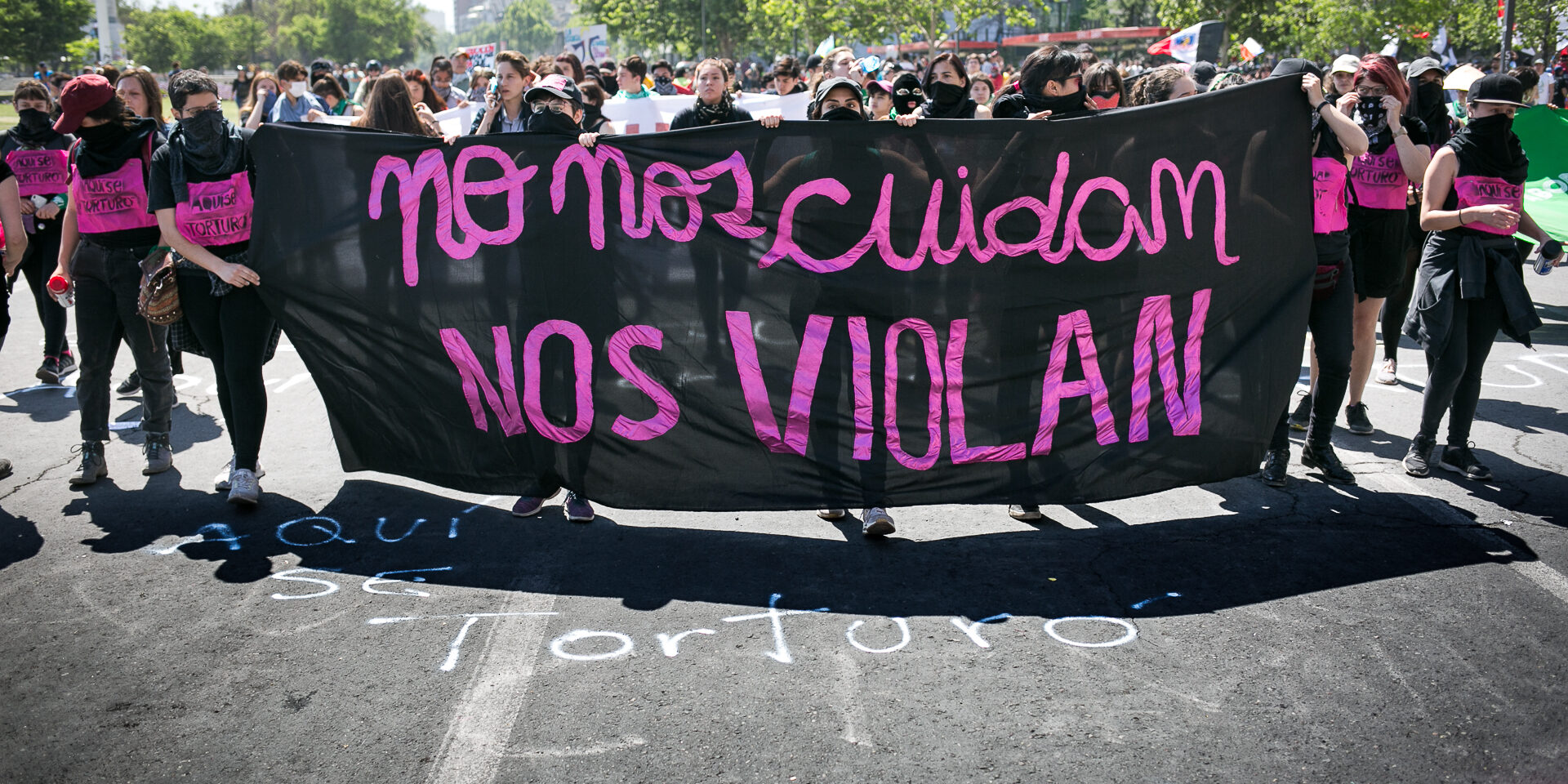
[In Photos] This is how feminism and diversity resist in the streets of Chile
"We, feminists, are part of the anti-capitalist struggles."

Share

Photos: Josean Rivera
This week, the National Institute for Human Rights (INDH) reported at least 18 deaths and 2,138 arrests—including 243 children and adolescents and 407 women—due to the repression of popular protests in Chile. LGBT+ and feminist activists are seeking to join forces to organize against police and military repression and torture amidst the social uprising that began five days ago with a subway fare increase, but was fueled by decades of inequality.

[READ ALSO: LGBTI+ people organize against repression under the slogan “Dissidences in action” ]

“We feminists are part of the anti-capitalist struggles, and today we have an exemplary episode of this movement, carried out by an overwhelming majority of workers. We know the history of Latin America and we know that this can be an opportunity to transform current conditions. A spark to ignite the prairie and open paths to escape the neoliberal quagmire and build a just and equitable society where we can live with dignity,” reads the statement released by feminist organizations .

Following reports of sexual abuse and torture during arrests , self-organized LGBT+ individuals gathered for the First Emergency Assembly in response to the national situation, in a space provided by the Student Federation of the University of Chile (Fech).

The president of the Association of Feminist Lawyers (Abofem), Bárbara Sepúlveda, and the law professor Paz Irarrázabal , filed a document on Wednesday before the Santiago Court of Appeals to report the denial of access to public records of people detained in police stations in Santiago, along with verifying violations of the protocols by personnel of the Armed Forces and Carabineros.
🔴 NOW | In response to the denial of access to public records of detainees at police stations and countless violations of protocols by the military and police, @BSepulvedaHales and Paz Irarrázabal have filed a complaint with the Court of Appeals' judicial prosecutors. pic.twitter.com/ODe4EQXWPX
— Feminist Lawyers Chile (@Abofemcl) October 23, 2019
“ This is a request directed to the judicial prosecutors to provide us with information regarding detainees. We are talking about a public registry, to which everyone should have access; however, this is not being guaranteed today, hindering the work of lawyers who are handling human rights cases to verify the status of people detained in police stations,” Sepúlveda stated.
This Saturday, October 26, an "Abofem in your neighborhood" event will be held in Santiago, where Abofem will offer free advice to victims of sexual abuse against women and the LBTIQ+ community, suffered during the protests.

For its part, the Network of Feminist Historians stated in a press release: “Civil disobedience against brutal neoliberal measures that have further precarized people’s lives is a legitimate democratic mechanism of organization, as is the use of public spaces for protest. The people have lost their fear and have spoken out forcefully: it’s not about 30 pesos, it’s about 30 years! However, instead of listening to us, of seeing that this is a legitimate demand, the State has only reacted with violence and terror. There is no dialogue, only the military boot crushing us with its state of emergency and curfews.”


We are present
We are committed to journalism that delves into the territories and conducts thorough investigations, combined with new technologies and narrative formats. We want the protagonists, their stories, and their struggles to be present.
SUPPORT US

FOLLOW US
Related notes



We are present
This and other stories are not usually on the media agenda. Together we can bring them to light.