

Paraguayan justice has convicted a transfemicide for the first time
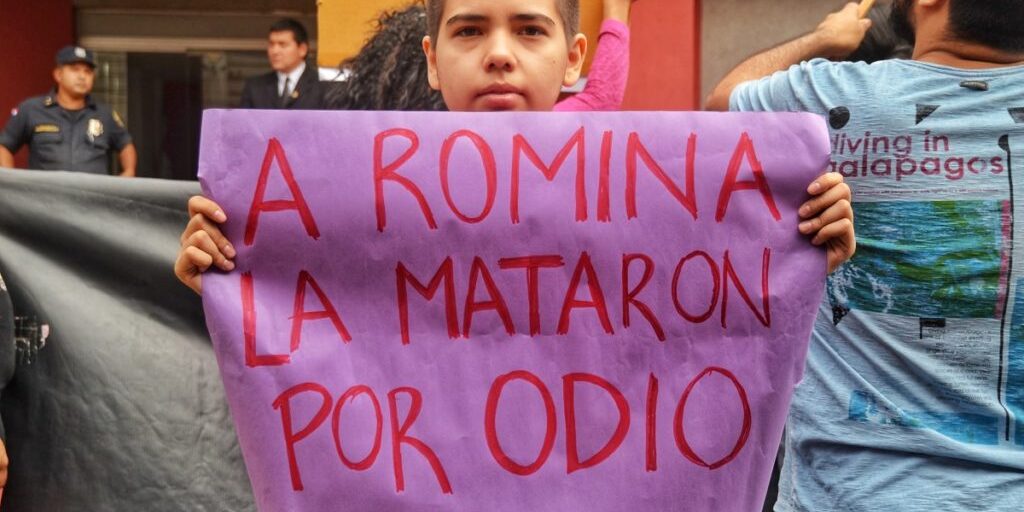
The Sentencing Court of the city of Luque (10 km from Asunción) declared Blas Enrique Amarilla guilty of the murder of Romina Vargas, and applied the maximum penalty of 25 years in prison.

Share

By Jess Insfrán and Juliana Quintana
Photos: Jess Insfrán
The Sentencing Court of the city of Luque (10 km from Asunción) found Blas Enrique Amarilla guilty of the murder of Romina Vargas and sentenced him to the maximum penalty of 25 years in prison. This is the first conviction in Paraguay for the murder of a transgender person.

Amarilla murdered Romina Vargas with two stab wounds in October 2017 in San Lorenzo, Greater Asunción. Romina had gone out with a friend when she was attacked in the street by "the transvestite knife-wielding maniac," as he is known in the media. The Prosecutor's Office classified the case as "intentional homicide" because transfemicide is not a specific crime in Paraguay and requested the maximum sentence for the accused (25 years plus 5 years for security measures). The forensic report revealed that she died from hypovolemic shock due to the stab wound.
[READ ALSO: For the first time, a transfemicide case goes to trial in Paraguay ]
The trial began at 10:30 a.m. Public defender Rocío Lucena did not appear. Fernando Cristaldo represented Amarilla in her place. The defense attorney requested a sentence of less than 15 years, arguing that Amarilla "regularly attends the prison church" and has "mental health issues." However, the prosecution maintained that psychological and psychiatric evaluations demonstrated that Amarilla was aware of his actions.
Furthermore, the perpetrator of the transphobic murder—who had previously attempted to kill Maida Bordón, Sheila Aguayo, and Yren Rotela—confessed to the crime and his hatred of the trans community . “I don’t understand why they’re arresting me, if society doesn’t care if one of them dies,” he stated. According to Yren Rotela, a Panambi activist and human rights defender, the accused, Blas Amarilla, had attacked other trans women currently incarcerated in the Tacumbú prison.

The prosecutor who handled the case, Ana Girala, told Presentes that there was ample evidence pointing to a hate crime against the trans community. “Blas Amarilla was arrested with the evidence in his possession. Laboratory tests confirmed that the knife had blood on it and that it was the weapon used to commit the crime. The person who was with the victim also provided evidence and gave their account to the court. Their testimony was clear, compelling, and specific in describing the events as they unfolded,” she explained.
[READ ALSO: March for the transfemicide of Romina Vargas: "We are not all here, 59 are missing "]
“ For me, it’s extremely important because it’s the first time a public entity has acknowledged our needs. We’re not on the streets because we want to be. It’s because we have no other job options, because this state discriminates against us ,” Yren explained.
Girala indicated that Amarilla admitted to the act at the end of the trial and apologized to the family. “Non-discrimination is enshrined in the national Constitution, and it is about upholding that right and seeking justice on her behalf, since her relatives have not been present due to the same discrimination she has been experiencing,” the investigator continued.

Among the organizations that supported the trial in Luque were Panambi, Escalando, Aireana, and Transitar. “For me, this is a historic and momentous occasion in the trans struggle because it is the first public trial where there was a verdict in our favor. We value the effort and work of the prosecution because they presented all the evidence and stood firm. It was a struggle of resistance, of empowerment. We believe that today marks the beginning of a new era in history where justice exists for us too,” she stated.
Since the fall of Alfredo Stroessner's dictatorship, there have been 61 cases of murder of trans people, and until today, there has been no investigation or conviction for any of them.
We are present
We are committed to journalism that delves into the territories and conducts thorough investigations, combined with new technologies and narrative formats. We want the protagonists, their stories, and their struggles to be present.
SUPPORT US

FOLLOW US
Related notes

We are present
This and other stories are not usually on the media agenda. Together we can bring them to light.