

The State is the main agent of violence against LGBT+ people in Peru
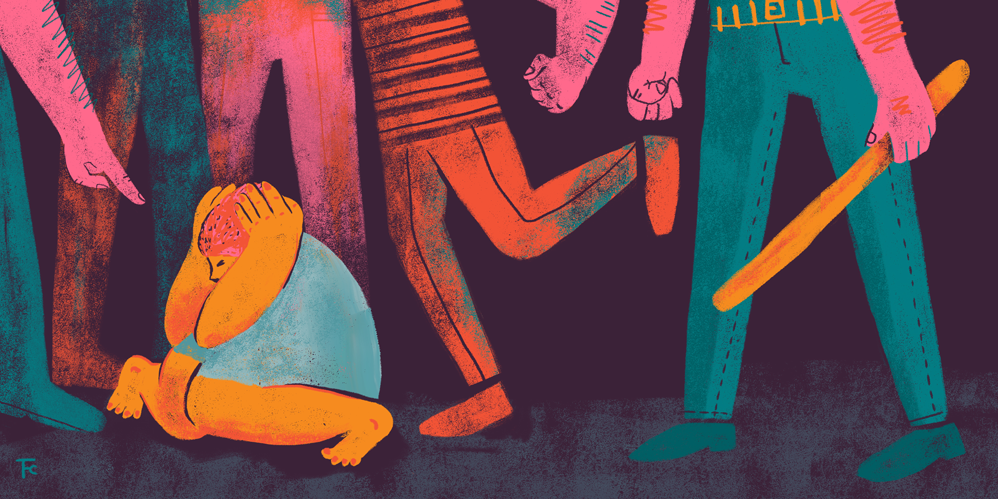
Twenty-two people were murdered in Peru between January 2017 and December 2018 because of their sexual orientation and gender identity. Additionally, 341 people were discriminated against, according to the 2017-2018 Annual Report of the LGBT Rights Observatory.

Share

By Vero Ferrari
Twenty-two people were murdered in Peru between January 2017 and December 2018 because of their sexual orientation and gender identity. Additionally, 341 people reported experiencing discrimination for being lesbian, gay, trans, or bisexual during the same period.
The figures are part of the Annual Report of the LGBT Rights Observatory 2017-2018, presented in June by this observatory in collaboration with the Únicxs Project – Trans People for Social Inclusion and the Interdisciplinary Research Center on Sexuality, AIDS and Society of the Cayetano Heredia Peruvian University.
Of the 341 violations recorded throughout 2017 and 2018, almost a third (108) were the responsibility of the Peruvian State. The State agents involved include municipal security personnel, the National Police of Peru, healthcare personnel (doctors and nurses) from various hospitals, municipal officials, and various other State officials (Judiciary, National Registry of Identification and Civil Status, etc.).
[READ ALSO: For the first time, the Inter-American Court of Human Rights addresses police torture of LGBT+ people]
According to Ho Amat y León, head of the LGBT Rights Observatory, “the average number of murders of LGBT people has been between 10 and 12 over the past two years, but it must be taken into account that there is underreporting and it is known that 90% of these cases go unreported; that is, family members, out of shame, do not disclose that these people have been murdered because of their sexual orientation and gender identity. This invisibility makes it impossible to have an exact figure, so we turn to the media, but they have adopted as a premise 'respecting the victim's good name,' so it is difficult to know the exact number of hate crimes.”
In 2017, the most vulnerable population, according to publicly reported complaints, was the gay community with 67 cases, followed by 37 cases against trans women, and 18 cases against lesbians. In 2018, the gay community reported 70 cases of violence, the trans women community 48 cases, and the lesbian community 16 cases.
These figures clash with a reality where more than 95% of Peruvians do not report violations of their rights when they are for reasons of sexual orientation and gender identity, according to data collected by the First Virtual Survey for LGBTI People (between 18 and 29 years of age), carried out by the National Institute of Statistics and Informatics of Peru (INEI), between May and August 2017, of a population of 12,026 people belonging to these groups.
Hate crimes
In 2017, there were 5 murders of gay men, 2 of transgender women, and 1 of a man who was the partner of a transgender woman. In 2018, there were 14 murders: 7 of transgender people and 7 of gay men. Because Peru has not legislated on hate crimes, these murders, if investigated, are prosecuted as intentional homicide.
The repeal of Legislative Decree No. 1323 , which aimed to strengthen the fight against femicide, domestic violence, and gender-based violence, and was enacted in 2017, is still pending in Congress. The Fujimori bloc opposed the possibility of aggravating the crime of homicide when committed under "motives of intolerance or discrimination, such as origin, race, religion, sex, sexual orientation, gender identity, genetic factors, parentage, age, disability, language, ethnic and cultural identity," and sought to eliminate the criminalization of "discrimination and incitement to discrimination." This was a contribution of this legislative decree to the Penal Code, which would have included, for the first time, sexual orientation and gender identity as grounds for discrimination.
[READ ALSO: Peru: Congress approved the repeal of Decree Law 1323 that protected the LGBTI population]
Amat y León points out that “the possibilities of achieving regulations that favor the LGBTI population depend more on contexts than on programs of political organizations. This, added to the fact that there is no strong movement and the constant crises of the State, means that these agendas end up being relegated because they are not considered priorities, but rather secondary problems that do not matter to address, just as happens with Afro-Peruvian and indigenous communities, which also have stalled projects, so the outlook is not good in the medium term.”
Press and transphobia
The report also examines how the press covers violence against transgender people, especially transgender women. Prejudices, stereotypes, and stigmas against them are perpetuated, with sensationalism persisting in reporting acts of extreme violence and a failure to acknowledge their gender identity, thus contributing to their invisibility. Aspects of the violence perpetrated against these populations are also omitted or concealed, hindering its understanding as a social problem.
[READ ALSO: Another attack on a trans woman in Peru: that makes 8 so far this year]
Finally, the report reviews the progress made in news coverage from 1959 to the present, titled “Nothing Has Changed,” due to the persistence of violence against LGBTI people. It focuses on two emblematic cases: the transfemicide of Brenda Jazmín Caimata Benites, which occurred in October 2016 in the city of Pucallpa, in the Peruvian jungle, at the hands of her partner, and the way in which the legal process unfolded, which may leave her murder unpunished due to the poverty in which Brenda's family lives; and the murder of journalist José Yactayo, in February 2017 in Lima, who had been reported missing three days earlier. Yactayo was well-known in the media, and his murder was condemned by many journalists because of the brutality of the crime: he was drugged, hanged, and dismembered, with his body parts scattered throughout Lima. His killers are currently in prison.
We are present
We are committed to journalism that delves into the territories and conducts thorough investigations, combined with new technologies and narrative formats. We want the protagonists, their stories, and their struggles to be present.
SUPPORT US

FOLLOW US
Related notes

We are present
This and other stories are not usually on the media agenda. Together we can bring them to light.