

Victoria approved a job quota and comprehensive inclusion program for transgender people.
Victoria (Entre Ríos) approved a transvestite-trans job quota and an ordinance for inclusion in housing, health, education, culture and sports.

Share

By Gisela Romero, from Entre Ríos
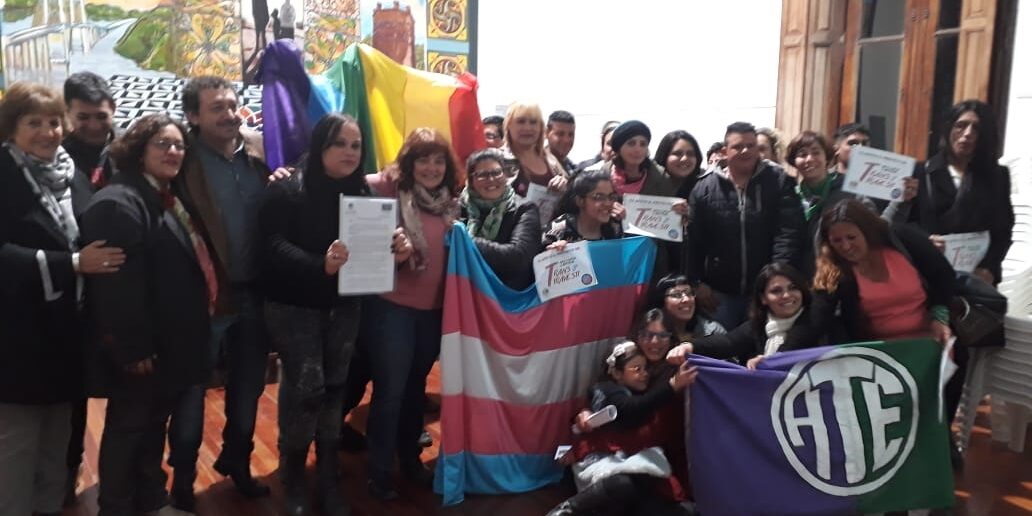
Photo: Diversity Victoria
Victoria became the second town in the province of Entre Ríos, after Paraná, to approve a transgender employment quota , and went even further: it established, through an ordinance, the inclusion of the transgender community in housing, healthcare, education, culture, and sports. These initiatives had been promoted by LGBTQ+ and human rights organizations.
The Victoria City Council passed the ordinance for the comprehensive inclusion of trans people , which promotes a quota of 1 percent of the total permanent and temporary staff of the municipality for transvestites, transsexuals and transgender people, whether or not they have made the registration change established in Law No. 26,743 on Gender Identity, over 18 years of age who meet the suitability conditions for the position.

Access to housing for trans and transvestite people
One aspect worth highlighting is the inclusion of transgender families in the housing market. According to the approved legislation, access to housing will be guaranteed for transgender families, with 1 percent of all land or housing allocations funded by municipal, provincial, and national governments being reserved for them.
There was thunderous applause in the chamber this Wednesday afternoon, when the city councilors raised their hands and unanimously voted in favor of the initiative promoted by organizations linked to the LGBTIQ+ community and human rights.
READ MORE: This is the map of the transvestite-transgender employment quota in Argentina
The text, presented by councilwoman Nelly Amilibia, accompanied by the Frente para la Victoria caucus, was defended by trans activist Karen Bruselario in the citizens' caucus.
“This project is hope for our community. Hope of being able to access work, of leaving prostitution, of my colleagues being killed because transvesticide and transfemicide have increased so far in 2019,” Karen Bruselario, a leader of Diversidad Victoria and one of the colleagues who fought hardest for the initiative to come to fruition, told Presentes.

“Diversidad Victoria put this project together with so much love and dedication. We were involved in every detail to ensure it was a beautiful project, one that could be respected,” Karen recalled. “And we felt it was essential for this project to happen because Victoria is a rather conservative, Catholic, exclusionary, and discriminatory city. We were heavily discriminated against and excluded from society, and this is a way of giving back, of repaying that historical debt to the trans and travesti community.”
A gateway to diversity
“Diversidad Victoria presented the project to me, and I supported it. Because it's a struggle that has lasted for years for people seeking employment, because the State must truly guarantee everyone's rights, so luckily it was unanimously approved by the council,” Councilor Nelly Amilibia explained to Presentes.

The councilwoman highlighted the progress made in passing the trans and travesti employment quota, as well as the creation of the Diversity Department, the promotion of access to housing and training programs to help them complete their studies, and access to healthcare, among other achievements. “It’s a very comprehensive ordinance; we’ve tried to address all the needs, and any that remain—because new ones will surely arise—will be raised through the Diversity Department.” Similarly, the councilwoman affirmed that “this opens a door and represents a very important opportunity for those who are part of the trans and travesti community.”
READ MORE: Transgender employment quota: how it changed Shazmin's life
Result of the work of the organizations
“We are very happy and celebrate this historic event for the city and for our entire community,” Alexis Taborda, a trans leader from Diversidad Victoria and the Violeta y Verde-Ate Entre Ríos group, told Presentes. Some of its members traveled to be present for the occasion. “Since May, when the bill was introduced, we kept pressing them to see what would happen with the project, which had been under review. To our surprise, not only was trans employment inclusion approved, but also the creation of a local Diversity department and access to housing for trans and travesti people. In other words, all the changes were for the better.”

"We made our first Municipal Ordinance a reality," celebrated Diversidad Victoria on social media. They emphasized that "it is the result of the work of the local organization and various projects implemented in the City Council, one of them being the Trans and Travesti Labor Inclusion Law (Lohana Berkins Law of the LGBTIQ+ League of the Provinces)."
"The State has a historical debt to our trans and travesti community; it is time for it to start recognizing public policies for us, and to begin with something basic and fundamental like work," Karen added.
The Diana Sacayán National Bill
The national bill for a transvestite-trans job quota has been dormant in the Argentine Congress since July 2018, and had already been presented in 2016 (but lost parliamentary status).
The National Front for the Diana Sacayán Transgender Employment Quota Law—comprised of more than twenty organizations from across the country—has been fighting to make this initiative law nationwide. The bill builds upon the struggle of the activist and human rights defender who championed it, and seeks to establish a 1% employment quota in the national public administration for transgender, transsexual, and gender-diverse people, as well as trans men.
The province of Buenos Aires was the first to approve it, on September 17, 2015, but so far it has not regulated or applied it.
READ MORE: Why a national transvestite employment quota law is urgent
The implications of the fine print
The approved ordinance also creates the Sexual Diversity Area, under the Secretariat of Social Development. "Its function will be the design and implementation of actions that contribute to guaranteeing human rights related to sexual orientation and gender identity and expression," the initiative states.

It also stipulates that "the Municipal Executive Department will promote the inclusion of transvestite, transsexual, and transgender people in municipal decentralized and autonomous agencies, state-owned enterprises, corporations with majority state ownership, mixed-economy companies, and all business entities in which the Municipality of Victoria holds a majority stake." Furthermore, it will guarantee the creation of a confidential Registry of Job Applicants for transvestite and transgender people in the city, from which the candidate for the vacant position will be selected. In this process, the Qualification and Disciplinary Board will include a representative from a social organization working with sexual diversity.
Regarding inclusion in access to health and education, Article 8 stipulates that the local government will guarantee training on creating healthcare spaces free from discrimination based on sexual orientation, gender identity, and gender expression, for all municipal health personnel. It will also ensure coordination with provincial health providers. Furthermore, it will enter into agreements with the Departmental Directorate of Schools to facilitate the inclusion of municipal employees in completing their primary and secondary education.
Regarding inclusion in access to culture and sport, the participation and inclusion of trans people in the development of cultural and sporting activities will be encouraged.
Panorama in Entre Ríos
Paraná was the first municipality in the province of Entre Ríos to enact a trans employment quota. On June 27, 2019, the City Council unanimously approved the bill establishing that 2 percent of employees must be trans people. It also promoted the development of programs related to health, education, housing, access to and exercise of civic rights, assistance to trans people who are victims of violence, and support for trans children, adolescents, and young adults and their families; as well as the creation of the Directorate of Sexual and Gender Diversity within the General Secretariat and Human Rights of the Municipality.
Meanwhile, at the provincial level, in May of this year the Chamber of Deputies gave preliminary approval to a bill promoting labor rights for the trans and travesti community. However, this bill—authored by provincial deputy Emilce Pross—has not yet been debated in the Entre Ríos Senate.
And in Nogoyá, the draft ordinance for a job quota for transvestite and trans people was presented by the transvestite, trans, lesbian, gay, bisexual, intersex and queer community on June 8 to the local mayor, Rafael Cavagna, and to the Deliberative Council, but it has not yet been addressed in the chamber.
We are present
We are committed to journalism that delves into the territories and conducts thorough investigations, combined with new technologies and narrative formats. We want the protagonists, their stories, and their struggles to be present.
SUPPORT US

FOLLOW US
Related notes



We are present
This and other stories are not usually on the media agenda. Together we can bring them to light.