

Transgender employment quota: how it changed Shazmin's life
At 37, Shasmin landed her first formal job. Life before and after the trans job quota.

Share

By Soledad Mizerniuk and Victoria Rodríguez, from Santa Fe
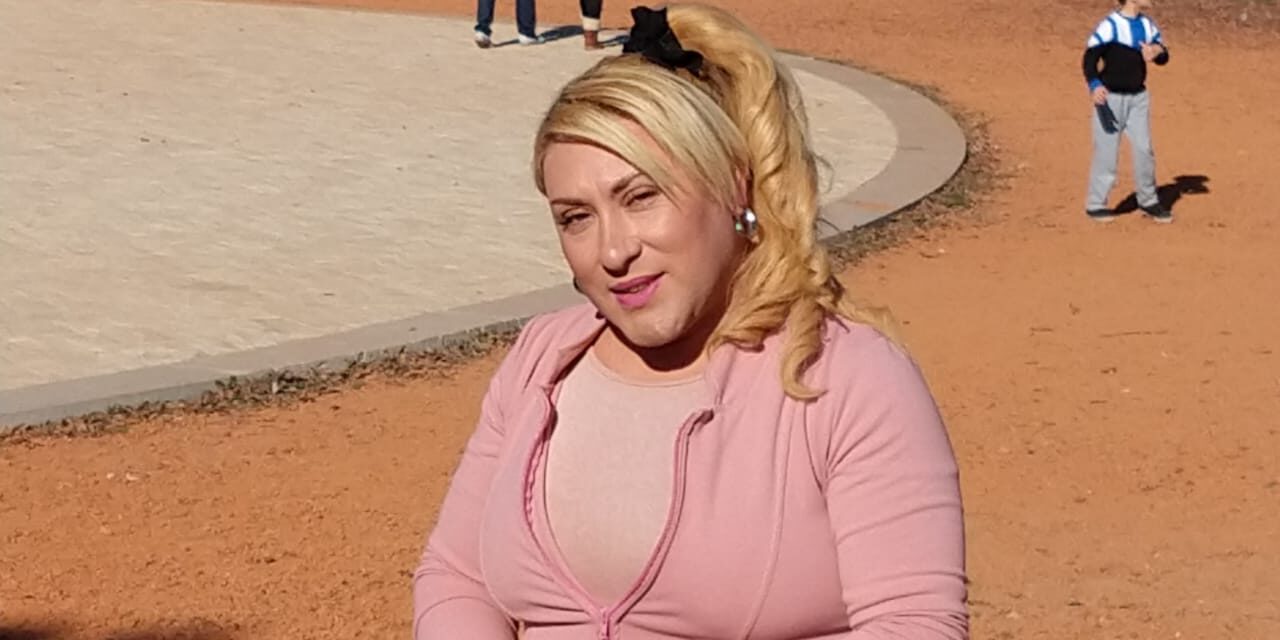
Shazmin Ramos Moreira is a 37-year-old trans woman. Four months ago, for the first time in her life, she received a job offer. It was after a job interview. Since the approval of the trans employment quota ordinance, she is one of six people who have been hired by the Municipality of Santa Fe.
“If God or the Universe had given me this opportunity earlier, I wouldn’t have even peeked out from behind a street corner,” she says. Shazmin outlived the average life expectancy for a trans woman in Latin America: 35 years. She survived the risks of the sex work she did, for lack of other options, for 17 years, seven days a week. She survived police violence, violence from clients, and the cold. “These past few days with the low temperatures, I couldn’t believe I didn’t have to go to the corner. That I could stay warm at home,” she reflects.
"We need access to work and healthcare."
Her testimony tells a story repeated by many of her colleagues: “All of us women leaders in Santa Fe who have had experiences with prostitution have suffered fights in the street because the client didn't accept us or accepted us as a game, or even with the police. We hope there will be a real change that allows us to transform our life expectancy. For that, we need real access to work and healthcare .”
Today her office day is packed with activities, as she is an administrative secretary in the municipal Gender and Diversity Program. There, she handles paperwork both inside and outside the main building and collaborates for a few weeks at the Job Training Schools.
She knows her case is the exception. That's why she's determined to continue promoting public policies that somehow compensate for the years of neglect and invisibility suffered by the trans and travesti community. “I 'm 37 years old. When I turned 35, I thought, ‘I'm a survivor.’ I think a lot about the life expectancy of trans women; we don't reach 40 ,” she says.
Shazmin arrived at the bar where the interview with Presentes was scheduled, pushed open the glass door, and entered with a huge smile. She's radiant. Platinum blonde, with her hair pulled back in a neat ponytail full of curls, her bangs swept to the left. Her presence commands attention, she commands respect. Dressed in jeans, white boots, and a pink blazer, she arrived impeccably dressed, ready for a long and in-depth conversation.
"The challenge is to attract younger women."
“While this trans quota project allowed us to bring in six colleagues, the idea is not to stop there. A lot of good work is being done in training. Now the challenge is to reach out to younger women and encourage them.”
The reality she often encounters when trying to help the youngest girls is very harsh. “Today, on Facundo Zuviría Avenue, which is the ‘red-light district’ of Santa Fe, there are five or six trans girls standing on every corner. Some are even minors, 13 or 14 years old, because they're coming out younger and younger. You see them lost, often high on drugs. We don't want to just give them a plate of food or a bag of groceries and nothing more. Access to work is essential to changing their life prospects,” she says.
Go out
Shazmin is from Villa Hipódromo. “My dad was a street vendor his whole life, and my mom was a homemaker.” Unlike other trans girls, she was able to complete her secondary education: “I always went to Raymundo Peña School on Blas Parera Avenue because it had a cafeteria. There were a lot of us siblings, so my mom sent us there. And I did my secondary school in that same building; it was called Patriarca de la Federación.”
Shazmin says she began to identify as a woman from a very young age, around six years old. Her younger sister, Ruby, had taken the same steps before her, which facilitated dialogue and understanding within their home. But once she finished high school, everything became more complicated.
“Like any citizen, I have taxes to pay, that’s why I needed to do sex work. Trans women also pay for electricity, cable, phone, just like everyone else. The difference is that many times we don’t have the work we deserve,” she says.
There were several attempts to forge a different future. “I handed out resumes everywhere and never had the opportunity to have another job. We always went together in a pack to hand out resumes, to take courses, always out of fear of going out alone,” she recounts.
She wanted to continue her studies. She liked nursing. “I completed a year and a half of the program, but it was very expensive. On top of that, I worked as a sex worker at night, so I couldn't study or take exams. Every day I would wake up and it was already dark,” she recalls. She didn't give up. She decided to enroll in a state-run vocational school. There she began to acquire new skills, which later allowed her to get her current job.
"Now we are seeking a trans job quota in the province"
One of the keys to forging the opportunities that had been denied her was the decision to organize with other trans women. “We are organized and empowered. That's how we managed to secure the trans job quota, and that's what we're trying to pass on to new generations,” Shazmin emphasizes. “We also had the support of lesbian and gay colleagues. And I think we never rested in the struggle. Now we're seeking the trans job quota in the province. There are generations behind us, and we don't want them to go through what we went through.” “Personally, I want to aim for a pension, to have health insurance.”
On her way to San Martín Square to take some photographs, Shazmin concludes: “My most beautiful stage is now. I think and meditate a lot. A leading figure in the Association of Transvestites, Transsexuals, and Transgender People of Argentina in Santa Fe, my colleague Marina Quinteros, always says: ‘I don’t want to die without seeing my comrades who came before me continue.’ And that’s what we’re aiming for.”
We are present
We are committed to journalism that delves into the territories and conducts thorough investigations, combined with new technologies and narrative formats. We want the protagonists, their stories, and their struggles to be present.
SUPPORT US

FOLLOW US
Related notes


We are present
This and other stories are not usually on the media agenda. Together we can bring them to light.