

A lesbophobic rape case reaches the courts: "I'm going to make you a woman, faggot"
“I felt strange, as if my body were heavy. My head was drooping to the sides and I had no strength in my limbs. My vision was blurry and I couldn't speak.”

Share

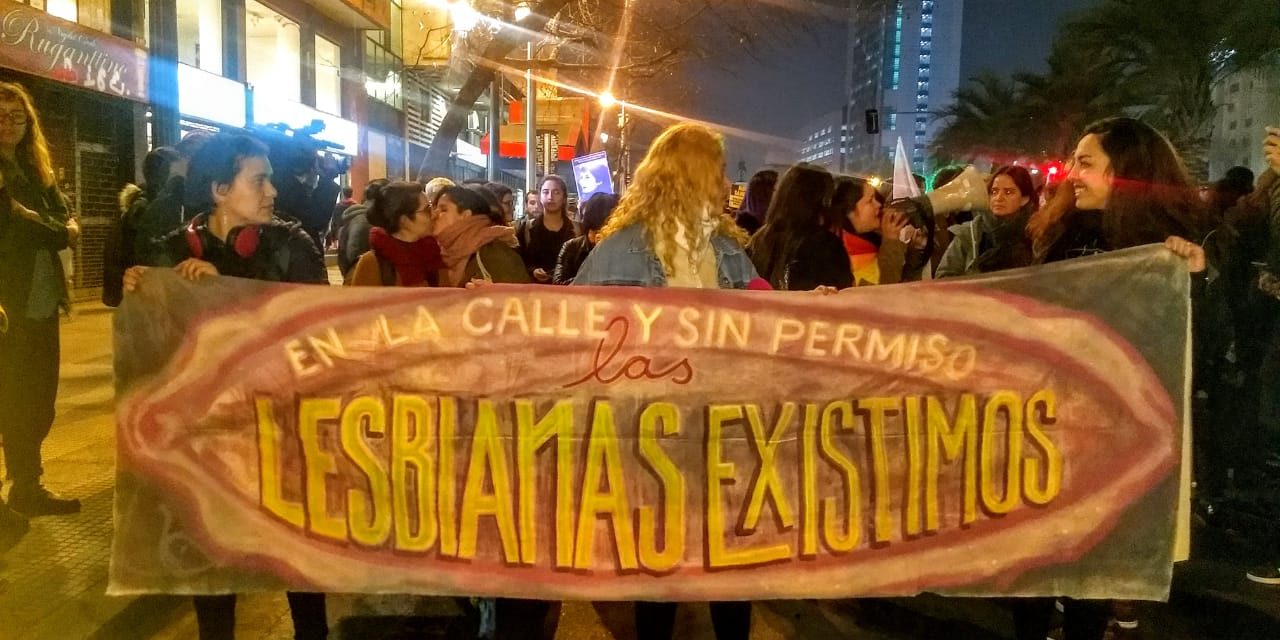
By Airam Fernández. On July 29, the first lawsuit for lesbophobic rape was filed in the Maule region of Chile. The victim (who requested anonymity) is a 37-year-old lesbian woman who went to the Talca Guarantee Court, supported by MOVILH (Movement for Homosexual Integration and Liberation) and represented by Rodrigo Medina and Nicolás Gaete, lawyers from the Santo Tomás University Legal Clinic. “This is the first rape motivated by homophobia in the region to reach the courts,” Medina explained to Presentes. For this reason, they are requesting the application of the aggravating circumstance introduced in the Penal Code by the so-called Zamudio Law, since, according to her account and the physical evidence already in the Prosecutor's Office, the case falls under what is known as corrective rape, motivated by her sexual orientation. “I work as an Uber driver, and in the early morning of May 21st, I was doing that. Around 2:30 a.m., I was talking to him on WhatsApp (…) He kept insisting that I should forget about Sara, that she was a 'faggot' (sic) (…) He told me we should get together. He insisted we go to the countryside, to Santa Rosa, but I refused and told him to meet me at my house. He had been there before, he knew my aunts, so I thought there wouldn't be any problems. (…) Around 4:00 a.m. that same morning, he parked the minibus he drives on weekends outside my aunts' house. (…) He arrived with a bottle of whiskey, a Sprite, and ice; he came inside, and we started watching television.” This is how the victim's account begins, as recorded in case RUC 1900555014-1, which Presentes accessed.
[READ ALSO: Crimes against lesbians remain unpunished in Chile: they demand justice]
She lives in Talca, a city in that region located in central Chile. That night she was alone in her house, located on the same property as her aunts' house. “I felt strange, as if my body were heavy. My head was drooping to the sides and I had no strength in my limbs. My vision was blurry and I couldn't speak. He started asking me what was wrong, if I was okay. He took my arm and led me to the bed,” she recalls in the legal document.“I’m going to make you a woman, you fucking faggot.”
What follows in the statement is a detailed description of a rape. She identifies her attacker as Marcos, a man close to her: he is Sara's uncle, and Sara was his partner for several years. She remembers everything that happened clearly, although she suspects the 56-year-old man put some kind of drug in the drink they were sharing. She says that this is what immobilized her and prevented her from defending herself or screaming for help. She also remembers what he said to her: “Oh! And weren’t you a faggot? (…) I bet you like it anyway (…) If the other one were here—referring to Sara—I’d fuck all the bitches (sic) (…) “Now I’m going to make a woman out of you, you fucking faggot.” Then he threatened her: “He told me that everything had to stay between us, that it was an act due to alcohol, that I should be careful because he could find me anywhere and he was going to make sure that nobody believed me,” she tells Presentes over the phone. The next day, when she managed to regain her senses, she decided to file a formal complaint with the Chilean Investigative Police (PDI). Sara accompanied her. The process was put on hold because two days later, on May 28, she attempted suicide. Her brother found her at home, unconscious. He took her to the emergency room, and she was hospitalized for 22 days. When she was discharged, she sought help from Movilh. “I didn’t know what else to do after more than a "That was the month after I filed the complaint, because I practically disappeared. I never knew if the Prosecutor's Office contacted me during those days to follow up. Sara was only with me during the filing of the complaint, and it was a very difficult day. After that, her family forbade her from speaking to me or seeing me. They don't believe me," she says.“We still don’t know what the medical reports say.”
In Chile, there are no official statistics on cases like this, nor is there data on other forms of violence against lesbians. But this is not the only recorded case with similar characteristics. On January 22, the Lesbian Group Breaking the Silence reported that a 14-year-old lesbian girl was beaten and raped by her stepfather in El Melón, in an attempt to “correct” her. In 2016, Nicole Saavedra was kidnapped, tortured, raped, and murdered in Limache. The study “Being a Lesbian in Chile,” presented in May by this organization, indicates that 75% of respondents reported having been harassed because of their sexual orientation, and 32.8% stated they had received psychological or psychiatric care for the same reason. Almost half of this group admitted that they attended a mental health center against their will. At the time of the first report, the victim in Talca was assisted by the Legal Medical Service to document her injuries. The medical studies and all the tests performed on her are with the Prosecutor's Office, says lawyer Medina: “But we still don't know what the reports say.” The bed sheets were also submitted as evidence in the complaint filed with the PDI (Chilean Investigative Police). On August 2nd, she was summoned to testify before the Prosecutor's Office. She spent almost two hours answering questions and recalling, at the request of the authorities, what she experienced that morning in her own home. In the end, she was referred to a social worker so that she, in turn, could refer her to a psychiatrist. The investigation is ongoing, and as of the time of this writing, the aggressor has not been summoned to testify. But the victim trusts in the justice system: “I know they will do a good job and verify that everything I say is true, so that this guy goes to jail. There is evidence, and he is fully identified. I filed the complaint so that this doesn't happen to other women, because if he did it to me, being practically family, he can do it to anyone.”We are present
We are committed to journalism that delves into the territories and conducts thorough investigations, combined with new technologies and narrative formats. We want the protagonists, their stories, and their struggles to be present.
SUPPORT US

FOLLOW US
Related notes
We are present
This and other stories are not usually on the media agenda. Together we can bring them to light.