

Trans people denounce inhumane treatment in detention centers in the US
Trans migrants, originally from Mexico and Central America, denounced abuses and discriminatory treatment.

Share

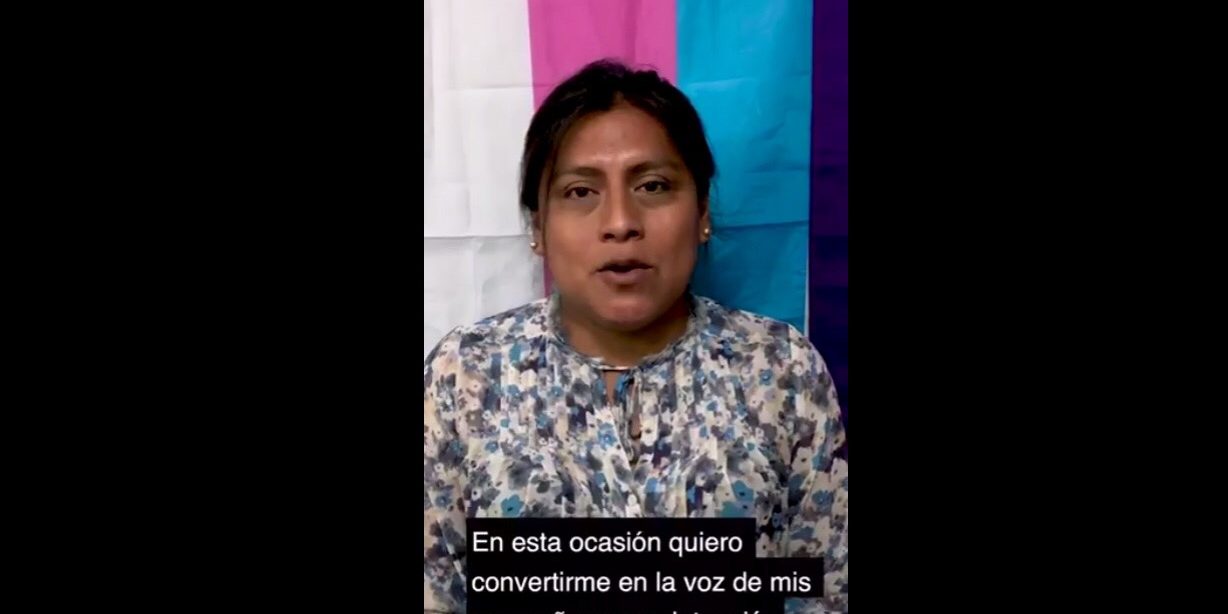
By Paula Rosales, from San Salvador. At least 29 transgender migrant women from Mexico and Central America have denounced abuse and discriminatory treatment by immigration agents while detained at the Cibola Correctional Center in New Mexico, USA. The complaint was made in a letter written by the victims at the detention center and mailed to the organization Trans Queer Pueblo, which then shared it in a video posted on its social media. In the letter, the transgender women, detained between April and June 2019, denounced the lack of medical attention and discriminatory treatment, such as being stripped naked for searches by immigration agents. The United States Immigration and Customs Enforcement (ICE) is holding the signatory transgender women from Mexico, Guatemala, El Salvador, Honduras, Cuba, and Russia, who fled violence and are seeking asylum in the United States. “I told ICE that we had already suffered in our home countries and it wasn’t worth it for them to keep us suffering in Cibola. There’s a lot of suffering in this place; the drinking water is recycled, the water used in the toilets is filtered for reuse, and even pieces of toilet paper come out of the tap,” Julissa Medrano, a Salvadoran trans migrant woman, told Presentes. Julissa Medrano fled El Salvador in January of this year due to threats from the Mara Salvatrucha MS-13 gang, who had sentenced her to death because of her gender identity and sexual orientation. She was detained in Cibola from April 3 to July 3, 2019.
READ MORE: The journey of Julissa, a Salvadoran trans woman who left in the migrant caravan
Unit 900 is the space in Cibola designated for trans women awaiting their immigration court appearances to request asylum. In their public statement, the trans women also reported that immigration agents are forcing them to sign documents in English that they do not understand; many of these documents are “voluntary” deportation orders. “In recent days, the workers in this unit deceived us, forcing us to sign forms that were not explained, and we didn’t know their true purpose,” stated Karla Bautista, coordinator of the Liberation for Trans Queer People project, who read the letter of complaint from the trans women detained in Cibola.READ MORE: Being LGBT and traveling in the Central American migrant caravan
The women who signed the public complaint say they did not receive adequate care for people living with HIV; that there is no medicine for skin infections they have acquired at the detention center; and that their use of water and personal hygiene items is restricted. “In the cooler “I was in the correctional facility for thirteen days, and they only took me out once to shower. It was very painful. If they had kept me in Cibola any longer, I would have gone crazy,” Julissa told Presentes. According to Julissa Medrano, “the icebox” at Cibola is a very cold room located in the basement of the detention center. It can hold about 10 people; there are no beds, and people are given a rug to put on the floor to sleep on and a piece of aluminum foil to cover themselves from the cold. The Cibola detention center is located in Villa Milán. The city is only 11 square kilometers in area, and 67 percent of its population is Hispanic or Latino. It is the only facility in the state with a specific area for diverse populations.Background in Cibola
Cibola is the same facility where Roxsana Hernández Rodríguez was detained for five days in 2018. This 33-year-old transgender woman arrived in the United States in one of the migrant caravans that departed from Honduras. Roxsana was transferred to Cibola on May 16, 2018, after turning herself in to immigration officials to request asylum in the United States. Roxsana spent five days in the "icebox" (a slang term for a holding cell) where she suffered severe diarrhea and vomiting. She was then transferred to Lovelace Medical Center in Albuquerque. There, she remained in intensive care for eight days and died on May 25 from pneumonia, dehydration, and complications related to HIV. [embed]https://www.facebook.com/transqueerpueblo/videos/354220841891797/[/embed] According to statements by forensic pathologist Kris Sperry - given to the media in November 2018 - when a second autopsy was performed on Roxsana, it determined that evidence of physical abuse was found, such as deep bruises on her abdomen and hands, as well as evidence of blunt force trauma. Julissa was in "the icebox" of Cibola between March 11 and 24, 2019. She told Presentes that during that time she was alone and was only allowed to bathe once in thirteen days; in addition, the aluminum foil to cover herself from the cold tore and she had to endure a climate to which she was never accustomed.
“They are very bad, they are ungrateful, you see terrible things. But the need to save our lives makes us endure everything we have to go through in these detention centers; it's painful,” said Julissa. Julissa regained her freedom on July 3. Her case was handled by the organization of Latinx Transgender Women – TRANSLATINAS, who helped her with the legal asylum process and covered the costs of relocating to the state where Julissa resides in the United States with a family member. At the time of her release from Cibola, 41 trans women remained awaiting a response to their immigration cases. Organizations like TRANSLATINA, which provides legal assistance to trans women in the asylum process, are organizing public awareness campaigns about the cases at Cibola.
Julissa was in "the icebox" of Cibola between March 11 and 24, 2019. She told Presentes that during that time she was alone and was only allowed to bathe once in thirteen days; in addition, the aluminum foil to cover herself from the cold tore and she had to endure a climate to which she was never accustomed.
“They are very bad, they are ungrateful, you see terrible things. But the need to save our lives makes us endure everything we have to go through in these detention centers; it's painful,” said Julissa. Julissa regained her freedom on July 3. Her case was handled by the organization of Latinx Transgender Women – TRANSLATINAS, who helped her with the legal asylum process and covered the costs of relocating to the state where Julissa resides in the United States with a family member. At the time of her release from Cibola, 41 trans women remained awaiting a response to their immigration cases. Organizations like TRANSLATINA, which provides legal assistance to trans women in the asylum process, are organizing public awareness campaigns about the cases at Cibola.
We are present
We are committed to journalism that delves into the territories and conducts thorough investigations, combined with new technologies and narrative formats. We want the protagonists, their stories, and their struggles to be present.
SUPPORT US

FOLLOW US
Related notes


We are present
This and other stories are not usually on the media agenda. Together we can bring them to light.