

Chile: Activists criticize how the gender identity law will be implemented
“There was no work with civil society, and the few meetings that the government held did not include all the activists and organizations that worked for this law.”

Share

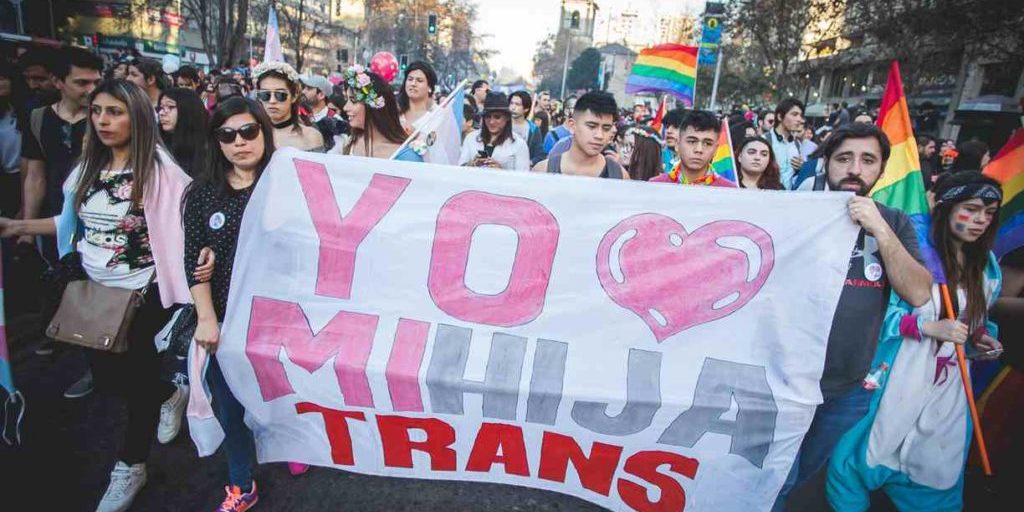
By Airam Fernández, from Santiago, Chile. Ten months after the Chilean Chamber of Deputies approved the Gender Identity Law , the regulations submitted by the government to the Comptroller General of the Republic for review were published this Wednesday. Both texts are necessary for the law to finally come into effect. One regulates the legal change of name and gender for single adults over 18 and was drafted by the Ministry of Justice and Human Rights. The other, issued by the Ministry of Health and the Ministry of Social Development and Family, addresses support programs for transgender children and adolescents, established in Article 23 of the law. This is the only mention of transgender children in the text, after they were excluded from accessing legal name and gender change. Constanza Valdés, a transgender advisor on sexual and gender diversity, criticizes the way the regulations were drafted. “There was no work with civil society, and the few meetings that (the government) held did not invite all the activists and organizations that work for this law,” he told Presentes.
No rights for children
In Valdés's opinion, the instruments are deficient. The accompaniment mechanism stipulates that children and adolescents can only access these programs with the authorization of a family member. If they do not have a family member, they can only "access information about the content of these programs," which Valdés considers detrimental. She also sees as a double-edged sword the possibility that these programs can be offered by the State or by non-profit organizations, with accreditation granted by the Ministry of Social Development and Family, through the Undersecretariat for Children.[READ ALSO: Gender identity law in Chile: children included again]
“It all boils down to a statement of good principles, starting with the fact that any organization, regardless of whether it is conservative or not, can be accredited to deliver these programs. This could clearly violate the principle of non-pathologization,” explains the trans expert. Franco Fuica, head of legislation and public policy at Organizing Trans Diversities (OTD), says that including a principle that refers to the “preceding right” of mothers and fathers to educate their children is “a dirty trick” by the government. “We believe that this directly undermines the right to progressive autonomy so that children can define and decide about their bodies, their identity, and their expressions,” he maintains.“It is necessary to promote training opportunities”
The fact that no experience or training in sexual and gender diversity is required of the professionals who will be in charge of these programs leaves Valdés bewildered. Fuica also doubts the capabilities of those who will be addressing this issue in the most remote parts of the country, especially in rural areas of the south or places far from Santiago. “It will be very complex for professionals immersed in communities that have not had access to information about trans issues. In that sense, it is essential that the Ministries of Health, Social Development, and Family promote training opportunities, so that there is at least some degree of certainty that the people working in this field know what they will be facing and how to handle it,” she recommends.[READ ALSO: “Pink boys, blue girls”: a documentary about trans children]
Valdés observes that the Ministry of Justice's regulations "are not so controversial," although they leave some issues unresolved. For example, they do not detail the notification procedure for different agencies regarding changes in registered name and sex, leaving doubts about how the obsolescence of systems in public and private institutions will be prevented—something that currently occurs as a consequence of other registry changes. A document from OTD's Legislation and Public Policy Unit, prepared following the dissemination of the content of these regulations, recommends that the data in the registration history of the registered individual should be treated as "sensitive data." Valdés also notes the inclusion of a 15-day period for issuing new identity documents, which was not included in the law approved last September, and which they estimate will come into effect in October, according to the stipulated legal deadlines.We are present
We are committed to journalism that delves into the territories and conducts thorough investigations, combined with new technologies and narrative formats. We want the protagonists, their stories, and their struggles to be present.
SUPPORT US

FOLLOW US
Related notes



We are present
This and other stories are not usually on the media agenda. Together we can bring them to light.