

Trans activist Bessy Ferrera murdered: fifth hate crime this week
Just nine days into July, statistics in Honduras already show five hate crimes. Three trans women and a bisexual man were murdered, and there was an attempted murder of a trans woman.

Share

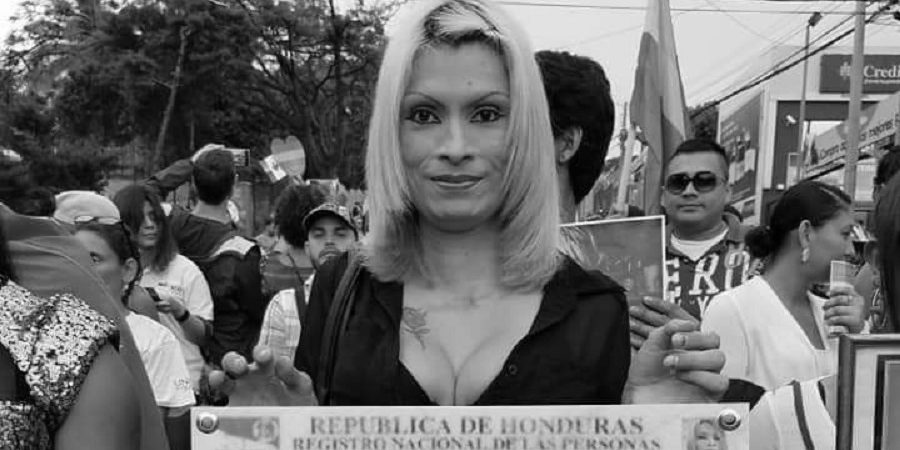
By Emy Padilla, from Tegucigalpa. In recent days, three transgender women, including human rights defender Bessy Ferrera, and a bisexual man were murdered in Honduras. There was also an attempted murder of another transgender woman. These new hate crimes, which bring the total to 21 so far this year, began on July 3 with the murder of Antonia Laínez Larios (38), who was shot to death in the early hours of that day on a street in the municipality of El Negrito, in the northern department of Yoro. Antonia was a well-known hairstylist in the area. The violence continued on the night of Saturday, July 6, with the murder of Santi Hernández Carbajal (32), a journalist who hosted a television program. Santi was shot multiple times in the city of Puerto Cortés, also in northern Honduras. And in less than 36 hours, Bessy Ferrera (40), an HIV activist for thirteen years, was murdered on Second Avenue in Comayagüela, in the Central District. Bessy was shot in the abdomen between 1:30 and 2:00 a.m. on Monday, July 8, while working as a prostitute with three other women. Another trans woman was wounded by several gunshots, and the other two women fled from their attackers.
[READ ALSO: Honduras: Three hate crimes against LGBT people in one week]
The morning hours passed when, around 1:00 p.m. on Monday, July 8, a 27-year-old bisexual man was murdered in the Oswaldo López Arellano neighborhood, one of the most troubled areas of San Pedro Sula, in northern Honduras. The victim suffered multiple gunshot wounds. Before the 2009 coup, attacks against LGBT+ people were perpetrated by police, military personnel, and other state agents for crimes such as rape, murder, kidnapping, extortion, torture, and cruel, inhuman, and degrading treatment, Indyra Mendoza, founder of the Cattrachas Lesbian Network, told Presentes. However, now these crimes are also committed by gang members, taxi drivers, private security guards, clients, and day laborers.Bessy Ferrera, a human rights advocate
For the Cattrachas Lesbian Network, the murder of Bessy Ferrera has become an emblematic case because throughout her life she was a human rights defender, especially on behalf of HIV-positive and transgender people, a cause she began championing in 2006. She fought for HIV-positive people to have access to antiretroviral treatment and to prevent discrimination in healthcare facilities. She also participated in international investigations such as Human Rights Watch's "You're Not Worth a Penny" report, which covered data from 2004 to 2009. She was also involved in a global Amnesty International campaign after being beaten by police officers in December 2008. Bessy worked tirelessly for eight uninterrupted years in defense of human rights and was one of the first people to advocate for full citizenship for transgender people, which is now known as the gender identity law. After her attack and constant threats, she migrated to Guatemala from where she returned to Honduras in 2017. She was the sister of Rihanna Ferrera, a human rights defender with the organization Cozumel Trans.[READ ALSO: LGBTI+ migrants in the caravans from Honduras to the United States]
As part of this violence, Rihanna recalled that she was the victim of a temporary kidnapping to force her to reveal her sister's location. "Since the beginning of the year, the trans community has been suffering a series of attacks for defending and demanding our rights," Rihanna Ferrera told Presentes. She also expressed her outrage and said that her sister's murder will only strengthen her resolve to continue fighting for the rights of trans people. Rihanna lamented that the Honduran justice system has done nothing in her sister's case and regarding the complaint she filed with the Protection Mechanism for Human Rights Defenders, Journalists, Social Communicators, and Justice Operators. Amid her dismay, she recalled that recently a trans woman was burned alive in the municipality of Villanueva, Cortés, while another in Roatán, Bay Islands, was stabbed and then run over by a moving vehicle until they were sure she was dead. “Another colleague was kidnapped, kicked, and then killed,” the trans rights advocate continued.Systematic violence
Nahil Zerón, an LGBT advocate with the Cattrachas Lesbian Network, stated that most of the cases registered in the last week involve trans women and that the State's failure to guarantee the rights of this population group makes this type of violence systematic. In her view, the lack of a gender identity law leads to the State's exclusion of trans women, leaving them with no other option for income than prostitution. In recent years, bills aimed at establishing gender identity legislation have been introduced to the National Congress three times. Members of the LGBTQ+ community filed a constitutional challenge against Article 112 of the Constitution of the Republic, regarding same-sex marriage, name change, and gender reassignment, as well as against Article 116 concerning adoption. The Court has not yet issued a ruling.A history of impunity
“It’s important to clarify that, although these people are being killed now, this has been a historical pattern in Honduras. There have always been these spikes in murders of three, four, or five people within a ten- or fifteen-day period, and what remains is truly impunity,” Indyra Mendoza, founder of the Cattrachas Lesbian Network, told Presentes. Ninety-six percent of crimes against LGBTQ+ people go unpunished, despite the existence of the Violent Deaths of LGBTI Persons Investigation Unit within the Public Prosecutor’s Office. This special unit is not functioning and has become a mere international requirement dictated by human rights committees and implemented by the Honduran state, said Nahil Zerón. The unit’s only task is registering cases, and paradoxically, this is limited to certifications made by human rights organizations such as the Cattrachas Lesbian Network. This is due to the lack of recognition of gender identity.From the coup d'état
In the last ten years, following the coup d'état of June 28, 2009, the Cattrachas Lesbian Network has recorded 327 crimes against members of the LGBT community. In the six months following the coup, 30 crimes were recorded, 13 of which were committed against transgender women, and nine of which occurred during curfews (suspension of constitutional guarantees).[READ ALSO: Why Honduras is one of the most dangerous places to be LGBTI]
The first reported case was that of transgender activist Vicky Hernández, who was the victim of an extrajudicial killing on the night of June 28, 2009, in San Pedro Sula, during a curfew. Vicky's case will be heard by the Inter-American Court of Human Rights (IACHR) due to the Honduran state's failure to clarify the crime. Following the 2009 coup, Indyra Mendoza speaks of a post-impunity era, because "the state allowed the murder of LGBTTI people to go unpunished, to the point that now anyone can kill us simply for being a gender-diverse person," she stated. Indyra added that at that time, hate crimes against trans people and their clients were committed in the streets by members of the National Preventive Police, the military, and municipal police.Hate speech from churches and government
On numerous occasions, individuals and human rights organizations have denounced that hate crimes against LGBTQ+ people are motivated by prejudice, fueled by conservative and religious sectors, including the government itself. In Honduras, the LGBTQ+ community is part of a large, vulnerable sector that has been cornered by religious fundamentalism, which, through the Catholic and Evangelical churches, dictates the public policy agenda. Whenever issues of advancing rights are raised, the ruling class summons pastors and priests to offer their perspectives from a moral and religious standpoint. In November 2018, the president of the National Congress, Mauricio Oliva, of the conservative and ruling National Party, proposed reforming Article 77 of the Constitution to allow pastors and ministers of faith to run for elected office. [READ ALSO: “Nominating pastors as part of politics gives one pause, because what do pastors know about politics or what do they know about the national crisis we face, beyond a religious discourse based on faith and morality? And within that discourse, that vision of the nation, LGBT people don't exist,” said Nahil Zerón. Rights such as abortion, same-sex marriage, and adoption by same-sex couples are not part of the agenda of state institutions. In fact, in 2009, the sale of the Emergency Contraceptive Pill (ECP) was prohibited because it was considered “abortifacient,” according to claims by fundamentalist religious organizations.]We are present
We are committed to journalism that delves into the territories and conducts thorough investigations, combined with new technologies and narrative formats. We want the protagonists, their stories, and their struggles to be present.
SUPPORT US

FOLLOW US
Related notes
We are present
This and other stories are not usually on the media agenda. Together we can bring them to light.