

Two hate crimes reported in one week: the Justice system is only investigating one.
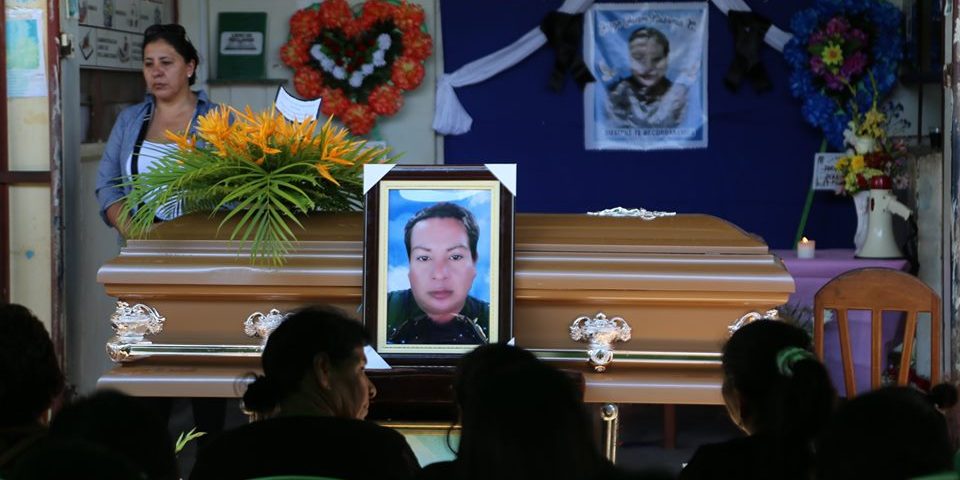
The well-known gay makeup artist Guillermo Sandoval Agurto was murdered on May 18 at his home: his body was found bound and with cuts.

Share

By Verónica Ferrari
Guillermo Sandoval Agurto was 68 years old and had worked very hard to be recognized as one of Lima's best stylists, the stylist to the stars. On Saturday, May 18, his brothers, worried because he hadn't been in touch all day, went to his apartment and managed to get inside. They found him half-naked, with his hands and legs tied, his mouth covered, and several stab wounds to his chest. He had also been beaten and strangled.
The building's security guard told the Homicide Division that Guillermo had entered the building Friday night with three young men. They left with packages, laughing, after 3 a.m. the following day. Nothing more was heard from the makeup artist after that.

The cruelty with which he was murdered suggests it was a hate crime, a murder whose ferocity sends a threatening message to LGBTQ+ people: that they cannot live their lives. In Peru, hate crimes are not legally recognized as a distinct form of homicide, where the victim's sexual orientation or gender identity is taken into account, thanks to conservative political forces that obstruct any legislation that might benefit the LGBTQ+ community.
[READ ALSO: Peru: Congress approved the repeal of Decree Law 1323 that protected the LGBTI population]
Archive death
The same is suspected to have happened to Jorge Javier Cabrera Canales, who died completely burned and under strange circumstances in the early hours of Sunday, May 19. His body was found inside the room, also consumed by fire, that he rented near his workplace, the Jorge Chávez Health Post, in Puerto Maldonado (Madre de Dios), a city in the Peruvian jungle.
[READ ALSO: The crusade against the gender approach in Peru]
According to the autopsy report, Jorge was electrocuted, which caused a short circuit that also set fire to the room where he lived. The Puerto Maldonado Prosecutor's Office is working on the hypothesis that the nurse, after showering, and probably intoxicated and barefoot, tried to turn on the fan with his wet hand, and that is when he was electrocuted.

Virginia Rojas, a worker at the Ministry of Women in Puerto Maldonado, told Presentes: “There is still nothing to confirm that it was a hate crime. The evidence is not establishing this scenario, and neighbors can't identify whether or not anyone was present that day. We have tried to locate the family members, but it has been very difficult because the mother is elderly. We have also spoken with the sister, and they tell us they don't know what happened; they don't have any other theories.”
For his part, José Urias Ruiz, a personal friend of Jorge, told Presentes that close friends believe it was a murder, contrary to the prosecution's claims. "Madre de Dios is in a state of emergency; there's a wave of crime and contract killings affecting the area."
Defenselessness before society and the law
The events are still under investigation, but if the investigation into what happened that night doesn't delve deeper, the Prosecutor's Office will most likely close the case. Jorge was openly gay, and his work as a nursing technician kept him in contact with the people who came to receive care, so he was well-known and well-liked by both patients and coworkers. This didn't prevent him from experiencing homophobic violence both online and on the street. His motorcycle was also stolen the day he died.

Jheinser Pacaya, a gay activist with the New Peru Movement, told Presentes that “in situations of increased citizen insecurity, it is the populations that are legally abandoned that end up being most vulnerable to violence. The attempt to repeal Legislative Decree 1323, which penalized hate crimes, put on hold the possibility of protecting the LGBTI population, and even of ensuring that prosecutorial or police investigations include a gender, rights, and sexual diversity perspective in their inquiries, so as not to end up seeing cases like the ones we are seeing now, where an investigation can be quickly closed, these cases are not registered as homophobic violence, and we still lack official data on what is happening in our lives.”
The social and legal vulnerability of the LGBTI population ultimately renders hate crimes against this community invisible. To date, there is no legal framework of constitutional rank to protect them.
We are present
We are committed to journalism that delves into the territories and conducts thorough investigations, combined with new technologies and narrative formats. We want the protagonists, their stories, and their struggles to be present.
SUPPORT US

FOLLOW US
Related notes

We are present
This and other stories are not usually on the media agenda. Together we can bring them to light.