

Mobilization in Santiago over the lesbian attack on Carolina Torres
Carolina is currently suffering from internal bleeding and a skull fracture as a result of the severe blows she received from a group of men.


Share

By Víctor Hugo Robles, from Santiago, Chile
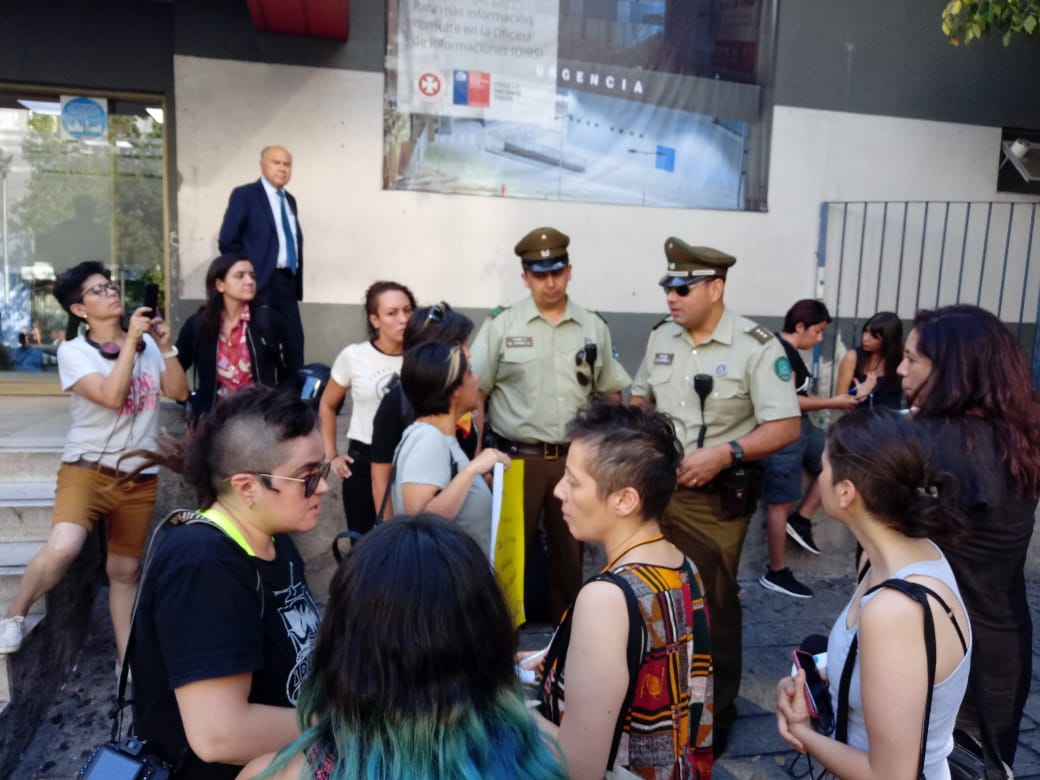
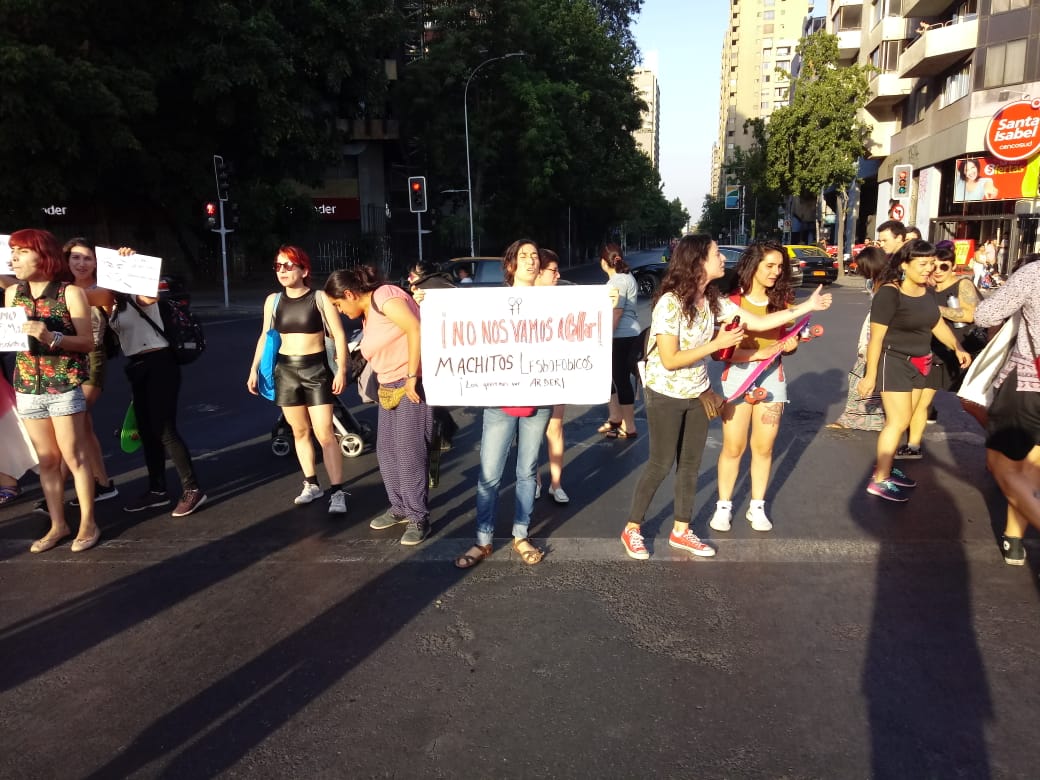
On Friday, February 15th, at 6:00 PM, a large group of activists and members of the LGBTI community, heavily guarded by the Chilean police (Carabineros), gathered at the entrance of the former Central Post Office (Posta Central) to speak with the press and publicly call for action in response to the hate crime suffered by 24-year-old lesbian Carolina Torres. Carolina is currently suffering from internal bleeding and a skull fracture as a result of the severe injuries she sustained.
On the night of Wednesday the 13th, Carolina was walking hand in hand with her partner Estefanía, an act that was commonplace for them, ended in a brutal scene of blows and insults, a criminal act perpetrated by three individuals who had previously threatened and assaulted Carolina due to her sexual orientation.
This was not a random incident but a vicious act of lesbophobia against people openly expressing their identity. The police labeled the case as "serious injuries," while lesbian organizations denounced it as "attempted murder."
Lesbian feminist organizations point out that Carolina had been subjected to harassment and bullying for a long time, even at her own job where – they denounce – she was “fired for being a lesbian and a trans woman,” the Lesbian Group Breaking the Silence wrote on social media.
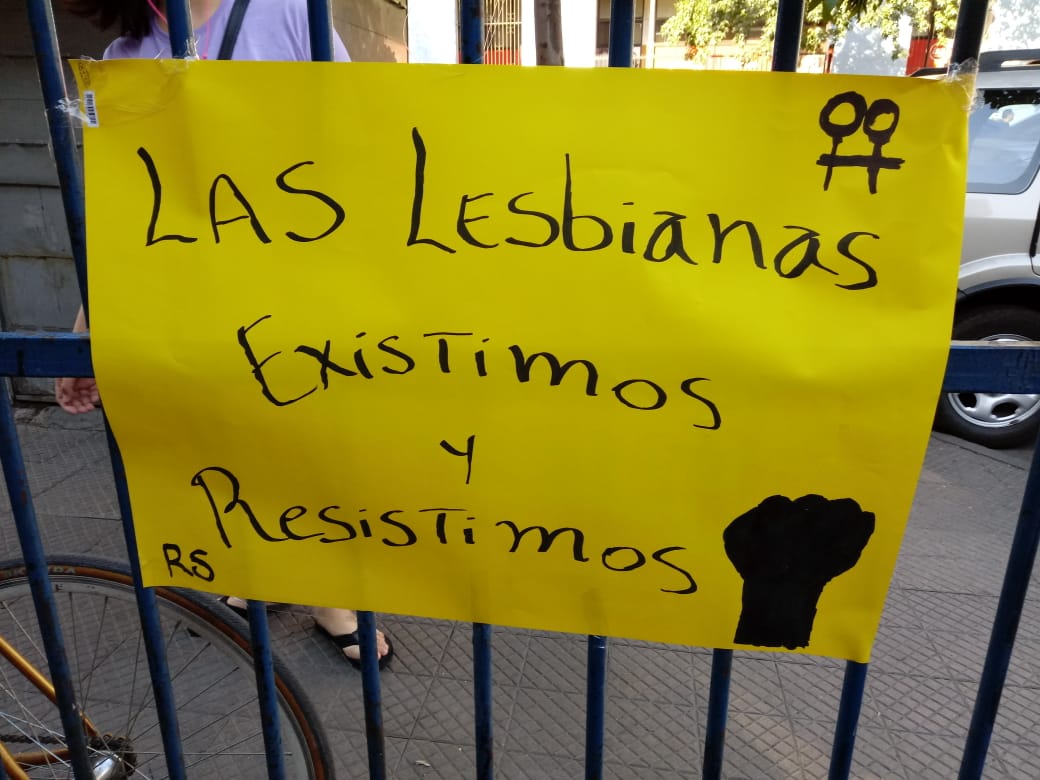
According to an official at the Posta Central hospital, where she is hospitalized, Carolina is “out of danger.” The hospital was the epicenter of the large public demonstration by the LGBTI community demanding “Justice for Carolina.”
The government is calling for people to report it.
The demonstration, convened by various sexual diversity organizations, particularly lesbian feminist groups such as the Breaking the Silence Group, sought to express repudiation, adding community strength and making an urgent call to "alert" in the face of the recurring acts of violence and discrimination towards the LGBTI community, with hate crimes being the most reprehensible, some of which are in complete impunity as is the case of the young lesbian Nicole Saavedra.
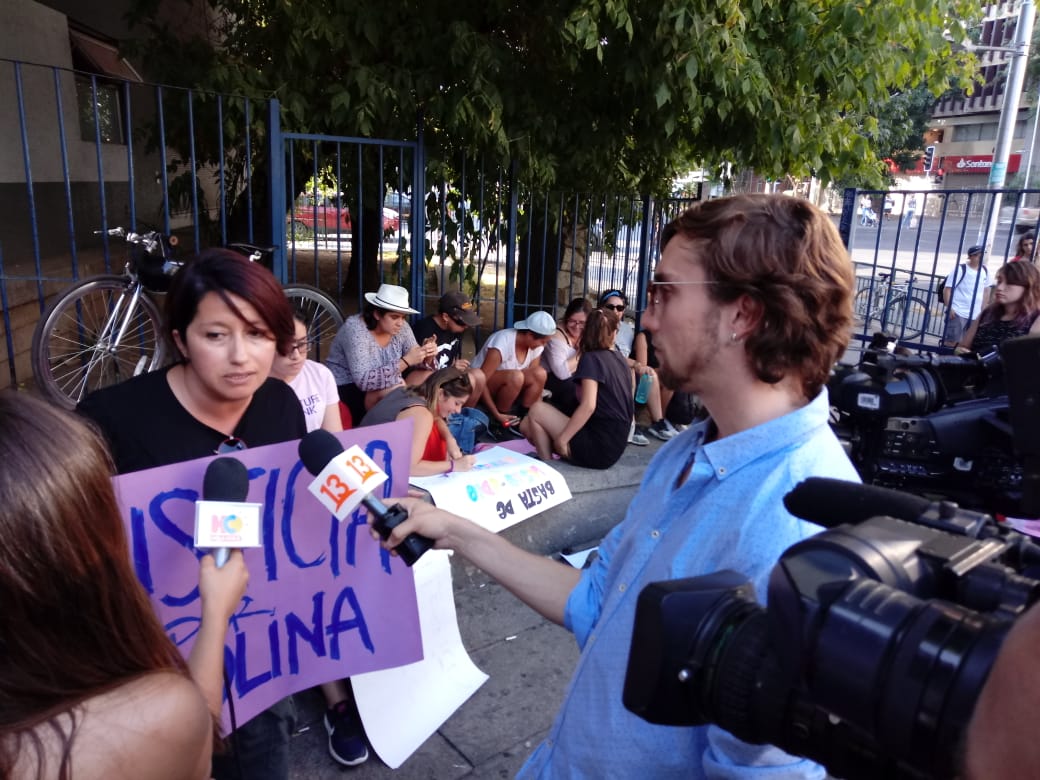
Among lesbian activists and television cameras, the presence of Katherine Martorell, Undersecretary of Crime Prevention of the Ministry of the Interior, stood out. Along with "deeply condemning what happened," she stated that she was in contact with Carolina Torres' family, publicly reprimanding the civil police who allegedly did not properly and initially receive the victim's family's complaint.
“The police must always accept reports, and that's why I asked the family for all the information. They stated that they went to the Pudahuel Investigations Police at 9:00 a.m. (on February 14th) and that they were refused entry, unlike what happened with the Chilean National Police (Carabineros), who accepted their report at 3:00 p.m. at the 55th Police Station in Pudahuel and began taking the appropriate action,” said the Chilean government official, adding, “I hope to speak with the Investigations Police so that the situation can be reviewed and, if sanctions are necessary, they should be imposed, because reports must always be accepted. We urge people to report crimes because many times they are hesitant; we have a very large number of unreported cases.”
 “We are on alert due to violence against the LGBTIQ community”
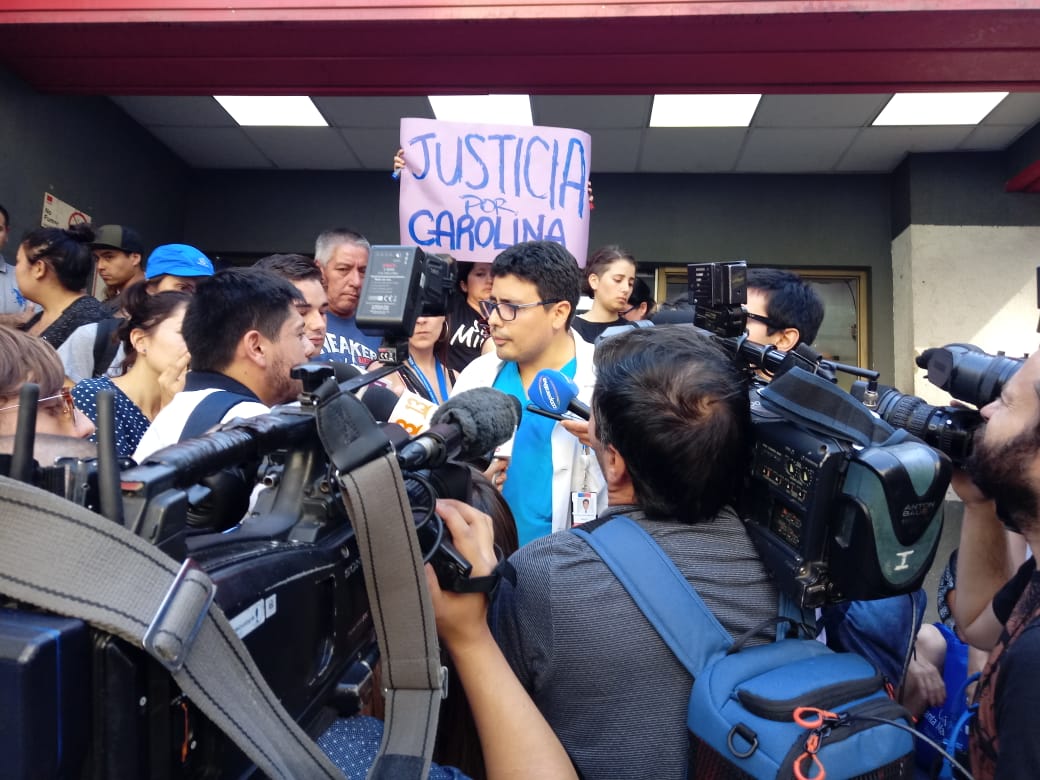 “We are on alert due to violence against the LGBTIQ community”
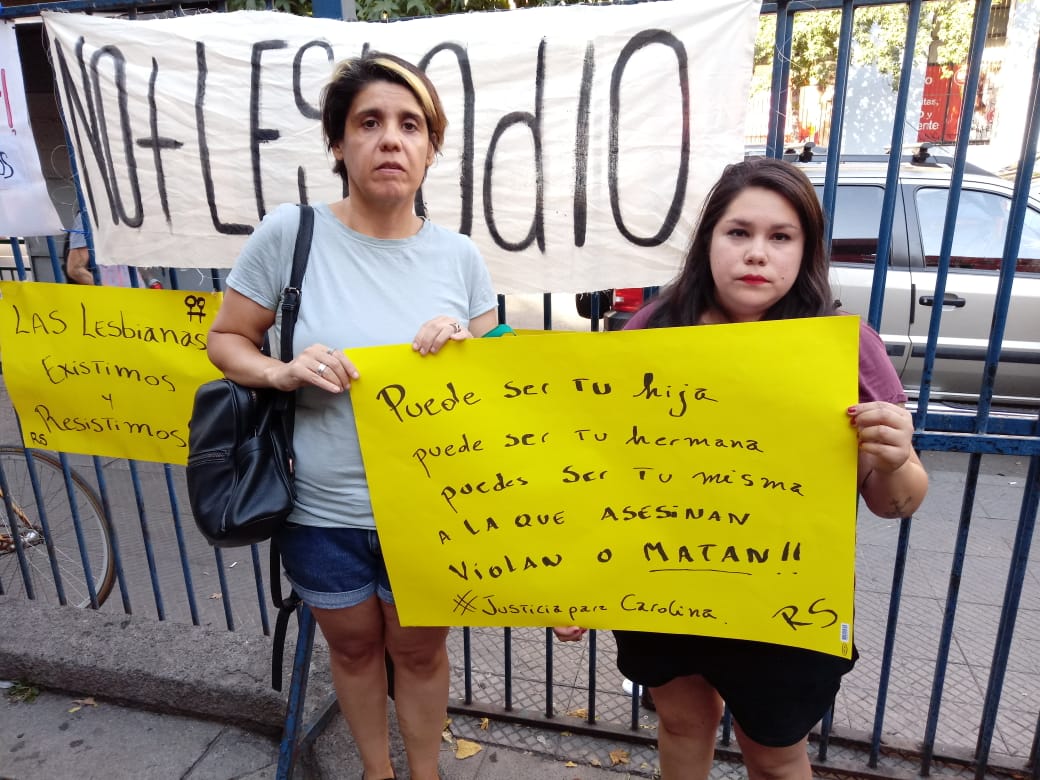
Erika Montesinos of the Lesbian Group Breaking the Silence stated that the call for the demonstration was made jointly with a Network of Feminist Lesbians that includes autonomous lesbian women. “Regardless of the organizations advising on the case, we wanted to hold this demonstration of condemnation and support,” Montesinos told Presentes , denouncing that “the cases continue to increase; this is not the first, and even in the towns of Limache and Quillota there are coordinated groups of men who harass and intimidate lesbian women, which is why we are declaring a state of alert.”
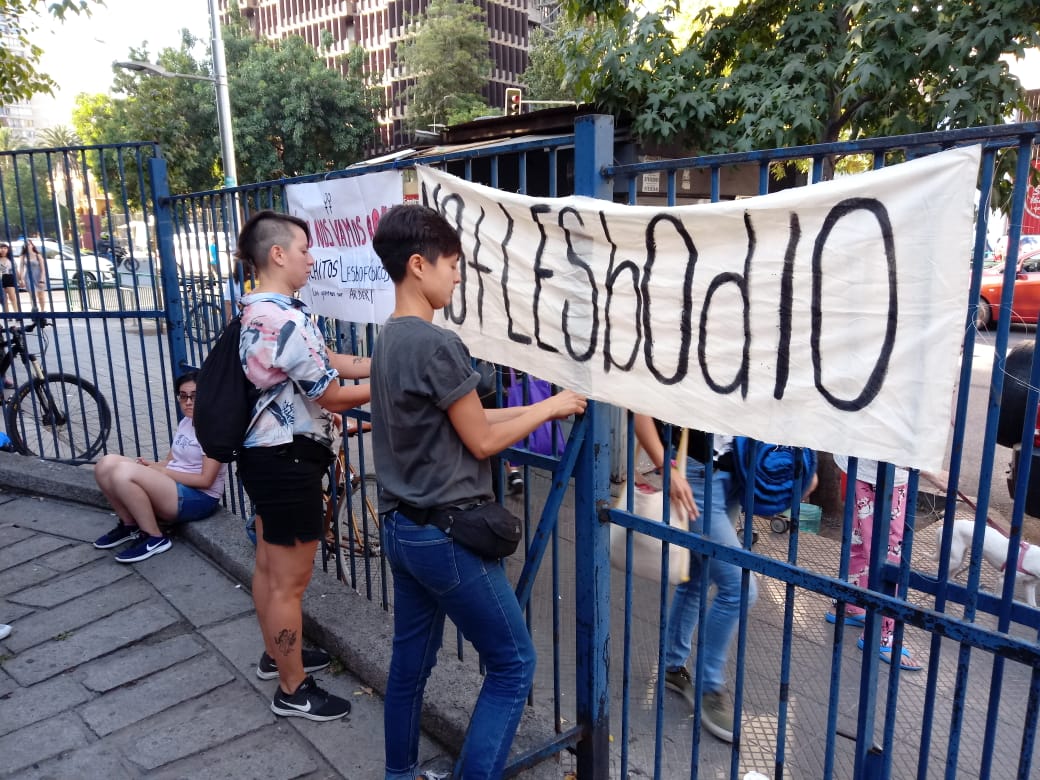 The renowned activist points out that the increase in acts of violence against the LGBTI community in Chile is due to the "fundamentalist and religious discourses that are emerging, that are becoming visible; the issue of evangelical religion in rural areas is very worrying," she denounces, adding that "these attacks do not stop at verbal abuse but also include physical attacks and serious aggressions."
“We gain nothing by carrying out visibility campaigns for our community's support only in downtown Santiago if we forget about our comrades in other regions and the most vulnerable outlying areas of the city, because that constitutes class discrimination. We must mobilize, denounce, and defend ourselves against this violence against our community in its various forms,” Montecinos reflects.
Opportunism on the part of the authorities?
Regarding the presence of government authorities at the demonstration, Erika Montecinos pointed out that "we must always be wary of these opportunistic gestures because they surely see this case as an opportunity, as was the Zamudio case," she notes.
We condemn and will prosecute all acts of aggression, such as the one suffered by Carolina Torres, who is in serious condition after being brutally beaten because of her sexual orientation. We all deserve to live in peace, with dignity, respect, and tolerance. Only in this way will we build a more inclusive and better Chile.
— Sebastian Piñera (@sebastianpinera) February 16, 2019
For her part, Claudia Amigo of Familia es Familia (Family is Family) reaffirms Erika Montecinos's distrust of the authorities' actions, recounting that—surprisingly—in the middle of the demonstration, "we happened to run into the person in charge of crime prevention at the Ministry of Justice, who informed us that the Chilean government had assigned lawyers and psychological support to Carolina Torres's family," adding that "we know how this works; we know that the lawyer and the psychological support are for the press. For them, the authorities, when justice isn't served, when these guys go unpunished like what happened with Nicole Saavedra, they won't care."
We are present
We are committed to journalism that delves into the territories and conducts thorough investigations, combined with new technologies and narrative formats. We want the protagonists, their stories, and their struggles to be present.
SUPPORT US

FOLLOW US
Related notes


We are present
This and other stories are not usually on the media agenda. Together we can bring them to light.