

El Salvador: For the first time, transgender people were able to vote without incident
One of the challenges of these elections was to minimize the obstacles that transgender people faced in past elections, where many were unable to vote.

Share

By Paula Rosales (photos and text) from El Salvador
El Salvador elected its president yesterday for the next five years, and for the first time, transgender people were able to vote without facing serious incidents of discrimination. One of the challenges of this election was minimizing the obstacles transgender people faced in past elections, where many were unable to vote.
This year with greater emphasis (and since 2014 and 2015 at polling stations where problems arose), the Supreme Electoral Tribunal (TSE) instructed all voting boards to allow voting in an environment free of discrimination for trans women and men.
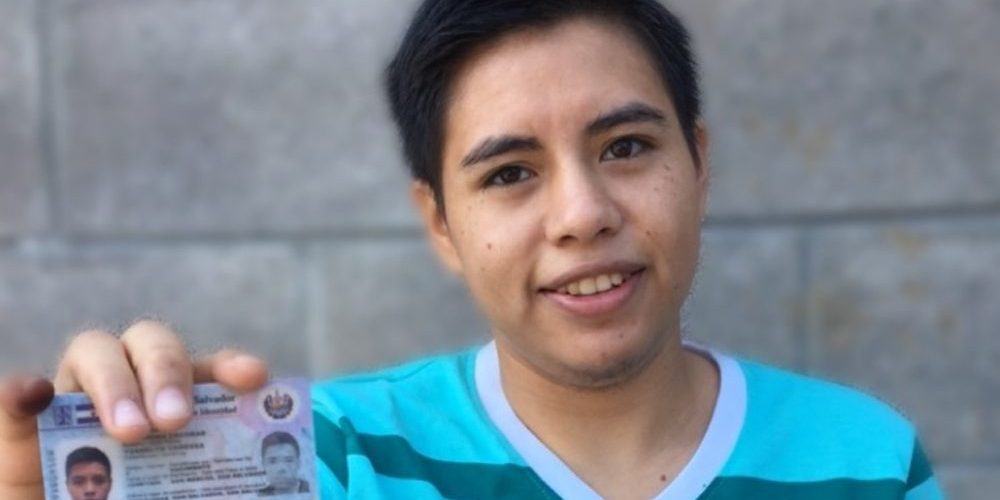
Gabriel, a young transgender man, arrived calmly yesterday at the polling station in a populous city in El Salvador. He carried nothing but his identity document, which he would later hand over to the officials at his assigned polling station.
“Transgender people will not be denied the right to vote when the photograph on their DUI does not match their physical appearance (gender expression) ; it will be sufficient for the JRV to verify their physical features and that there is a match between the name, number and signature recorded on the DUI and the data in the search register,” the TSE ordered.
Although the population of the impoverished Central American country is -for the most part- conservative, the discrimination and obstacles reported in past elections have been gradually overcome.

The experience of a young transgender person
At the center's gate, Gabriel was met by a delegate from the Human Rights Ombudsman's Office (PDDH), authorized to report even the smallest instance of discrimination.
Together they looked up his number on the electoral register and went to the table where Gabriel had cast his vote for the country's new president. He handed over his ID so that one of the poll watchers could verify that the information matched the young man standing before them.
They handed him a ballot, and Gabriel hurried to vote. They returned his ID, he signed, thanked them, and said goodbye. It was a quick process.
“Previously there has always been prejudice against people from the community, but there has been significant progress and we see that they are taking into account the recommendations that the electoral tribunal has given,” Humberto Portillo, a lawyer from the Attorney General's Office, told Presentes.

Gabriel Barahona is a 23-year-old transgender man who voted without incident in Sunday's presidential election in El Salvador. He works in communications for a human rights organization and studied fine arts at El Salvador's public university. He is aware that none of the candidates offered concrete proposals for the LGBTI community and that their speeches only touched upon them marginally in the context of healthcare .
READ MORE: Elections in El Salvador: candidates ignore the LGBT+ community
“The LGBTI population has other needs, just like everyone else, not only in health. What health encompasses is not comprehensive, because it's not just about HIV or hormones; health care must be differentiated,” Gabriel told Presentes.
Despite the progress, trans women from the Solidarity Association to Promote Human Development (ASPIDH) carried out electoral observation in some polling stations in the capital, and reported that the only obstacle they encountered was an incident of mockery towards a trans woman at the time of voting.
“I was assigned to vote near my house and I had no problems. In fact, the PPDH was going to move to where most of us trans women were assigned to vote, and nothing inappropriate happened. The only incident involved a colleague who was mocked at the polling station,” said Mónica Linares of ASPIDH.
“Not all obstacles to LGBTI voting have been overcome yet.”
“Not all obstacles to LGBTI voting rights have been overcome. Many prejudices still exist in Salvadoran society. Although this campaign aimed to raise awareness about respecting each person's identity, there is still a lot of prejudice among members of the polling station boards,” Juan Carlos Hernández, head of the departmental electoral board, told Presentes.
El Salvador elected a new president on Sunday who will have to overcome serious fiscal problems, high homicide rates, and entrenched corruption in all state institutions over the next five years. And of course, violence against LGBTI+ people.
READ MORE: Karla Avelar: “In El Salvador there is a genocide of LGBTI people”
More than 1.3 million people voted for the young businessman and former mayor of the capital, Nayib Bukele. An estimated 2.6 million people cast their votes, representing 51 percent of registered voters.
Share
We are present
We are committed to journalism that delves into the territories and conducts thorough investigations, combined with new technologies and narrative formats. We want the protagonists, their stories, and their struggles to be present.
SUPPORT US

FOLLOW US
Related notes


We are present
This and other stories are not usually on the media agenda. Together we can bring them to light.