

The 10 good news stories of 2018 for LGBTI people in Latin America
The 10 good news stories of 2018 for LGBTI people in Latin America


Share

Photos: Presentes Agency and La Diaria
2018 was marked by conflicting forces regarding human rights for LGBTI people in Latin America. On the one hand, there was an exemplary ruling in Argentina that, for the first time, condemned a transphobic murder, and countries like Chile and Uruguay passed laws for transgender people. On the other hand, anti-rights groups like "Don't Mess With My Children" filled public squares and infiltrated Latin American parliaments, such as those in Paraguay, Chile, Argentina, and Guatemala. But let's focus on the good news (to read the full article, click on the title of each piece) .
 1. Inter-American Court of Human Rights: States in the region must guarantee gender identity and marriage equality
 1.
1. January 9, the Inter-American Court of Human Rights (IACHR) declared in a landmark decision that the rights of same-sex couples and transgender people are protected by the American Convention on Human Rights. Furthermore, it ordered the signatory states to guarantee their full exercise.
“This is the first time the Inter-American Court of Human Rights has ruled on gender identity. In doing so, it states that the right is enshrined in the Convention and must be guaranteed. And it breaks with the biological paradigm.”
2. “A Fantastic Woman”, starring a Chilean trans actress, won the Oscar
 2. “A Fantastic Woman”, starring a Chilean trans actress, won the Oscar
In March , the Chilean film "A Fantastic Woman," directed by Sebastián Lelio and starring Daniela Vega (28 years old), won the Oscar for Best Foreign Language Film. The film explores violence and discrimination through the character of Marina, a trans woman who faces the sudden death of her partner, Orlando (Francisco Reyes), 20 years her senior. During her grieving process, her ex-partner's family prevents her from living in peace, subjecting her to reproaches and prejudice.
 3. Argentina: For the first time, the State provided reparations to trans survivors of the dictatorship
In May, Carolina Boetti—a 55-year-old actress living in Rosario—became the first trans woman in the country to receive a pension granted to victims of the dictatorship, under Provincial Law 13.298. The government of Santa Fe presented her with the resolution recognizing that she was persecuted and unlawfully deprived of her freedom “because of her gender identity” during those years.
4. Legal abortion received preliminary approval in the Argentine Chamber of Deputies
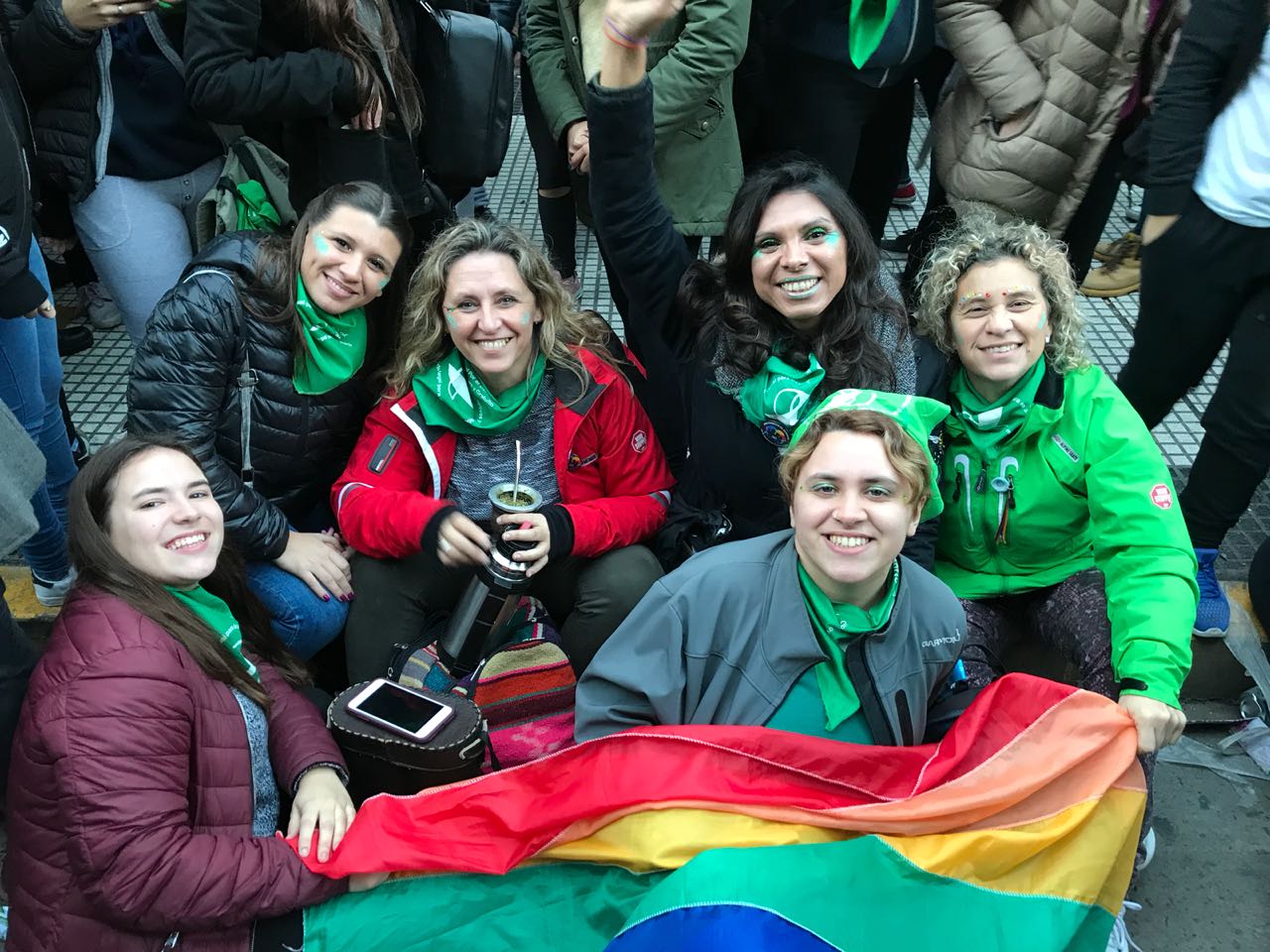 4. Legal abortion received preliminary approval in the Argentine Chamber of Deputies
In a historic day for the women's, lesbian, bisexual, transvestite, and transgender movement, after a session that lasted more than 23 hours, the Argentine Chamber of Deputies gave preliminary approval on June 14 to the bill legalizing abortion. It passed with 129 votes in favor and 125 against.
5. Historic sentence: Life imprisonment for hate crime against Diana Sacayán's killer
 5.
5. On June 18, the Oral Criminal and Correctional Court No. 4 of the City of Buenos Aires sentenced Gabriel David Marino to life imprisonment by majority vote for the murder of transgender human rights activist Amancay Diana Sacayán. In its verdict, the court determined that it was a hate crime and that gender-based violence was a factor, as defined in sections 4 and 11 of article 80 of the Penal Code. This is an unprecedented and historic ruling. This trial marked the first time the term "transvesticide" was used in court records.
6. Argentina: National transvestite-transgender employment quota entered Congress
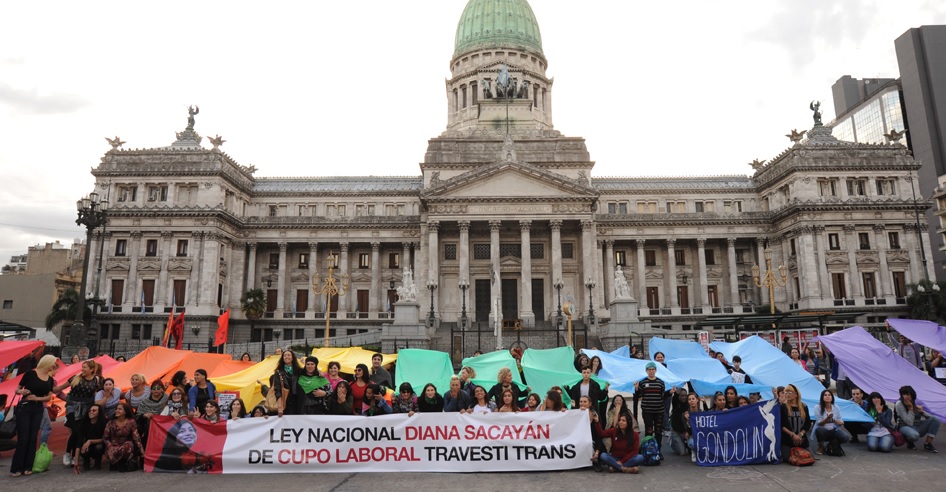 6. Argentina: National transvestite-transgender employment quota entered Congress
The National Front for the Diana Sacayán Law presented a bill in July to the Chamber of Deputies seeking to establish a 1% job quota for transgender, transsexual, and gender-diverse people in the national public administration. The initiative entered Congress with the support of more than 40 deputies from six legislative blocs.
7 For the first time, violence against LGBT people reached the Inter-American Court of Human Rights
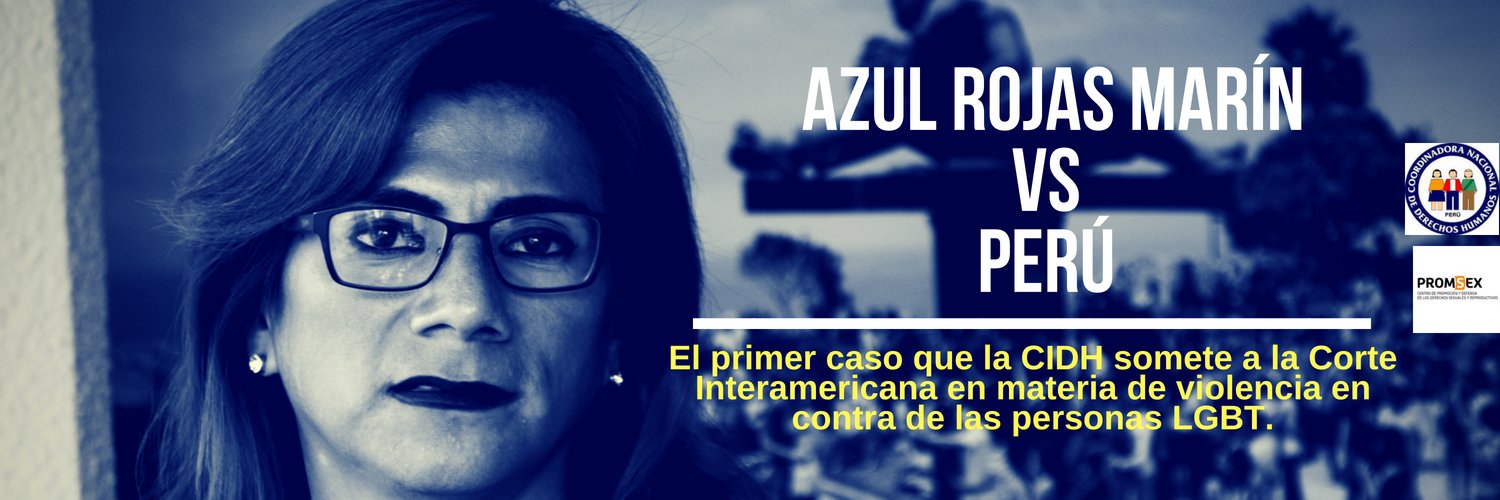 7 For the first time, violence against LGBT people reached the Inter-American Court of Human Rights
In August, after verifying Azul Rojas Marín's allegations of beatings and sexual abuse at the hands of police officers in 2009 and determining that it constituted "bias-motivated violence with elements of torture," the case was referred to the Inter-American Court of Human Rights. This is a historic event: it is the first case of violence against an LGBTI person that the IACHR has brought before the Inter-American Court . The ruling is also expected to be groundbreaking, as Azul's case received no justice in her own country.

8. Chile passed the gender identity law
In a historic day in Valparaíso, on September 12, with 95 votes in favor and 46 against, the Chilean Chamber of Deputies passed the right to gender identity into law. The previous week, it had been approved in the Senate after five years of debate and back-and-forth negotiations between the two chambers. The law only applies to those over 14 years of age, prompting LGBTQ+ organizations to file appeals with the UN and the Inter-American Commission on Human Rights (IACHR).
9. Uruguay passed the comprehensive law for transgender people
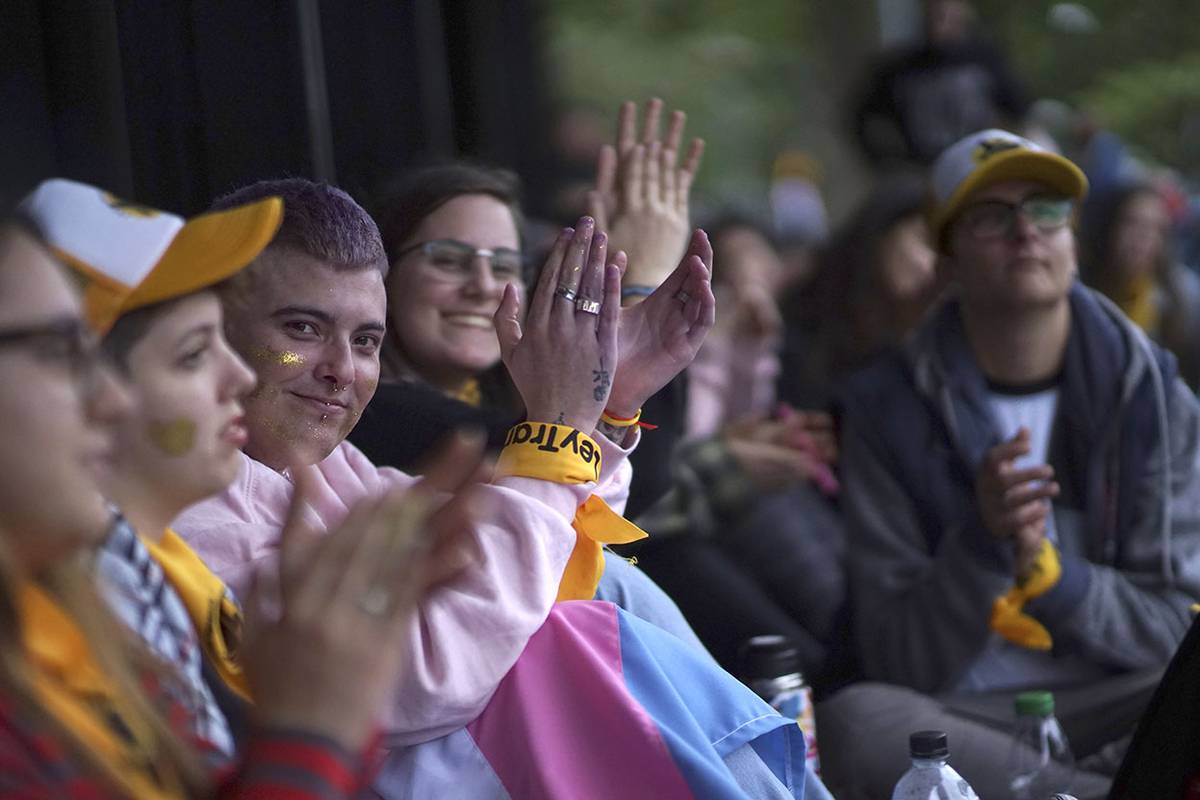 9.
9. The Chamber of Deputies approved the Comprehensive Transgender Law in October. Uruguay has had a gender identity law since 2009, but it was limited exclusively to changing the name on identity documents. Until now, there was no law that addressed the rights to health, housing, and employment for transgender people. Therefore, this comprehensive transgender law , which includes these rights as well as historical reparations for survivors.
10. #Chile Sexual orientation and gender identity will not be obstacles to adoption
 10. #Chile Sexual orientation and gender identity will not be obstacles to adoption
After approving the New Adoption Law in June, the Chamber of Deputies of Chile included in December all the categories protected from discrimination by the “Zamudio Law”: in this way, it is established that neither sexual orientation nor Gender Identity can be an obstacle.
We are present
We are committed to journalism that delves into the territories and conducts thorough investigations, combined with new technologies and narrative formats. We want the protagonists, their stories, and their struggles to be present.
SUPPORT US

FOLLOW US
Related notes



We are present
This and other stories are not usually on the media agenda. Together we can bring them to light.