

2018: an attack or murder every 3 days against LGBT people in Argentina
In 2018, there were at least 94 hate crimes in Argentina where the victims' sexual orientation, gender identity, or gender expression were the motives for discrimination and violence. That's one murder or attack every 77 hours.

Share

Report by Rosario Marina
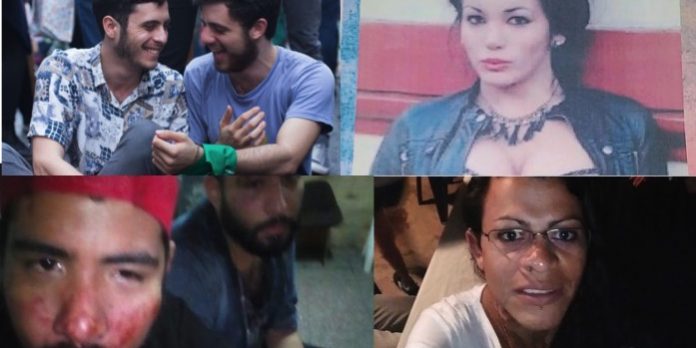
In 2018, there were at least 94 hate crimes , where the victims' sexual orientation, gender identity, or gender expression were the motive for discrimination and violence. This equates to one murder or attack every 77 hours . While this represents a decrease compared to 2017, when 103 such crimes were recorded, the difference is minimal.
Of all the hate crimes that occurred between January 1 and October 31 of this year, 23 were murders, and the rest were cases of physical violence that did not result in death. This data comes from the annual report of the Federation of Lesbians, Gays, Bisexuals, and Transgender People, which compiles information from the Ombudsman's Office of the City of Buenos Aires, media outlets, and LGBT organizations.
[READ ALSO: “Ideology of hate” against LGBT people is advancing in Latin America]
Unknown cases, from provinces or cities that lack ombudsman offices with a gender perspective, are left out. The same report warns: “It is impossible to record the violence suffered daily by LGBT people. This report only includes cases that have reached the media or been reported.”
Of the total number of LGBT people who were victims of prejudice-related violence, 50% of the cases correspond to trans women (transvestites, transsexuals and transgender people), followed by cis gay men at 38%, then lesbians at 11%, and finally trans men at 1%.
[READ ALSO: Hearing before the IACHR: reports on increased violence against trans people in Argentina]
According to the Trans Memory Archive and other activists, along with Sister Mónica Astorga, a cloistered nun from Neuquén, 11 trans women were murdered in Argentina during 2018. In many cases, the location and age of the victims are unknown. This information is gathered through social media and trans networks, which report the deaths of friends and colleagues, including the circumstances and location. They also document more than 70 trans deaths in total, many due to lack of access to healthcare , victims of "social transvesticide."
According to the partial report from the National Ombudsman's Office's Observatory of Femicides, six transgender women were murdered. They represent 2.4% of all femicide victims. This report includes the murders of women (girls, adolescents, and/or adults) and transgender people, perpetrated by men for reasons related to their gender, classified as femicide or as suspicious deaths under suspicion of femicide, as well as related femicides. The data is the result of an analysis of news coverage between January 1 and November 15, 2018.
According to the survey, the victims were between 22 and 49 years old. The ways in which they were killed included: stabbed, dismembered, burned, strangled, and shot.
Murders
January 14 , two women were stabbed to death in Río Nio, a small town 60 kilometers northwest of the city of San Miguel de Tucumán. Lourdes Reinoso , a 30-year-old trans woman, and her great-aunt Francisca Ofelia Palacio, 80, were attacked with a knife, allegedly by Lourdes's ex-partner.

Cynthia Moreira was found April 17 , but her family and friends had been desperately searching for her for almost two months. Cynthia was a 25-year-old trans woman. Cynthia was not the first: Tucumán is one of the most violent provinces in Argentina for trans people.

Adriana Bonetto was 45 years old and lived in San José del Rincón, Santa Fe province, where she was murdered. On February , a friend and her goddaughter found her dead. Cuqui, as her friends knew her, was wrapped in a bloodstained sheet and had multiple stab wounds on different parts of her body.

In March , a 24-year-old trans woman was murdered in the same province. Her body was charred and found in a garbage dump in Recreo, 14 kilometers from the provincial capital. Her identity was confirmed days later. The victim's name is Sol , but the justice system did not respect her gender identity and referred to her using the initials of a male name.
DJA, 65 , was murdered, beaten and stabbed twice. On April , he was found lying in bed in his home in Béccar, in the San Isidro district of Buenos Aires province. Two days later, a 29-year-old man was arrested for the crime. A perfume was the key piece of evidence that led the investigation to the alleged perpetrator. Members of the Conurbanos por la Diversidad (Suburbs for Diversity) group called for the case to be investigated as a hate crime.
Street attacks and assaults
March 22nd as Sofía Del Valle exited the subway station on Corrientes Street in Buenos Aires, she was grabbed by the neck and dragged a few meters away to be beaten. She had already been attacked twice before, from behind. It's the same group of men who always attacks her because of their homophobia. "We don't want weirdos in the neighborhood. We know you went with the cops, you fucking lesbian," they told her the last time.

March 24, Matías Villalba and Ariel Croce were attacked by two men as they arrived at the General Roca train station in Quilmes, Buenos Aires province. It was around 7 a.m. On March 28, they filed a complaint with INADI (National Institute Against Discrimination, Xenophobia and Racism).

Fernando Adrián Albornoz is April 23 , as he arrived home in a building in the Barrio Norte neighborhood of Buenos Aires, he was attacked by a neighbor: he pushed him against the elevator mirror and said: “I don’t want to see any faggots or queers in my building. If I see you here again, I’ll kill you.”

July 23 , in the city of La Plata, Hermann Müller , a 30-year-old actor, was attacked in a hate crime. “This guy’s a faggot, let’s kill him!” two men yelled before attacking him. Hermann kept walking, but before he knew it, they were beating him. He says that the police station refused to take his report.

On Saturday of that same week, Jhonan de la Barrera and his partner were beaten by a group of men, also in the capital of Buenos Aires province. And on Sunday, he was assaulted and attacked while being called “fucking Bolivian” and “fucking faggot.” Three incidents in one week that raised concerns throughout the city.

Cristina Espíndola September 8th, at an aquarium in Escobar , Buenos Aires province. Later, she recorded a video, which she uploaded to Facebook, recounting what happened.

Mirna Antonella Di Marzo , a 30-year-old trans woman, was attacked in late October by a man outside the Caribe nightclub in the city of General Güemes, 50 km from Salta. It was not the first time Mirna had been attacked due to prejudice against her gender identity.

October 10 , as Fernando was leaving his house, a kick to the leg, just below the calf, made him lose his balance. It was Matías Álvarez, the same neighbor who had assaulted and threatened to kill him in April. While kicking him in the face on the ground, he said, “You fucking faggot, I already warned you to get out of here. You ruined my life,” referring to the legal proceedings he faces for reporting the first attack.
October 21st , at eleven o'clock at night, Tomás and Joaco were having dinner at the 'Academia della Pizza' pizzeria in the Palermo neighborhood of Buenos Aires. “They chased us and when they caught up with us they separated us. The waiter who served us and the cook hit me in the face and back, and I hit my leg on the floor. They had us by the arm; they were much bigger than us,” Tomás explained the next day.

December 1, Federico Pasquali was beaten by three security employees of the Mata Mua nightclub in Ramallo, Buenos Aires province, and ended up hospitalized with a suture in his eye, a fractured septum, and damage to the orbital cavity.

Institutional violence
The Trial and Appeals Court of Paraná, based in La Paz (Entre Ríos), sentenced Joe Lemonge , a trans man, to five years and six months in prison for attempted homicide. The reading of the sentence began shortly after noon and lasted almost two hours. Throughout the hearing, Joe was referred to using female pronouns, despite his self-identified gender as male.

OTRANS Argentina denounced a brutal beating and threats suffered by a trans woman on November 26th at the hands of a police officer from the 9th precinct in the city of La Plata. According to the complaint, filed with the General Auditor of Internal Affairs, Ambar was intercepted by a police officer who, without saying a word, began to beat her and threatened her by putting his gun to her head, pulling her hair, punching her breasts, leaving bruises and scratches, throwing her to the ground, and causing hematomas on her knees and legs.
Discrimination
Florencia B. (27 years old) and Irupé B. (23 years old April 20, they were assaulted by the owner of a supermarket in Morón (Greater Buenos Aires) while shopping. The couple filed a complaint with the Morón Prosecutor's Office No. 2 and the National Institute Against Discrimination, Racism and Xenophobia (INADI).
In the early hours of Sunday, May , a player from the Córdoba Rugby Club entered a party at the Casa Warhol LGBTQ+ bar in the city of Córdoba with a group of men. After a series of threats and insults, he violently attacked one of the owners and insulted her business partner. He has already filed a complaint with the prosecutor's office.
Carolina Perona filed a complaint against the authorities of the Madre de los Emigrantes Institute (IME) in La Boca (Buenos Aires) for refusing to hire her as a teacher when they learned she was going to marry a woman. She has already filed a complaint with the National Institute Against Discrimination, Xenophobia and Racism (INADI) and is now pursuing a labor lawsuit.
Upon leaving Fiesta Plop, a well-known gay party in Buenos Aires, Emanuel Moyano was refused entry to a bus. “On top of being disabled, you’re a faggot,” the driver of bus number 3004 on line 168, operated by the Expreso San Isidro company, told him. As he was about to get off, the passengers rallied around him and confronted the driver.
September 7 , Oscar Perassi, deputy director of Neighborhood Policies, addressed Noemí Maldonado , president of the electoral board of a neighborhood center, as "sir" and "gentleman," according to a complaint filed with INADI (National Institute Against Discrimination, Xenophobia and Racism). Diversity organizations demanded his resignation.
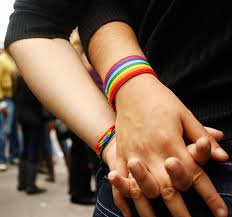
September 28 , a student at Santa María School in the city of Salta decided to publicly acknowledge his homosexuality and began wearing a bracelet with the rainbow flag. School authorities immediately told him that this was not permitted at the institution.
In early October , Micaela Ruiz and her companion were at the San Telmo Market. “You can’t do that here. I have nothing against your condition, but you have to leave. If you don’t leave, you’re putting my job at risk. There are cameras,” a man told them. He then kicked them out.
We are present
We are committed to journalism that delves into the territories and conducts thorough investigations, combined with new technologies and narrative formats. We want the protagonists, their stories, and their struggles to be present.
SUPPORT US

FOLLOW US
Related notes

We are present
This and other stories are not usually on the media agenda. Together we can bring them to light.