

#SantaFe: A young trans woman was murdered, burned, and thrown into a garbage dump.
Sol's charred body was found in a garbage dump in Recreo Sur on Wednesday. She had been dead for two days. The Santa Fe justice system denies her self-identified gender and officially refers to her by the initials of her male name. This is the second transphobic murder in the province in just over a month: on February 8, Cuqui Bonetto was murdered in Rincón.


Share

By Soledad Mizerniuk and Victoria Rodríguez, from Santa Fe. A 24-year-old trans woman was murdered in Santa Fe. Her charred body was found in a garbage dump in Recreo—14 kilometers from the provincial capital—on Wednesday, March 7, but her identity was confirmed days later. This is the second transphobic murder in the province in a month: on February 8, Adriana Cuqui Bonetto, another trans woman, was murdered in San José de Rincón. It is also the third hate crime in the province so far in 2018. The victim's name is Sol, but the justice system does not respect her gender identity and refers to her using the initials of a male name. “The victim is a 24-year-old person whose initials are OOG. Prosecutor Andrés Marchi—after meeting with family members—requested that her identity not be released to protect the family's privacy,” the Public Prosecutor's Office announced on Friday the 9th. The news came on the eve of International Women's Day. “The trans community is deeply hurt. We are devastated; we no longer know how to fight against all these hate crimes. First it was Cuqui Bonetto and now Sol,” Alejandra Ironici, a leading figure in the Santa Fe trans community, told Presentes.
[READ ALSO: Transvesticide: A trans woman was murdered in Santa Fe: Adriana Cuqui Bonetto]
On Wednesday, a man passing near a vacant lot in the southern part of Recreo spotted the charred body among the trash and alerted the authorities. As soon as the police arrived, rumors began circulating that it was a trans woman. It is estimated that the body had been there for at least a day and a half. Her body showed signs of extreme violence. Forensic examinations identified Sol through fingerprints and a tattoo. Sol had not yet legally changed her gender marker on her national identity document. But she had been Sol since she was 13. Her family knew it, as did her friends, neighbors, and classmates. Accepting oneself in solitude One of her friends, who asked to remain anonymous, told Presentes that Sol's short life—she had turned 24 in January—was marked by multiple forms of exclusion and violence. At 13, Sol spoke to her family and put into words what she felt. They didn't understand. They didn't understand: "She loved playing soccer so much..." According to the same source, her mother frequently filed police reports about her running away from home. School didn't help her either. She dropped out of high school as soon as she started. Although she responded to every taunt with her fists, she couldn't take it anymore. At that time, she was living in the city of Santa Fe. After one of her escapes, she returned completely herself. With long hair and makeup, she faced the stares of the San José neighborhood and never stopped being Sol again. Her courage didn't earn her family's acceptance. The streets embraced her and forced her into prostitution to earn money. Her friend recounts that Sol used to stand on a corner of Blas Parera Avenue, north of the provincial capital, from late afternoon until nightfall. From there, she would head towards Facundo Zuviría Avenue, where she would stay for another couple of hours. It wasn't easy. In the neighborhood, they often saw her return with marks of physical assault. Sometimes several days would pass without any news of her. Afterward, she would return to her mother's house—they were getting along better by then—and drink mate with her family or meet up with friends on a sidewalk.[READ ALSO: Trial for the transvesticide of Vanesa Zabala: life imprisonment for the murderers]
The most vulnerable The Undersecretariat for Sexual Diversity Policies reported that it has been in contact with Sol's family and plans to meet with the victim's mother and sister, as well as with the judicial authorities leading the investigation. “We are very concerned. So far this year, we have had two trans femicides in the Santa Fe metropolitan area and a hate crime in Las Parejas. “So we are following up on the issue, supporting the families and, above all, the LGBT community in each of the localities so that this does not happen again,” said Esteban Paulón, Undersecretary of the area.[READ ALSO: Transfemicide in Santa Fe: her neighborhood mourns her and demands justice for Cuqui Bonetto]
She announced that a meeting is pending with representatives from the Ministry of Security of the province of Santa Fe to discuss specific mechanisms for the protection of transgender women. “We are looking at what measures can be taken to strengthen security and, above all, to create a network where a report can be filed quickly when an incident occurs,” Paulón added.[READ ALSO: Hate crime: He was stabbed to death in Las Parejas]
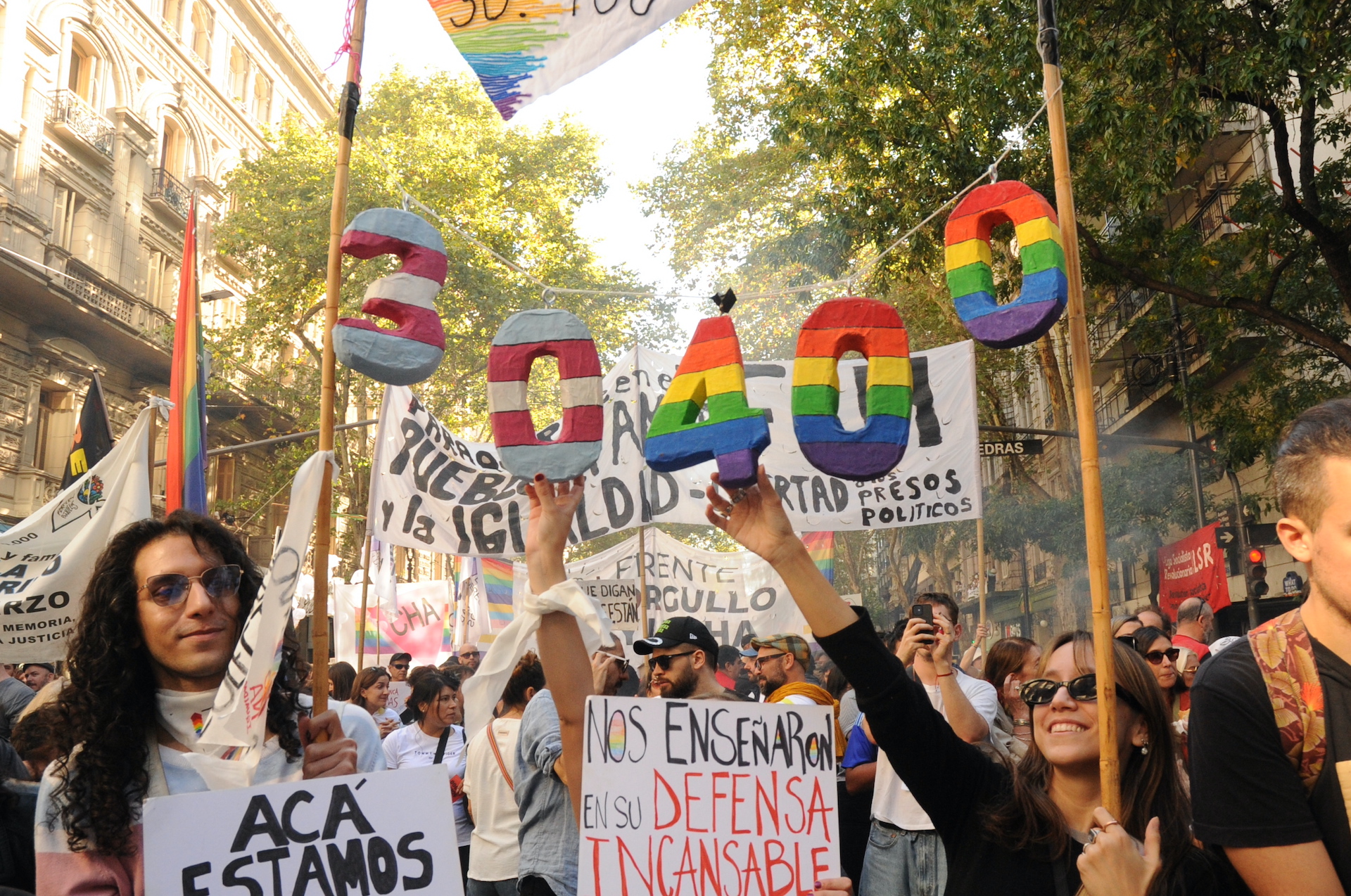
Ironici, a trans activist, told Present The fact that most trans women in the city and its surrounding areas live alone and in peripheral zones exacerbates their vulnerability makes having this support network crucial for responding immediately to a disappearance or case of violence. In Santa Fe, as in the rest of the country, the life expectancy of trans women is less than 40 years. No more than 10 in Greater Santa Fe live past 50. A concrete fact that shows the consequences of discrimination on one of the most marginalized groups in the exercise of their rights. Cuqui Bonetto had been surpassing the average for five years; Sol reduced that average by 15 years. On Thursday, as part of the International Women's Strike, trans and travesti people marched as members of the Ni Una Menos Santa Fe collective. They did so with specific demands, related to the need for public policies that promote access to employment and the importance of making hate crimes visible and putting a stop to them. That day, although their identities were not yet confirmed, they also marched for Sol.We are present
We are committed to journalism that delves into the territories and conducts thorough investigations, combined with new technologies and narrative formats. We want the protagonists, their stories, and their struggles to be present.
SUPPORT US

FOLLOW US
Related notes


We are present
This and other stories are not usually on the media agenda. Together we can bring them to light.