

Indigenous leader denounces official over HIV policies in Chile
He took his case to the Chilean courts, stating that Carlos Beltrán violated his rights as a patient and user of the health service by making his clinical records public through a public email.

Share

By Víctor Hugo Robles
Willy Morales considers himself a “survivor” of HIV/AIDS because he has withstood the social stigma attached to what was originally known as “gay cancer.” From the sadness, worry, and invisibility of being a shy teenager, he moved into social organizing, which has now transformed into an intense public and political struggle. Today, he is president of the National Network of Indigenous Peoples in Response to HIV/AIDS in Chile, an organization that seeks to influence national and international HIV/AIDS public policies with cultural relevance.
[READ ALSO: HIV/AIDS in Chile: Between the worst figures in the region and the media circus]
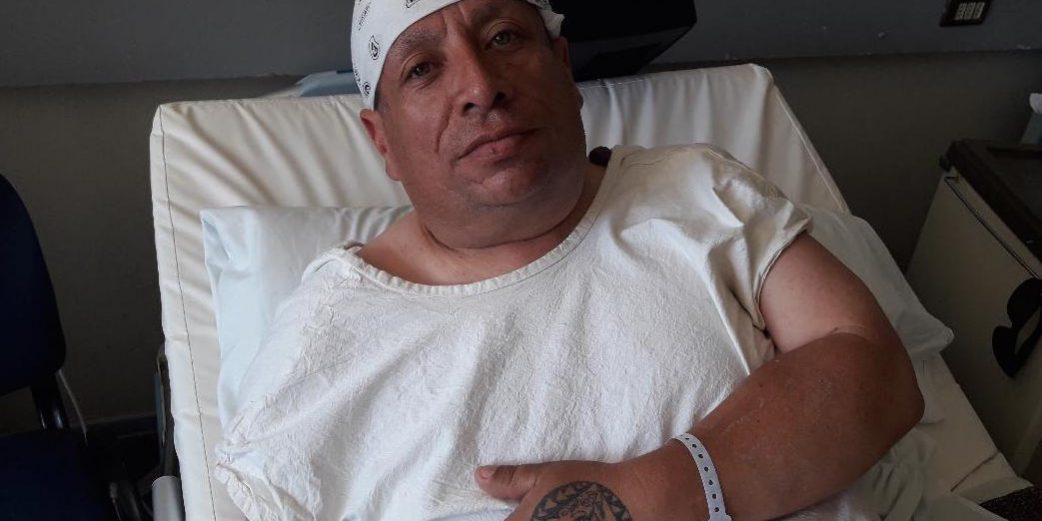
Willy Morales not only publicly denounced the incident but has now taken his case to the Chilean courts, alleging that Carlos Beltrán violated his rights as a patient and user of the health service by making his medical records public through a public email sent to dozens of social organizations, which was subsequently published in its entirety by the media. In recent hours, the First Chamber of the Santiago Court of Appeals accepted the Writ of Protection filed by Willy Morales and ordered Dr. Carlos Beltrán to submit a report within five days. The report must be served by the police at his registered address with the Ministry of Health.
– What were the reasons for your hospitalization, Willy?
“Because I had no platelets, my blood pressure was through the roof. I felt sleepy and tired. I didn't have any other symptoms, but I wasn't eating, and that's strange for someone like me who has a great appetite. During my stay in the hospital, I miss where I live. I'm here in unfamiliar cities.”
From your hospital bed, you recorded a viral video denouncing the Chilean Ministry of Health's HIV/AIDS advisor. Why did you do it? What is the basis of your public complaint?
“I recorded it so people would know what was happening. I am denouncing and accusing, by name, Dr. Carlos Beltrán, an advisor to the Minister of Health, who was giving me medication without me being at any healthcare facility, without opening a medical file for me, and without following any protocol. I remember when I told him I was having cramps and urinating blood, it was very uncomfortable; I was suffering and my quality of life was terrible. The doctor told me I had to endure it. I endured it for three months, but I couldn't take it anymore. When I couldn't continue with the treatment, he gave me the order to go to another hospital and legally obtain the medication there. I couldn't stand it; I was urinating blood, which I didn't understand. I thought it might be a kidney stone, but it wasn't. My quality of life was terrible.”
Willy Morales is referring to the drug commercially known as “Stribil,” marketed in our country by the Gador laboratory—a company that sponsors the activities of the Chilean AIDS Corporation—which is indicated for “people who have not suffered organ damage from so much medication. I have had hepatitis and pancreatitis, and they gave me this drug, which is for people who have never taken treatment,” the activist points out.
“They needed guinea pigs, and I just happened to be the one.”
– Why do you say they conducted an “experiment” on you?
“I investigated who was taking the medication and couldn't find anyone. The medication wasn't yet included in the clinical guidelines in Chile when they prescribed it for me; taking a pill was like something new. When I told the doctor I couldn't continue the treatment, he didn't care and they transferred me from one hospital to another. It was an experiment, I think. After a few months, that medication became available in Chile and now the Chilean government provides it to people without organ damage. I think they were using me as a guinea pig.”
What were you asking for in the video?
“I asked—to no avail—for the minister to face me, to understand why this is happening. I know I stopped the therapy before because it was making me sick; they saw it was making me sick. Urinating blood isn't normal, cramps aren't normal, having involuntary movements in my hands isn't normal—my hands are still swollen. The minister needs to talk to people and answer for everything he promised. It's important to know how many people are experiencing rejection from these latest-generation therapies. I don't know if they underwent a prior evaluation or if they switched to them without any assessment.”
The minister who didn't show up
For her part, Tai Riroroko Pakarati, spokesperson for the Rapa Nui National Network of Indigenous Peoples, stated in a public declaration: “We offer our full support to our comrade, our Indigenous brother, Willy Morales, who is currently hospitalized in serious condition due to the HIV/AIDS therapy experiment being conducted by the Ministry of Health, and especially by the Minister of Health, who has not bothered to learn about the real situation on the ground in our country, thus creating public health policies that are not in line with the current reality.” “If you, Mr. Minister, do not deign to face us and give us, as Indigenous peoples, a space to decide on our health, we will be forced to seek other means, other mechanisms to make ourselves heard,” she concluded.
The doctor's statements
The Protection Appeal
Esteban Arévalo, Willy Morales's lawyer and a specialist in health law, spoke to Presentes about the first legal action—and announced others—that he initiated this Wednesday, December 5th. The legal action alleges that Carlos Beltrán committed "an illegal act that deprives Morales of the legitimate exercise of the right to: a) Respect for and protection of his private life, and b) The protection of his personal data. Both are recognized and guaranteed in Article 19 No. 4 of our Constitution." The petition requests that the Constitutional Action for Protection be admitted and ultimately granted, declaring: 1) That the sending of the aforementioned email by the respondent was an illegal act, which deprived my client of the legitimate exercise of the rights indicated in section IV, letters "a" and "b" of this petition. 2) That the respondent be ordered to refrain from continuing to illegally disclose sensitive data contained in my client's medical record. 3) That the respondent is ordered to pay costs.”
The Minister of Health declined to comment on the matter.
We are present
We are committed to journalism that delves into the territories and conducts thorough investigations, combined with new technologies and narrative formats. We want the protagonists, their stories, and their struggles to be present.
SUPPORT US

FOLLOW US
Related notes

We are present
This and other stories are not usually on the media agenda. Together we can bring them to light.