

The artist behind the Superclásico kiss that went viral
Presentes spoke with Maximiliano Mamani, the conceptionist and part of the photo, the text and creator of the chola Drag Bartolina Xixa, a mixture of his peasant origin and his dissident identity.


Share

By Lucas Gutiérrez
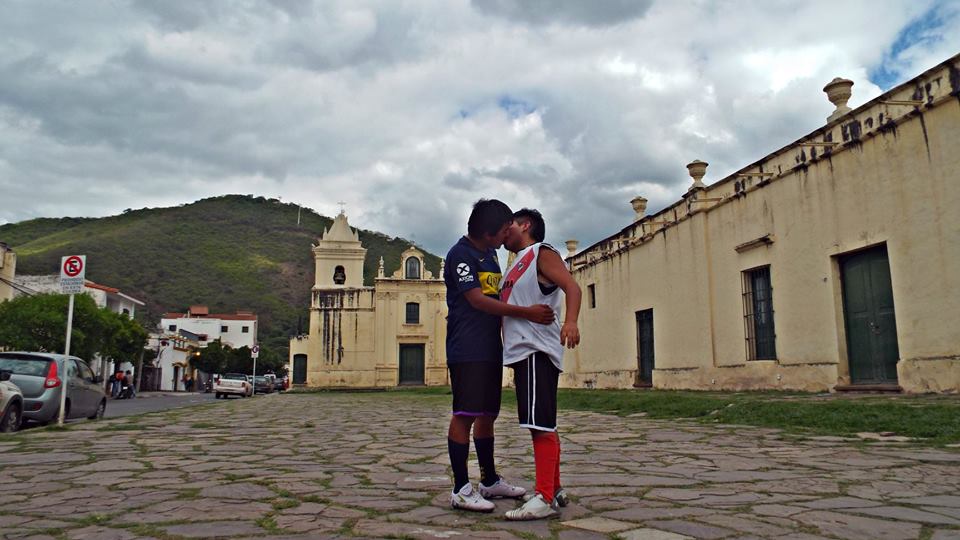
On Saturday, November 10th, minutes before the Superclásico between Boca Juniors and River Plate was suspended due to rain, the LGBT+ Pride march was taking place in Salta, and a photo went viral: two men wearing the football teams' jerseys kissing in front of the San Bernardo convent. The caption beneath the image spoke of another Superclásico: the one of the queer kiss, of Black people, of the slum dwellers; of those silenced by heteronormativity but also by LGBTnormativity. This time, diversity scored the goal, and the cry was a queer howl. Presentes spoke with Maximiliano Mamani, the mastermind behind the photo and one of the men, and creator of the drag queen Bartolina Xixa , a blend of his rural origins and his dissident identity.
Born in Abra Pampa, a town in the highlands of Jujuy province, Mamani is 23 years old and a folk dance teacher. He is currently studying anthropology. Regarding the impact of the photographic intervention he carried out with Iván Carvajal Perka, he says: “While we wanted to have some impact on social media, we didn't think it would be this big. It was positive. We think that if we can reach spaces that aren't so friendly to the LGBT community, that's already a victory. Spaces where we're going to be insulted, where we've been called Bolivians, Black people, ugly, all sorts of things that we experience all the time and that materialize in words on social media.”
– Why use football as a metaphor?
– An Argentine classic isn't a Boca-River match. An Argentine classic is seeing how we're stigmatized, insulted, expelled, hated, and killed. Football comes and teaches us violence towards others; this is part of the constitution of our nationality. We, as queers, as people who inhabit other spaces (slums, towns), come to demonstrate another way of understanding love.
– What would that shape look like?
– There are two messages we want to convey. One of pure love, which is part of being part of a diverse community. And another is that in the diverse community, we are not just LGBT. Because ultimately, LGBT is a colonial norm, and we are other realities, other bodies with different skin colors, different features—features stemming from something that has been eradicated in Argentina. We are from poverty, from the outskirts of cities, from the periphery of the country. We wanted to show what it means to be gay, but in other spaces, outside the center or outside of what hegemonic gay culture has always portrayed.
 Northern Drag
 Northern Drag
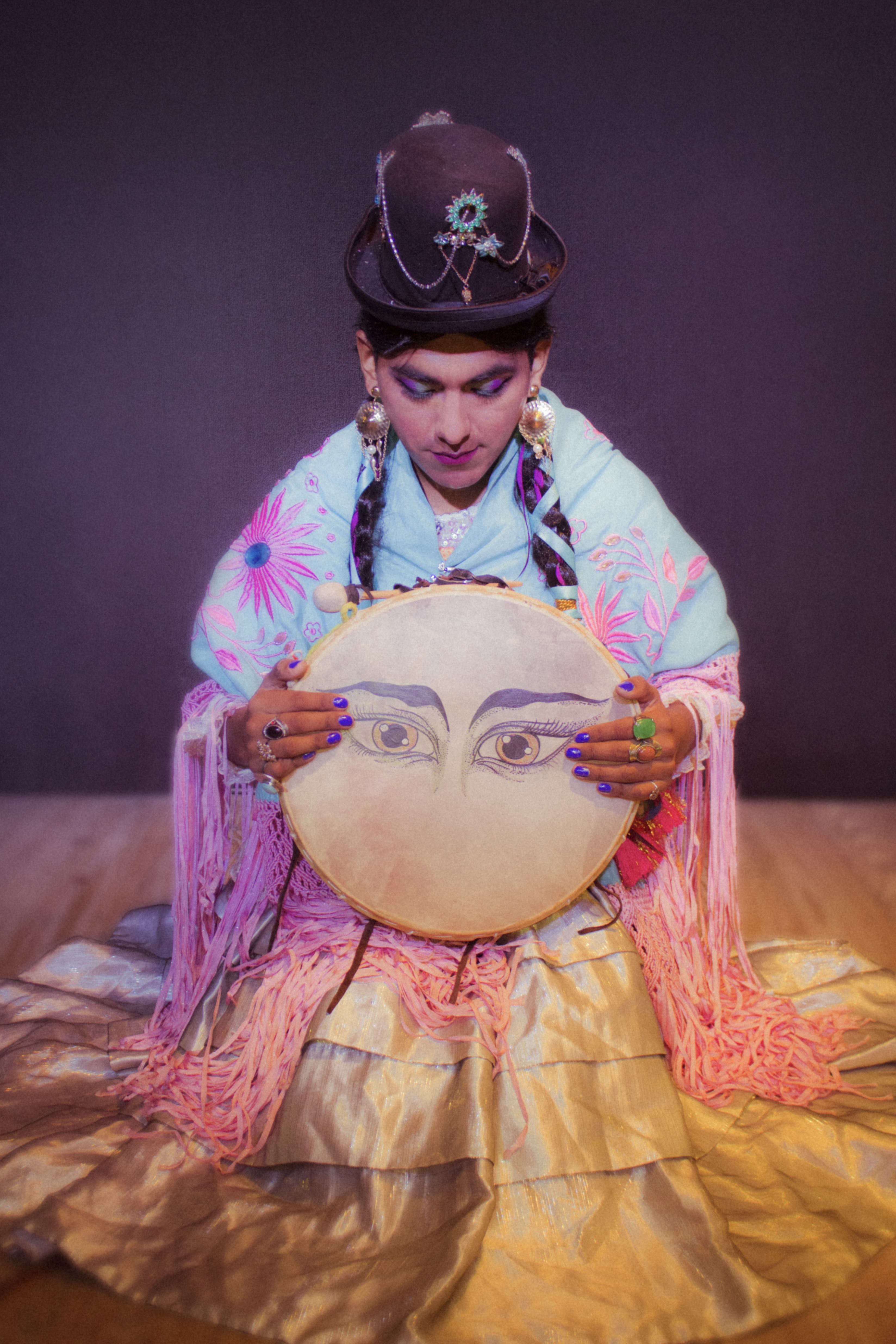
Bartolina Xixa is a drag character created by Maximiliano Mamani, who debuted a year ago at the previous Salta Pride march. “Bartolina is born from the fusion of many things, one of which is my ethnic origin. I come from a family of farmers who have long been connected to the land and Andean cultural traditions. Furthermore, I graduated as a folk dance teacher and began to realize that Argentine folklore was conceived from a heteronormative perspective.”
– How was the transition to drag?
– In a folklore workshop, I was reflecting on gender roles and felt the need to take it a step further, not only to experience it but also to make it part of my bodily experience. Then I thought that, since I also identify as gay, I could unite my Andean perspective and my life between the Andes and folklore with my diverse identity. To blend my cultural identity and my sexual identity.
Bartolina Xixa dances, and Pachamama celebrates her. Her social media features videos of performances and texts that narrate what it means to experience this drag persona. “Bartolina Xixa is inspired by a chola from La Paz. I chose the character of the Bolivian Andean chola because I find it very interesting how, although her clothing was imposed on Indigenous women during the colonial era, they appropriated it and made it part of their identity. I appropriate the sexual diversity of which I am a part, but I also transform it. Drag queens generally end up reproducing Western perspectives of femininity and never Latin American perspectives.”
– What does it mean for you to move away from the term 'gay'?
– We are empowered and subaltern queer people, far removed from the stereotypical "classic" gay man. We navigate our lives in spaces and in the collective memory that are always silenced by heteronormativity and LGBTnormativity. Last year I visited Bolivia with this persona; the important thing was being able to share with great respect and learn more. It was the greatest thing that could have happened to me. It was very powerful and revitalizing for me to understand that there are networks of people who are thinking of themselves as diverse, as different from heterosexuality but also different from LGBTnormativity, from other perspectives, from other, more Latin American realities.
*
Maximiliano Mamani (Bartolina Xixa) will be dancing on Friday 23/11 at the El Deleite de los cuerpos Festival (Cordoba) and giving a workshop on roles and gender in the imaginary of popular folk dance on 30/11 at Espacio Repúblico (Cordoba).
We are present
We are committed to journalism that delves into the territories and conducts thorough investigations, combined with new technologies and narrative formats. We want the protagonists, their stories, and their struggles to be present.
SUPPORT US

FOLLOW US
Related notes



We are present
This and other stories are not usually on the media agenda. Together we can bring them to light.