

History, memory and daily life of trans people, in an exhibition
Today in La Plata, the exhibition “Transitares. Dissident, Political, Poetic and Visual Journeys,” created by trans artists, opens. It will feature artworks, photography, documentary films, and even a police archive documenting the persecution of the LGBT community by security forces.

Share

By Rosario Marina, from La Plata
Today in La Plata, the exhibition “Transitares. Dissident, Political, Poetic and Visual Journeys,” created by trans artists, opens. It will feature artworks, photography, documentary films, and even a police archive documenting the persecution of the LGBT community by security forces both during the dictatorship and in democracy.
The exhibition will be held at 984 Calle 9, the headquarters of the Provincial Commission for Memory (CPM), which is organizing the event. The first thing visitors will see upon entering is “Alias. DIPPBA Archive, Registry and Intelligence of the Trans, Transvestite and Transsexual Community,” a selection of files from the Intelligence Directorate of the Buenos Aires Provincial Police, which operated from 1956 to 1998.
“There are extensive files documenting the criminalization and persecution of the trans community,” Sandra Raggio, director general of the CPM, explained to Presentes. The archives contain references to “narco-transvestites” or “narco-transvestites.” These were the terms used to refer to trans people in police records from the 1990s.
During the dictatorship, they were referred to as "the immoral ones" or "the deviants." In democracy, the aim was "to persecute them as criminals simply because they were prostituting themselves," Raggio explained.
[READ ALSO: LGBT memories persecuted and silenced under dictatorship]
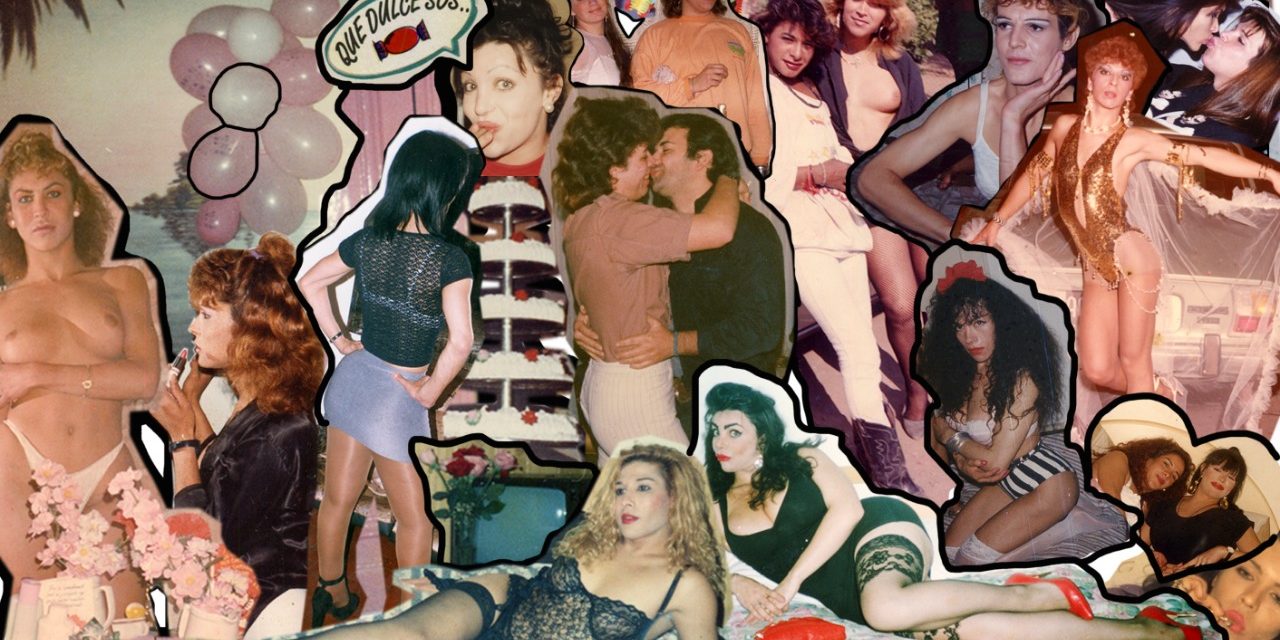
Next to that archive you can see another one: the Trans Memory Archive of Argentina, a photographic exhibition called "This one left, this one was killed, this one died."
María Belén Correa and Pía Baudracco wanted to bring the survivors together. After Pía's death and with María Belén in exile, the Trans Memory Archive was founded, a virtual space where anecdotes, photos, testimonies, letters, and police reports from the transvestite, transgender, and transsexual community are shared. This is explained in the text affixed to one of the walls of this exhibition.
Today the archive has more than 5,000 items. These are documents that survived the dictatorship and police repression in the democratic era. In the center of the room, you can see a shoe, some documents, necklaces, more photos, and glitter. On the walls, smiles, poses, and embraces of trans people who are no longer here.
On a television screen between this file and the next work, “I am that imaginary boy”, a video art piece by Bruno Valentino, will be constantly projected.
 I work from Uruguay
 I work from Uruguay
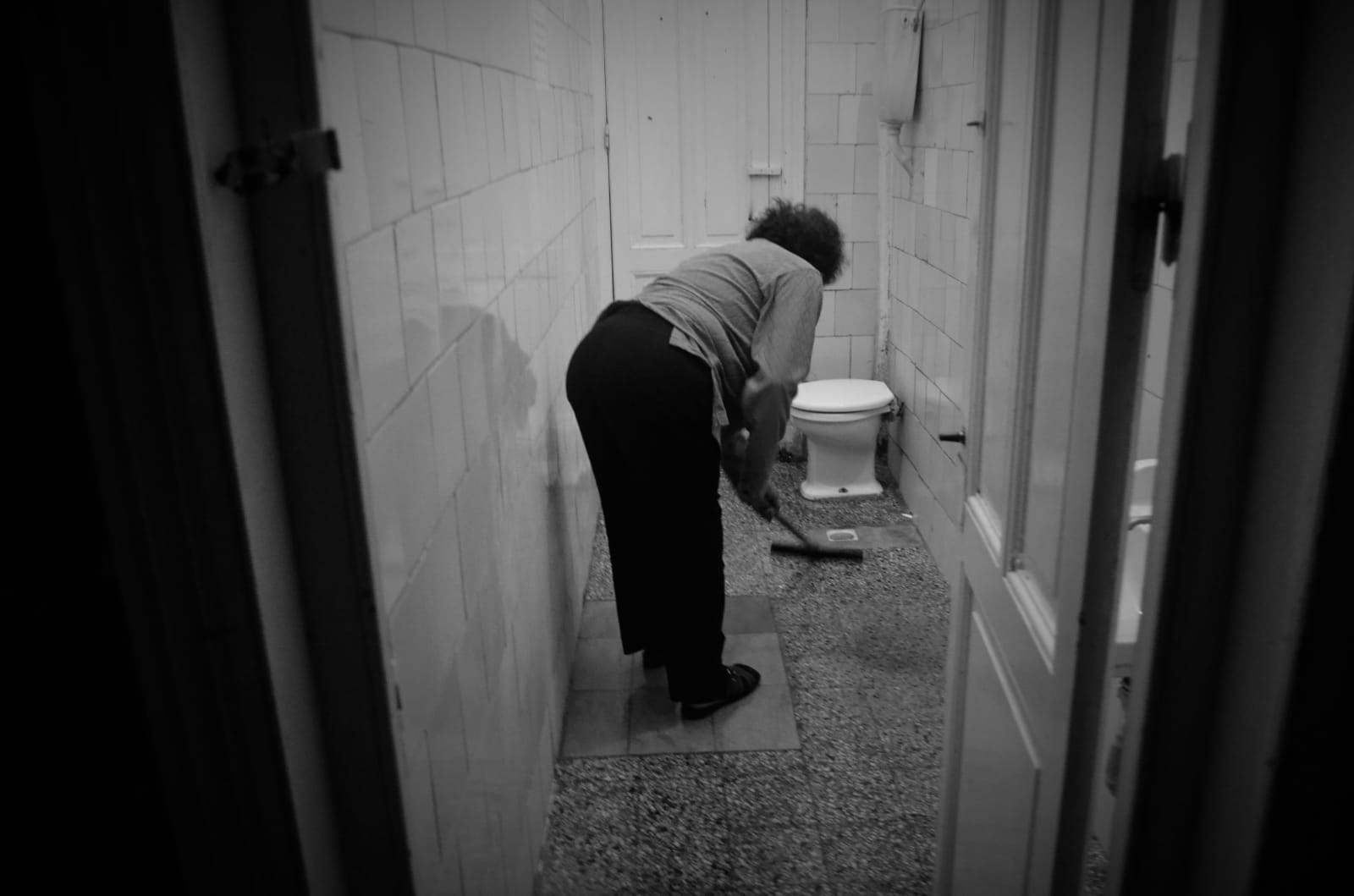
 The next part of the exhibition is the photographic series “When work is spelled with a V” by Delfina Martínez. Delfina is Uruguayan. On Thursday, while installing her work, she was wearing a black t-shirt with white lettering that read: Gender inequality is killing us.
[READ ALSO: Trans Memory Archive: “This one left, this one was killed, this one died”]
Her photographs are black and white and depict trans people in everyday formal work settings, such as hospitals, schools, offices, and factories. “I didn’t have a job, and I was working as a prostitute,” Delfina said about the time she took the photos, two years ago.
She would arrive at the workplaces and ask the women she was photographing not to pose, but to continue with what they were doing. She wanted an everyday image. The story that marked her most was that of Gloria, whom she calls "the oldest trans woman," who works as the manager of a boarding house and is seen in the photo mopping a bathroom floor.
Initially, her goal was to participate in Trans Art Week, an art festival organized by the Montevideo city government. Her intention was to show a reality about trans people that the mainstream media doesn't portray. Later, the work was exhibited in Buenos Aires and Barcelona.
Identikit
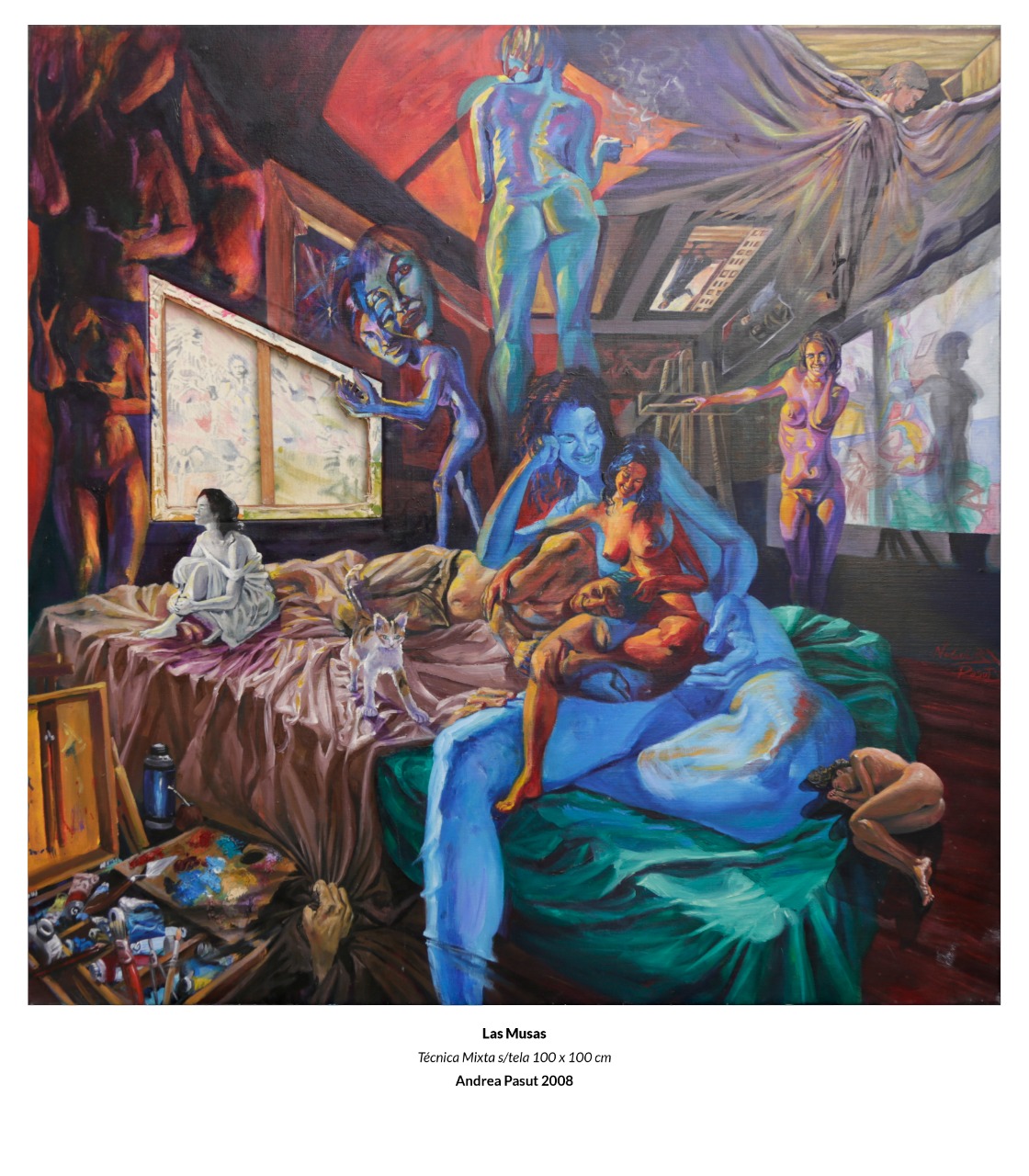
The final piece in the Transitares exhibition is the work of visual artist Andrea Pasut, “Dissident Bodies #3.0.” Andrea is a visual artist, actress, illustrator, muralist, and set designer. Her work focuses on making visible the invisible, the unspeakable, the hidden, and the essential.
These works are part of the Identikit project, which operates in a unique way: the artist asks each person portrayed to choose an iconic painting from any era in which they would like to be depicted. She then uses that painting and that artist as an aesthetic, technical, and compositional framework and “produces a new work that engages in dialogue with the model, the chosen artist, and the artist herself,” as explained in her presentation folder.
Next, each model is asked to choose a word that defines their gender, sexual orientation, and personality/energy. These chosen words are then added to their name in the painting as part of the overall composition.
Each artwork is accompanied by an "identity device" where you can see the original painting (with artist information and context), the creation and production process, and a text from each person portrayed, recounting in the first person their experience leading up to the painting. All of this is displayed on what appears to be a cell phone screen.
The exhibition will be open until December 5th. During this time, there will be events such as the presentation of Marlene Wayar's book, "Travesti, una teoría lo suficiente buena" (Transvestite, a Good Enough Theory), and a closing event featuring Chilean poet Claudia Rodríguez and artist Susy Shock. On the final day, the two will stand in front of the museum to recite poetry and South American trans verses.
We are present
We are committed to journalism that delves into the territories and conducts thorough investigations, combined with new technologies and narrative formats. We want the protagonists, their stories, and their struggles to be present.
SUPPORT US

FOLLOW US
Related notes
We are present
This and other stories are not usually on the media agenda. Together we can bring them to light.