

The day Hollywood visited the trans high school Mocha Celis
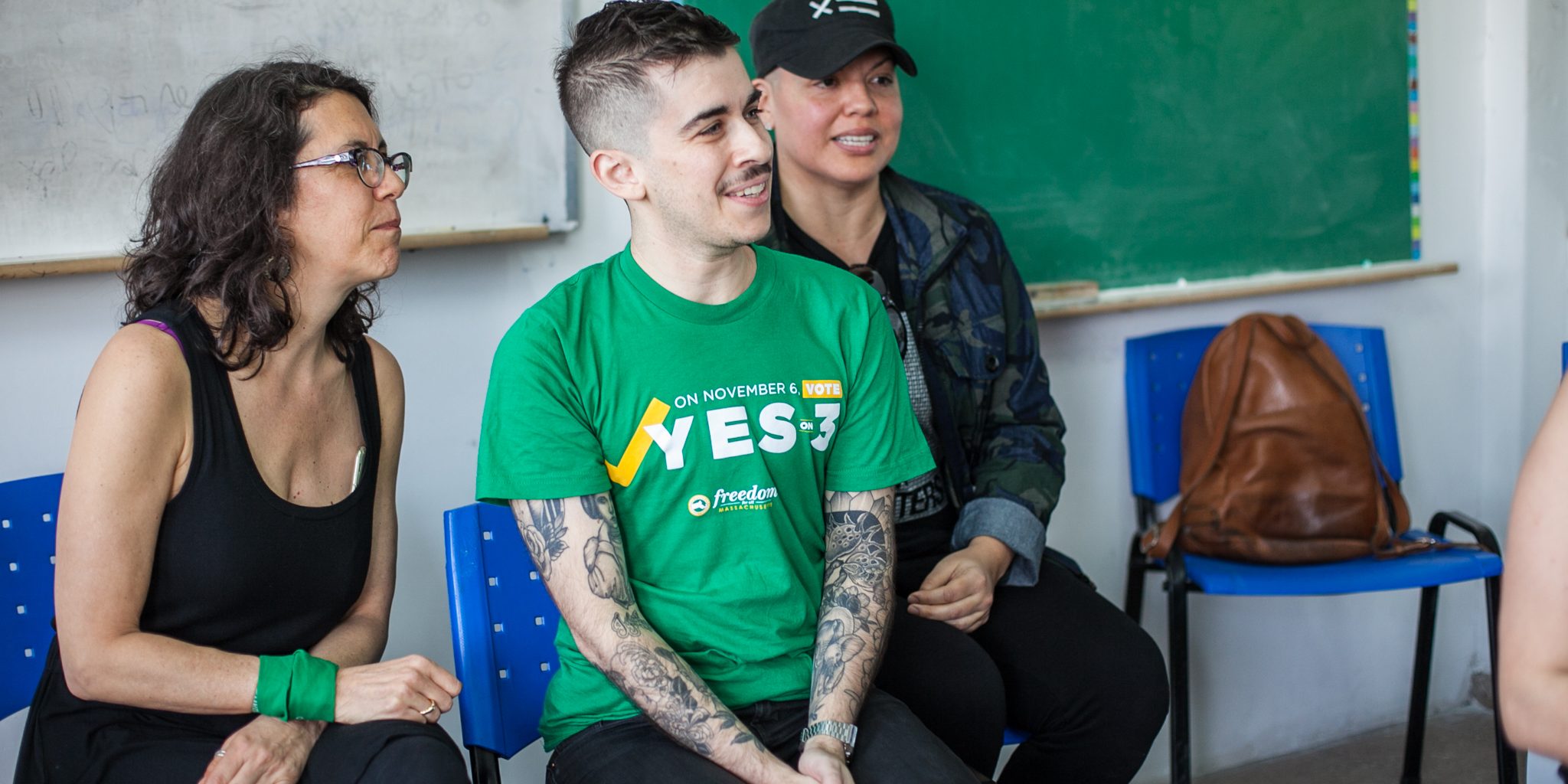
From New York, almost nonstop, came Sara Ramirez - an actress known especially for her role as Dr. Callie Torres in the series Grey's Anatomy - and Chase Strangio, a trans activist and lawyer for the American Civil Liberties Union (ACLU).

Share

By Quimey Ramos*
Photos: Luciana Leiras/CELS
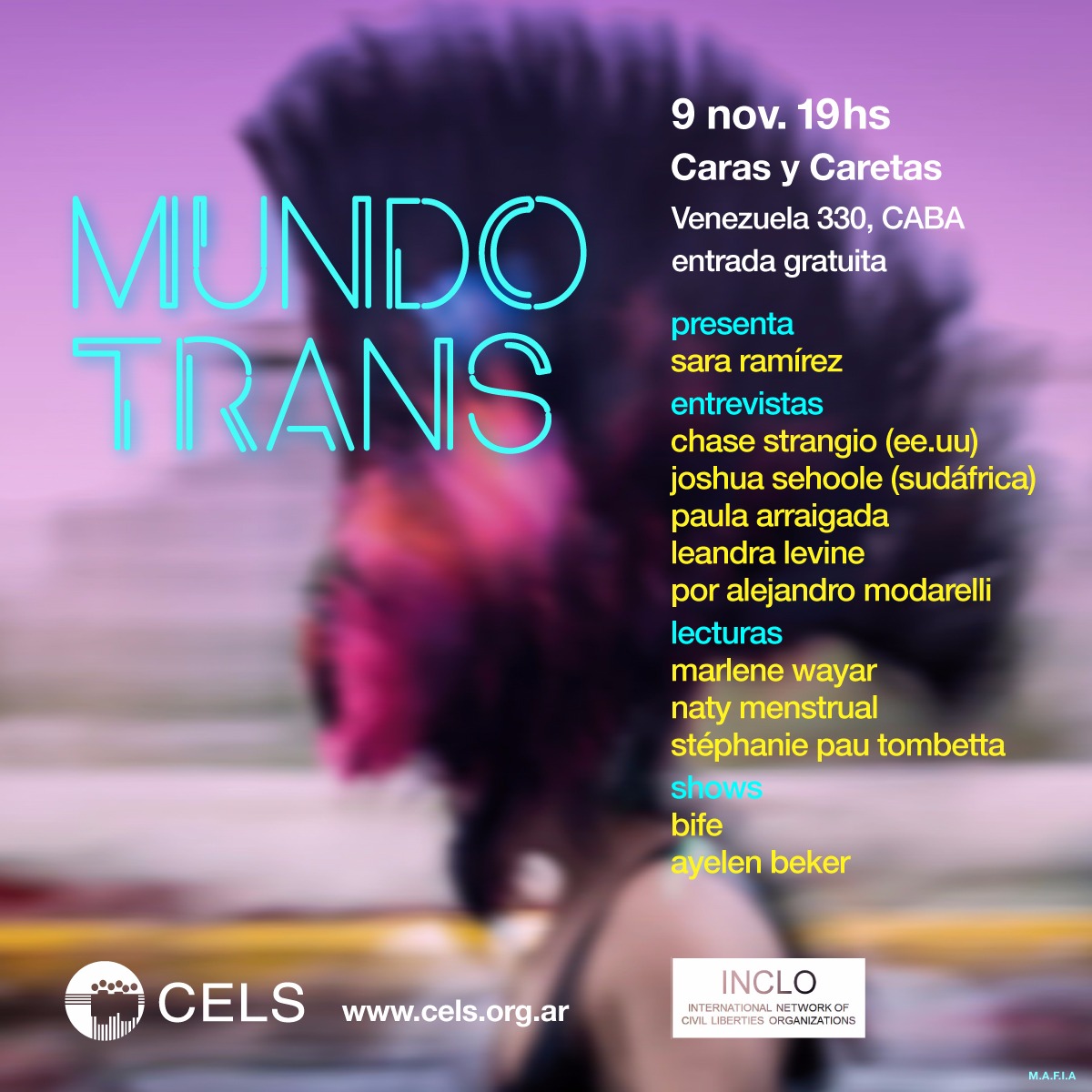
This Tuesday, we received two visits at the Mocha Celis Popular High School—the kind that don't happen every day, even for Mocha, where surprising visits are commonplace. Sara Ramirez—an actress best known for her role as Dr. Callie Torres on Grey's Anatomy—and Chase Strangio, a trans activist and lawyer with the American Civil Liberties Union (ACLU), arrived at our school almost directly from New York. This organization, along with the Center for Legal and Social Studies (CELS) and the International Network of Civil Liberties Organizations (INCLO), is hosting the "Trans World" activism event in Buenos Aires until November 9th.
 [READ ALSO: Buenos Aires hosts the World Congress on Transgender Health]
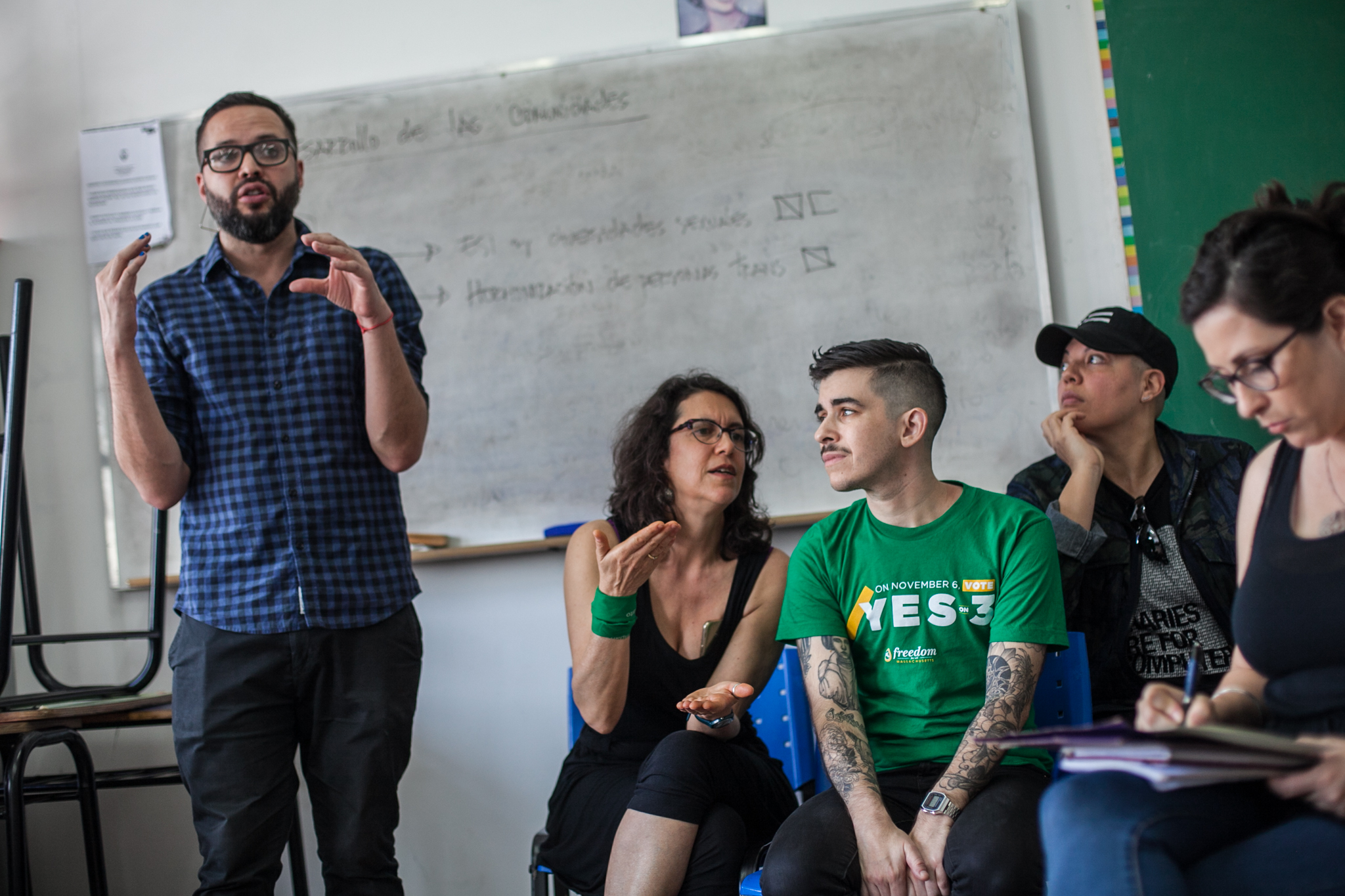
We were hastily finishing some posters with the slogans "Stop Trans Murders" and "Stop trans genocide," when one of the teachers from the high school warned: "They're already coming up in the elevator!"
We went out into the school hall and found them. Overcome with emotion, we greeted them with a kiss. Once seated, and with the help of an interpreter, their first question arose: “This school is characterized by not being just a school, is that true?”
“Of course!” we replied. And we added: “It’s very difficult to think about tomorrow’s task if today I don’t have a guaranteed meal, a place to sleep, or someone I can ask for a hug or chat with for a while about what’s happening to me.”
A blood-stained ID card
 A blood-stained ID card
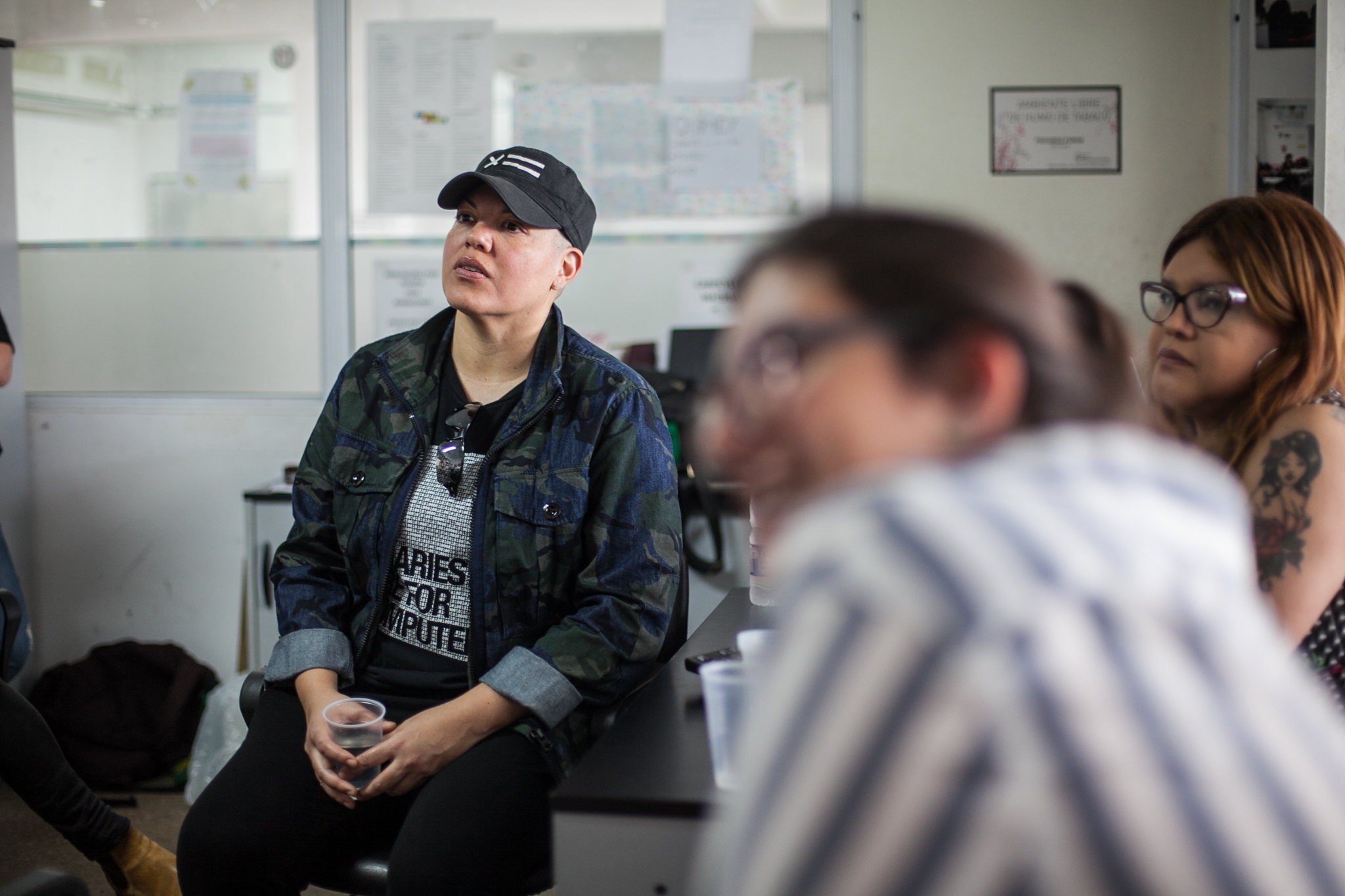
And so we began to weave a dialogue in which each teacher contributed a stitch, and between each stitch, our daily lives unfolded. We talked about our problems and our gender identity law, which, even after six years, is still not fully implemented. We talked about health and the industrial oils that are commonplace here, but also in the United States, for those who cannot afford a prosthesis.
We were asked about trans self-management and cis-heterosexual supervision, and about our collective spaces. And we mutually lamented how difficult it is to achieve this, since we are generally not the ones with the basic resources to begin.
We tell you who Mocha Celis was and why her name was chosen for the school.
At a certain point, the issue of housing arose. Then I showed them something that, for me, was symbolic as soon as I started working at La Mocha: a student's pending identity document application.
The paper was stained with blood because at the time she was homeless and had been attacked by a group of men the night before she was supposed to register. At that moment, Sara, who was next to me, gently and firmly took my hand. We didn't need to say anything more. I only added that this is what we mean when we say, "It's genocide!"
Different geographies, the same exclusions
 Different geographies, the same exclusions
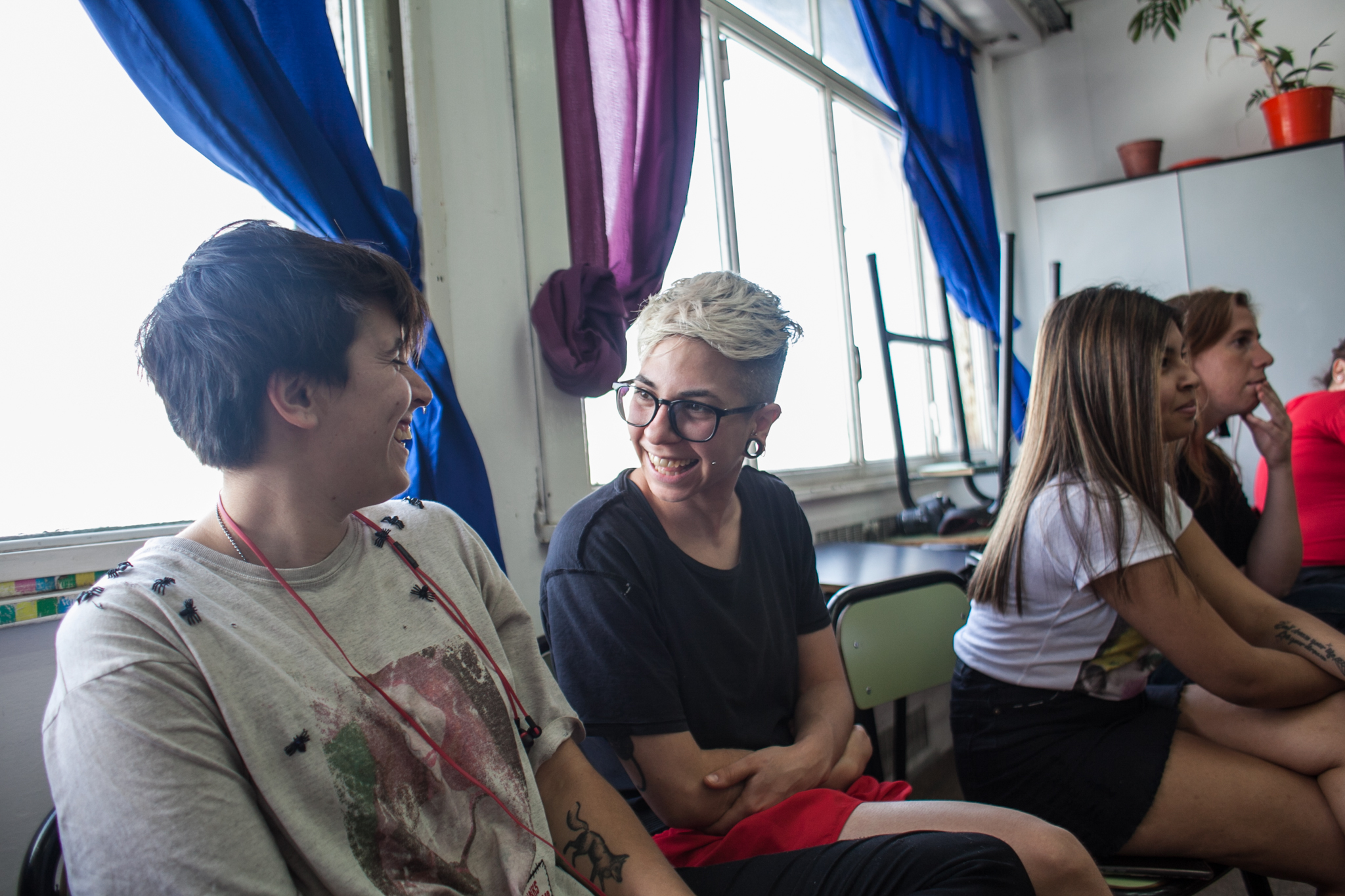
After a while, she suggested the similarity between the stories of her older colleagues and the stories of legendary American trans activists Sylvia Rivera and Marsha P. Johnson . In this Western world, there may be many differences, but trans women, here and there, are the same.
The conversation continued pleasantly, and we even got to talk about the War of the Triple Alliance and the waves of migration, since they were interested in the intersectionality between racism and transphobia in our country (just look at the topics transvestites talk about!).
Before leaving, they stopped by to say hello to a class that was in session, and as a farewell we gave them copies of "The Butterfly Revolution" (an update of research on the transvestite population done by Lohana Berkins and Josefina Fernández) and "Unlocking Knowledge," the new book published by the University of La Plata with first-person accounts from the Bachi students.
We thanked them for listening, which they greatly appreciated. We hugged, and they repeatedly invited us to the discussion this Friday at the Caras y Caretas Cultural Center at 7 pm, where they will be speaking alongside Marlene Wayar, among others, also as part of the event organized by the
*Trans activist and teacher
We are present
We are committed to journalism that delves into the territories and conducts thorough investigations, combined with new technologies and narrative formats. We want the protagonists, their stories, and their struggles to be present.
SUPPORT US

FOLLOW US
Related notes

We are present
This and other stories are not usually on the media agenda. Together we can bring them to light.