

Buenos Aires is hosting the World Congress on Transgender Health
In its 25th edition, the event is being held for the first time in a Latin American country. The capital of Argentina was chosen for its leading role in laws and rights for transgender people.

Share

From Friday, November 2nd to Wednesday, November 6th, more than 750 specialists and professionals will gather in Buenos Aires to present their research and discuss current issues in all key areas of transgender health. This is the 25th World Congress on Transgender Health (WPATH), and for the first time, it is being held in Latin America, in the City of Buenos Aires. Supporting children and adolescents in their transition process will be a key theme of the meeting.
“This is the first time this will happen outside of Europe and the United States. And it's happening here because the world looks to Argentina as an example of policies and health issues for transgender people. And the truth is, this is a source of pride and it's important,” Javier Belinky, local president of the Congress, explained to Presentes. “In fact, when the last symposium was held two years ago in Amsterdam, specialists from different countries approached me to ask about our law and our working methodology. We are pioneers in transgender health rights, and that is what we will be presenting now,” he added.
Belinky is in charge of the Transgender Surgery area at Durand Hospital and Güemes Sanatorium. “This in Argentina began before the Gender Identity Law. Ten years ago, I started performing reassignment surgeries at Durand; the Supreme Court ordered me to operate on patients because I couldn't. Of course, after the law was passed, the number of surgeries increased significantly, and we were able to work much more freely,” he says.
 The law is pioneering but does not guarantee the right to full access to health care
 The law is pioneering but does not guarantee the right to full access to health care
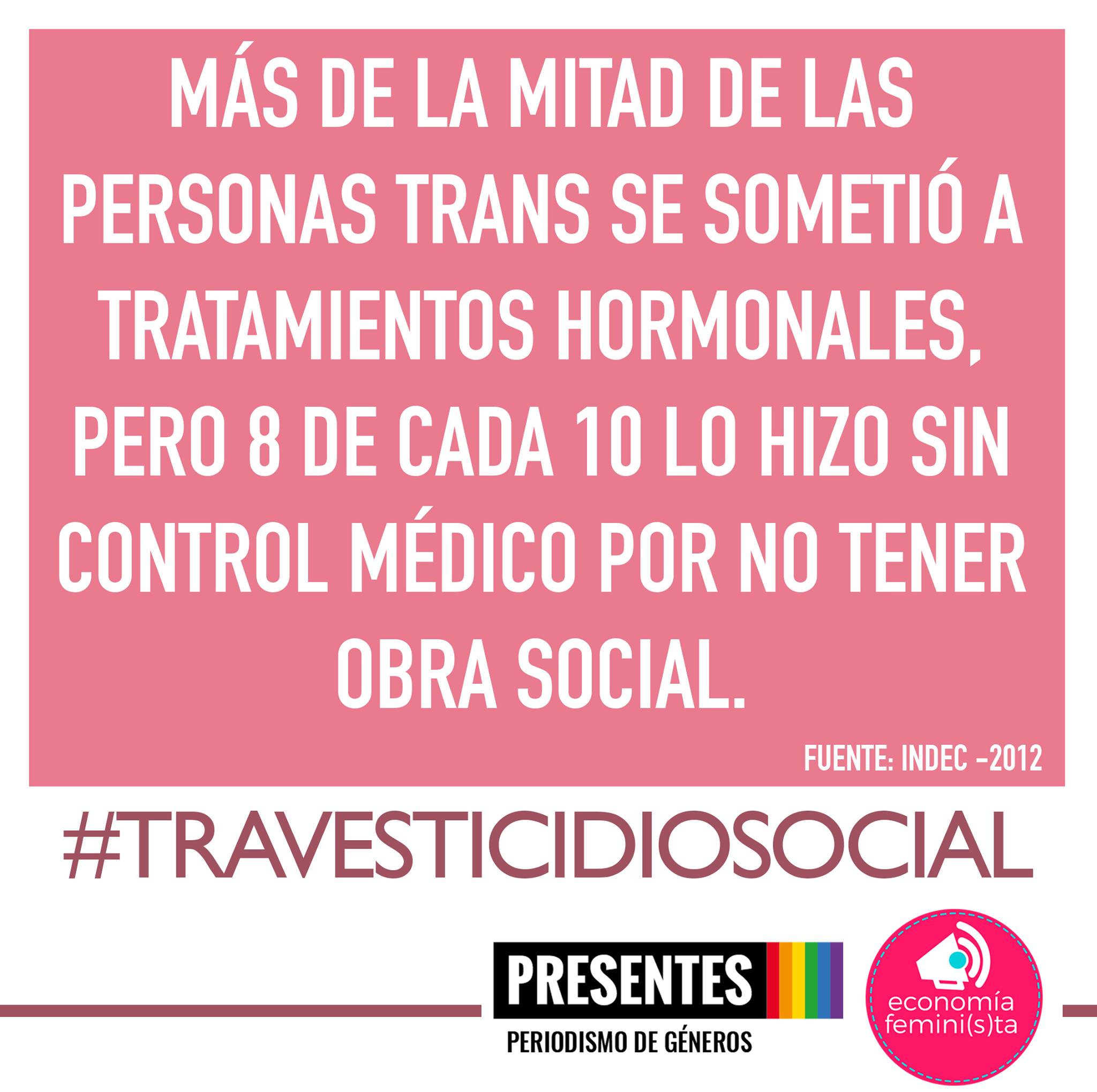
Despite the groundbreaking nature of the Gender Identity Law that Argentina passed in 2012, Belinky acknowledges that access to healthcare is fraught with obstacles in her practice and that there is still a challenge in the training of professionals: “It’s a huge problem here and around the world. I work at Durand Hospital, where this is routine, but I know that’s not the reality,” she admits. She explains that it was achieved through training that included everyone from receptionists and elevator operators to secretaries, nurses, and every other staff member, to guarantee full access to healthcare for trans people. “But I know very well, because patients tell me so, that discrimination and abuse are everyday occurrences in other healthcare systems and institutions.”
[READ ALSO: This is how one of the first inclusive clinics in Argentina works]
In addition, along with psychiatrist and sexologist Adrián Helien and endocrinologist Alberto Nagelberg, with whom he forms the interdisciplinary team at Durand Hospital—the most important in Argentina and the region—he has been traveling for years to give talks and training throughout the country and abroad. “Over all these years, the three of us got tired of giving talks all over the country and abroad. And we see everything: we encounter professionals who talk about hermaphrodites or people who were born 'abnormal.' It's that harsh. There's still a long way to go, but we're working on it.”
Trans children and adolescents, the big issue
The main objective of the Congress, which will be held at the Hilton Hotel in Puerto Madero, is the well-being and quality of life of our patients. In concrete terms, this translates into central discussions about how to support children and adolescents in their transition process.
[READ ALSO: The court ruled in favor of a trans woman: the health insurance company has to cover her surgeries]
Over the five days, more than 750 specialists from a variety of health disciplines will participate: doctors, surgeons, endocrinologists, psychiatrists; but also lawyers, writers, and representatives from various organizations.
For example, Tamara Adrián, the Venezuelan LGBTI activist and first transgender member of parliament in that country and in Latin America, will open the event.
We are present
We are committed to journalism that delves into the territories and conducts thorough investigations, combined with new technologies and narrative formats. We want the protagonists, their stories, and their struggles to be present.
SUPPORT US

FOLLOW US
Related notes



We are present
This and other stories are not usually on the media agenda. Together we can bring them to light.