

Who is Erica Malunguinho, elected as Brazil's first transgender congresswoman?
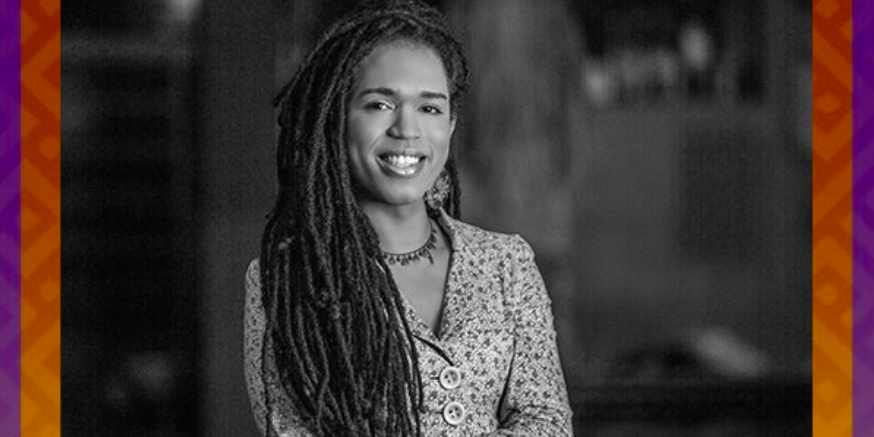
Erica Malunguinho, a Black, trans woman from Northeast Brazil, a teacher and trainer, was elected to the São Paulo state legislature, the city where she has lived for 16 years, becoming the first trans woman to hold a seat in that chamber in the country. “For a fair and necessary alternation of power” was one of her most prominent slogans…

Share

Erica Malunguinho, a trans woman, Black, from Northeast Brazil, a teacher and trainer, was elected deputy of São Paulo, the city where she has lived for 16 years, and became the first trans woman to hold a seat in that chamber in the country. “For a fair and necessary alternation in power”: was one of the strongest slogans of the campaign she led from the Socialism and Liberty Party (PSOL).
Despite the results of the first round, where Jair Bolsonaro (Social Liberal Party) - a candidate whose platform is openly discriminatory against the LGBT+ community, obtained the most votes for the presidency and advances to the runoff - it was an election with a historic number of transvestite and trans candidacies in the history of Brazil.
Who is Erica Malungunho?
“I, Erica Malunguinho, was born and raised in Pernambuco, in a family of activists who believed in institutional politics as an important place for building a just society. My family of origin, historically impoverished in socioeconomic terms, was never included in spaces for debate and effective participation within organizations. Why is that, right?” she asks when introducing herself on her website.
Throughout her campaign, she proposed to defend the rights of all, and especially those most punished by structural violence, including women, LGBT+ people and Afro-descendants.

As she recounts on her website, at age 17 she began researching the process of constructing transgender identities through performance art. She arrived in São Paulo when she was 20. There, she began exploring what was happening with these identities in the educational field, while also questioning the categories of race and gender. She worked as a teacher and cultural agent.
“Due to circumstances, for more than a decade I continued training teachers and managers of schools, nurseries, NGOs and the network of circus schools, to share what they called 'expansion of the cultural universe',” he says in his biography.
She received her teaching degree in Aesthetics and Art History from the University of São Paulo. She became an art activist and the driving force behind the urban "Quilombo" Apareja Luzia, a space for art, culture, politics, and technologies of Afro-Brazilian identity. Her idea of promoting "quilombos" in all Brazilian states was a central campaign promise.
Parabens @malunguinho ! Black, trans and northeastern eleita State Representative! To rebalance the forces and alternation of power for the legislature of São Paulo. pic.twitter.com/qW78I8Tjw5
— Mídia NINJA (@MidiaNINJA) October 8, 2018
Her identity as a Black, trans woman was and remains one of her most powerful symbols. “This Black body, a woman's, trans, and from Northeast Mexico!” she proudly proclaims. “The struggle of Black women is not a struggle for themselves. It is a struggle for collective emancipation. Having endured all forms of structural violence, we know that if there is no peace for us, there will be no peace for anyone. Having the Afro-centric perspective as the epicenter challenges the logic of established power. And I'm not talking about leaving anyone behind, but about proposing a rebalancing of forces, which will consequently produce other, truly humanizing horizons because this struggle is for life,” she reiterated during the campaign. She openly presented her candidacy as a form of resistance to institutional politics dominated by wealthy white men, a system permeated by gender, class, and race.
“The challenges of thinking and doing politics in the institutional space are enormous and complex. Politicians talk about society's problems, but they always look at these problems from a distance, or only after the blood has been spilled, the flood has swept everything away, or disease has arrived. It is necessary to look at society as it organizes, structures, and is founded, and from there articulate public power to think about and implement structuring and intersectional public policies,” she said during her campaign.
On October 7, 2018, Brazil held its elections with a record number of transgender and transvestite candidates. According to a count by the Folha de Sao Paulo newspaper, 45 LGBT candidates ran for legislative positions. In 2010, there were only five. The publication Sul24 reports 52 LGBT candidates .
Despite the record number of LGBT candidates, the electoral observatory of the International Lesbian, Gay, Bisexual, Trans and Intersex Association for Latin America and the Caribbean (ILGALAC) identified that only seven of the thirteen presidential campaign platforms promoted the rights of the LGBTI community. Two of them, like Bolsonaro's, who won in the first round, "are openly discriminatory and exclusionary .
Share
We are present
We are committed to journalism that delves into the territories and conducts thorough investigations, combined with new technologies and narrative formats. We want the protagonists, their stories, and their struggles to be present.
SUPPORT US

FOLLOW US
Related notes



We are present
This and other stories are not usually on the media agenda. Together we can bring them to light.