

The death of a trans woman hit by a car on Route 4 is under investigation.
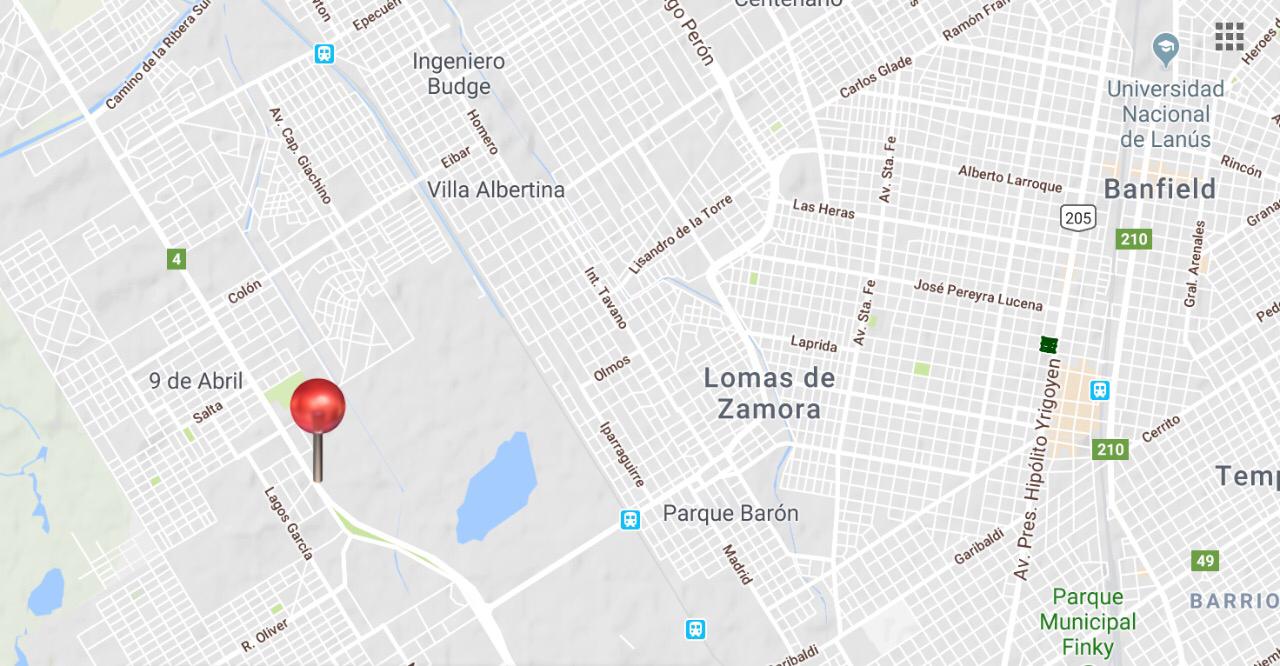
Alma Clara Solano, a 42-year-old trans woman, was working as a prostitute and was hit by a bus from line 338 (La Costera) on Thursday night at the intersection of Route 4 and Venus, in Esteban Echeverría (Buenos Aires province).


Share

ML, LC, PB, from Buenos Aires
Alma Clara Solano, a 42-year-old transgender woman, was working as a prostitute when she was struck by a bus on the 338 line (La Costera) Thursday night at the intersection of Route 4 and Venus Street in Esteban Echeverría (Buenos Aires Province). The local Prosecutor's Office is handling the investigation into the circumstances of her death, as confirmed to Presentes by the Lomas de Zamora Attorney General's Office.
A version of events given to the local newspaper Diario Sur states that Alma had been the victim of an attempted robbery and that she ran across the street to escape two men when she was struck by a bus. The incident occurred on Route 4, also known as Camino de Cintura, an area where, for many years, transgender and transvestite people, mostly excluded from the labor market and the education system, have survived by working as prostitutes, alongside cisgender sex workers.
At 9:00 p.m. on Thursday, September 27, an alert was received at the 3rd Police Station in 9 de Abril regarding a woman seriously injured on the highway. The police report states that when the patrol car arrived at the scene, “what they saw was a transgender person. They called an ambulance. The driver, in his statement, said that he was driving when a person appeared from the shoulder of the road and ran across. He tried to avoid her but couldn't.”
Alma arrived at the hospital with severe multiple injuries and died hours later. The case, which had initially been classified as negligent injury, was reclassified as negligent homicide.
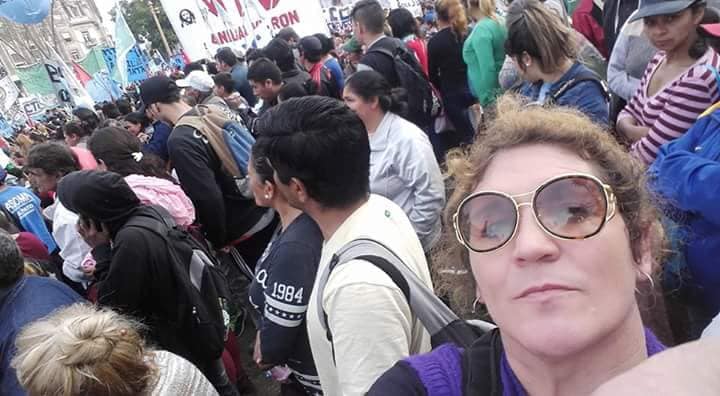
A survivor, he wanted to leave the streets and return to Entre Ríos.
At 42, she was a survivor in a country where the average life expectancy for transgender people is around 35. She was born in Santa Anita, in the department of Concepción del Uruguay (Entre Ríos province). One of her nieces, Carla Solano, told Presentes that for years, “much of the family despised her because of her gender identity.” As of this afternoon, her body remained in the morgue, awaiting collection by a cousin.
“She was cheerful, humble, a good person, but at the same time she had a very strong character. She just wanted to be accepted for who she was,” Carla said.
“She had planned to finish her work this year and return to Entre Ríos,” said Vicky Izquierdo, coordinator of the Otrans organization in the province of Buenos Aires and a member of the Argentine Trans and Travesti Federal Network. The activist says she was recently in that area, which has a long history of violence.
Area denounced for bribery and police exploitation
For years, women, trans people and transvestites in prostitution and sex workers have denounced and continue to denounce the police's extortion and in exchange for "protection", as well as all kinds of violent situations .
In June 2017, a federal judge ordered the arrest of seven Buenos Aires police officers, including a police inspector and the head of a police station in Lavallol, accused of running a prostitution ring of 150 women in the area.
“The women on Route 4 (Camino de Cintura) have problems with the police. That's why this caught my attention. The police often send men to beat or rob those who refuse to negotiate with them. A little over a month ago, two men hired a woman who was working and ended up beating her and setting her on fire. And there are others who had to leave the area because of the police,” says Vicky Izquierdo. And she asserts that Clara never wanted to negotiate.
Alma Solano had recently become involved in activism. “She approached our organization a few months ago, in the 9 de Abril neighborhood,” Tango Dotti, a leader of the Polo Obrero in the southern part of the city, told Presentes. “The idea was to start meeting with other trans women from the south and take up the campaign for a trans employment quota. She argued that this was the only option she had to avoid continuing to work as a prostitute, since trans people are excluded from the job market,” Dotti explained.
In the province of Buenos Aires, the Diana Sacayán Transgender Employment Quota Law was passed by the legislature more than three years ago, in September 2015, but to this day Governor María Eugenia Vidal has not implemented it. In the National Congress, in August of this year, the National Front for the Diana Sacayán Law presented a bill seeking to establish a 1 percent employment quota for transgender, transsexual, and transmasculine people in national public administration positions.
The same source from Polo Obrero said that a few weeks ago, the place where she lived had been evicted, and she had had to find another place, “given how difficult it is for a trans woman to rent.” This group is seeking to promote a demand for justice and clarify the circumstances of her death.
We are present
We are committed to journalism that delves into the territories and conducts thorough investigations, combined with new technologies and narrative formats. We want the protagonists, their stories, and their struggles to be present.
SUPPORT US

FOLLOW US
Related notes



We are present
This and other stories are not usually on the media agenda. Together we can bring them to light.