

Campaign for lesbians deprived of liberty in Paraguay: they are denied the right to intimate visits
Activists in Paraguay are promoting a campaign for the right of incarcerated lesbians to have intimate visits.

Share

Activists in Paraguay are promoting a campaign for the right of incarcerated lesbians to have conjugal visits. They claim the government is not complying with a 2012 prison service regulation that does not specify the gender identity or sexual orientation of visitors. “It’s the absurdity of discrimination,” says Rosa Posa of Aireana , an organization that fights for sexual diversity and the non-discrimination of lesbians from a feminist perspective. The government's response so far has been to maintain that it is acting within the framework of the law, citing the 2014 penal execution code.
The public campaign to allow a group of incarcerated lesbian women to have visits from their partners began in April at the premiere of the multi-award-winning film "The Heiresses," directed by Marcelo Martinessi. However, the issue has been in the works since 2011, Rosa Posa explained. "In 2012, we managed to get the regulations governing visits changed, and since then, they no longer specify the sex or gender of visitors," she said.
 "Heterosexual women are not required to be married."
 "Heterosexual women are not required to be married."
But starting in 2012, with the “institutional coup” (when the Senate subjected President Fernando Lugo to a swift impeachment trial and removed him from office), that provision was erased. And it remained unenforced during Horacio Cartes's administration. “The little progress made with the regulations was swept away by the Cartes government, which nullified our rights, and I think what's coming is worse,” Rosa said. The activist reported that since 2013, the organization has held meetings with various officials from the Ministry of Justice, but nothing has changed. “The former Minister of Justice in that government turned a blind eye,” she said. She then pointed to the case of a woman detained at the El Buen Pastor prison in Asunción, where a petition for judicial protection was filed but rejected. The judge argued that she could not allow conjugal visits because their purpose is to maintain family ties, and in these cases, there is no marriage. The formal complaint filed in 2015 included a group of 10 women detained at the El Buen Pastor prison.
“It’s an absurd proposition. Heterosexual women aren’t required to be married for their boyfriend, lover, or partner to visit them. It’s the absurdity of discrimination. Both the Criminal Enforcement Code and the Constitution establish the principle of non-discrimination; therefore, having access to conjugal visits isn’t a matter related to marriage: it’s a right of people deprived of their liberty, regardless of the status of the person with whom they have a relationship,” stated the Aireana activist.
When the State does not recognize same-sex marriage
When asked by Presentes, Víctor Servían, director general of penitentiary establishments, responded: “The Penal Execution Code (Law 5162 of 2014) is very clear on this point, stipulating the right to privacy with the people designated as visitors, but it specifies that they cannot be of the same sex. We can't do anything; it's a legislative matter, and we act within the framework of the law.”
“What we see is de facto discrimination. On the one hand, we have regulations that don't prohibit it; there's no legal or regulatory restriction. We're facing a discriminatory practice that stems from an institutional culture reflecting a conservative society that denies rights to certain sectors,” Diana Vargas, former commissioner of the National Mechanism for the Prevention of Torture in Paraguay, told Presentes. “Over time, the narratives justifying discrimination change: religious, personal, and those of officials, but they all contradict the principle of legality.”
Much more than a denial of rights
Vargas said that during her administration, not only were formal requests for the authorization of visits initiated, but an awareness process was undertaken aimed at prison staff and women deprived of their liberty regarding human rights.
She noticed that when they gathered with the girls in the prison yard, there were many of them, but when it came time to make formal demands, not all of them dared to come forward. They feared reprisals, that their legal proceedings would be affected by participating in this demand. Even if there was a religious organization involved, they feared being excluded from the cellblocks. “It’s not just a denial of rights. They fear the repercussions of acknowledging their sexual orientation and demanding their rights for fear of reprisals.”
Posters at an advance screening
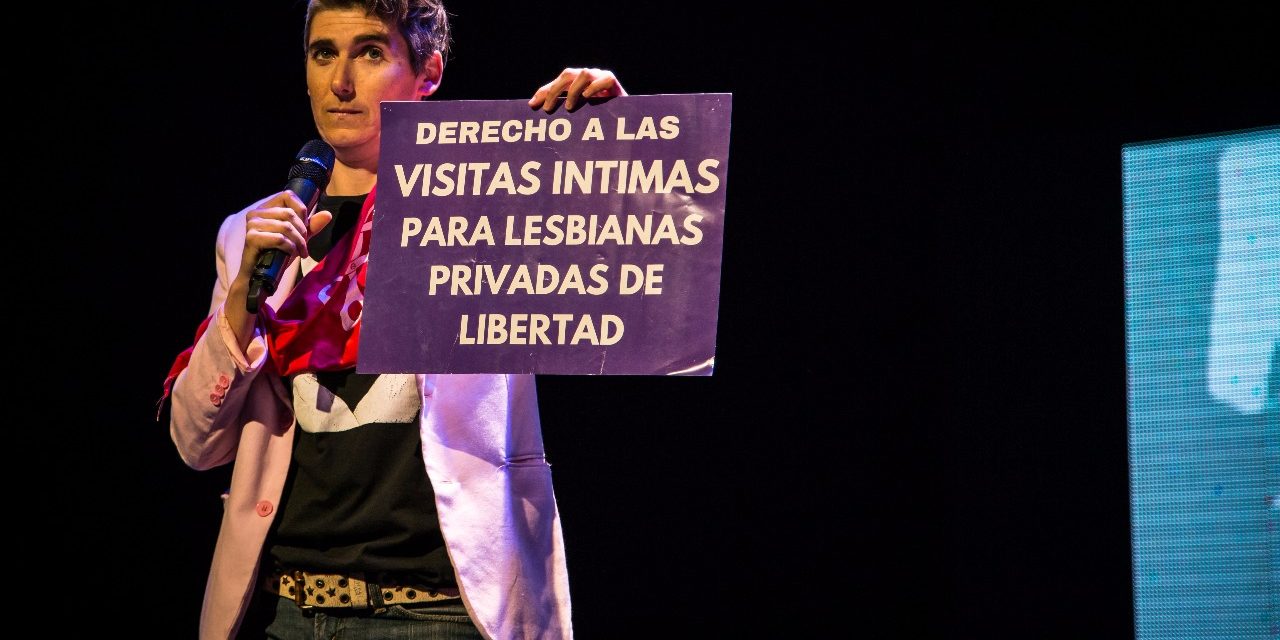
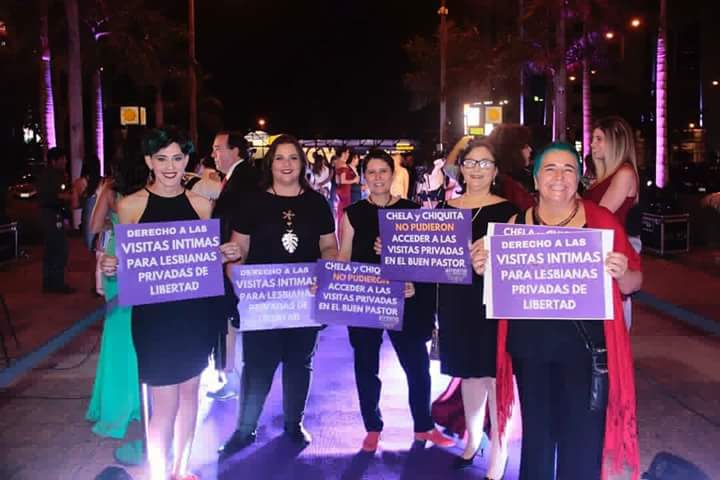
The members of Aireana participated as extras in the film "Las Herederas" (The Heiresses), which tells the story of a lesbian couple from the Paraguayan aristocracy. One of them is imprisoned. “We were invited to the premiere and went with our signs advocating for the right to conjugal visits for incarcerated lesbians. The entire film crew, including the director, took photos with our sign. That's how we started to raise awareness about this issue, even though we've been working on it for some time,” said Jessie Infrán Pérez, a member of Aireana.
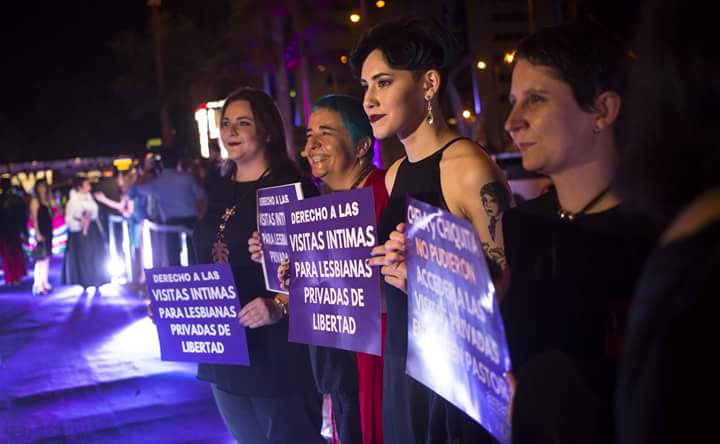
Jessie was the one who, on the day of the avant-premiere, confronted the former Minister of Justice Ever Martínez during the presentation of the film about his lack of response to the request for intimate visits for lesbian women in the El Buen Pastor prison who have been locked up for months.
Last weekend, Argentine actresses Ana Carolina and Vanesa Strauch presented their comedy show in Asunción alongside Malena Pichot and Charo López, and joined the campaign on their social media.
https://www.instagram.com/p/BneCnlslDFL/?utm_source=ig_share_sheet&igshid=ts7bso58ht6z
Next Saturday, September 29, during the 15th TLGBI event in Paraguay, this campaign will continue to end discrimination against lesbian women deprived of their liberty.
We are present
We are committed to journalism that delves into the territories and conducts thorough investigations, combined with new technologies and narrative formats. We want the protagonists, their stories, and their struggles to be present.
SUPPORT US

FOLLOW US
Related notes



We are present
This and other stories are not usually on the media agenda. Together we can bring them to light.