

I, who am not trans
I, who am not trans, never experienced a radical sense of alienation from my body, nor was I rejected by my family because of my sexual orientation. During my adolescence, I spent my mornings at school, my afternoons with friends, and my evenings at home. I started working at a young age, but that didn't prevent me from completing my higher education.

Share

By Nicolás Lasa*
This article is published in partnership with the Uruguayan media outlet La Diaria.
I, who am not trans, never experienced a radical sense of alienation from my body, nor was I rejected by my family because of my sexual orientation. During my adolescence, I spent my mornings at school, my afternoons with friends, and my evenings at home. I started working very young, but that didn't prevent me from completing my university studies. Now that I'm over 30, I don't see blowing out another birthday candle as a miracle; I have plans, and old age presents itself to me as an unavoidable destiny.
I spent much of my life in Reducto, a neighborhood where prostitutes and transvestites frequented the corners of Bulevar Artigas at night, and as a child, I was torn between looking at them or not. On my way to the video store, I would uncomfortably observe how these "grown women" were objects of consumption and ridicule for others.
Compared to the lives of the trans people whose testimonies I have had the opportunity to hear, my life is privileged, and from the recognition of this position, I feel responsible . Their suffering, stemming from devising survival strategies on the margins of society, the series of exclusions they are and have been subjected to, their invisibility, and their lives confined to the shadows, should challenge us and summon us to transformative and restorative action. For those of us driven by a vocation for justice, the advance toward a new kind of society demands that we identify with the most vulnerable, deprivatizing their suffering and thinking about reality from the peripheries toward the center, not from an asymmetrical and paternalistic perspective, but from a collective critique of dominant power and the effective solidarity of a common struggle.
Excluded vs integrated
The German economist and theologian Franz Hinkelammert argues that “when society treats the excluded as objects, calculating their limits of what is tolerable and focusing its relationship on them, the very social relations within this society—now that of the 'integrated'—cease to be sustainable.” ¹ The fact is that the attack on or disregard for human dignity is not a problem of those who suffer it directly and obviously, but of us all.
For those of us who make the ethics of social change the meaning of our lives, being citizens implies not only being subjects of rights (and legal or formal obligations), but also a set of commitments and responsibilities toward the community in which we live. It is our duty, then, to ensure a fair distribution of social power, basic goods, and opportunities, and to expand these practices throughout society, seeking to overcome the tendency to focus solely on our own affairs and shield ourselves from the problems of others. There is a world to build in which self-affirmation does not require denying the existence of others, but rather the opposite.
[READ ALSO: Uruguayan Senate discusses comprehensive trans bill]
Attempts at normalization in our societies, where capital and the market tend to colonize and shape all spaces and relationships, are diverse. While more subtle strategies of domination have developed in our time than in the past, the treatment of the trans population brutally exposes certain very old forms of punishment. The figure of “exile,” for not complying with the laws of “us,” has moved from the public square to the private sphere of the family, and that of “torture” seems to structure trans lives. Foucault argues, based on this logic: “Death is a torture insofar as it is not simply the deprivation of the right to live, but the occasion and the end of a calculated gradation of suffering […] Death-torture is an art of retaining life in pain by subdividing it into a thousand deaths.” ²
A historic opportunity
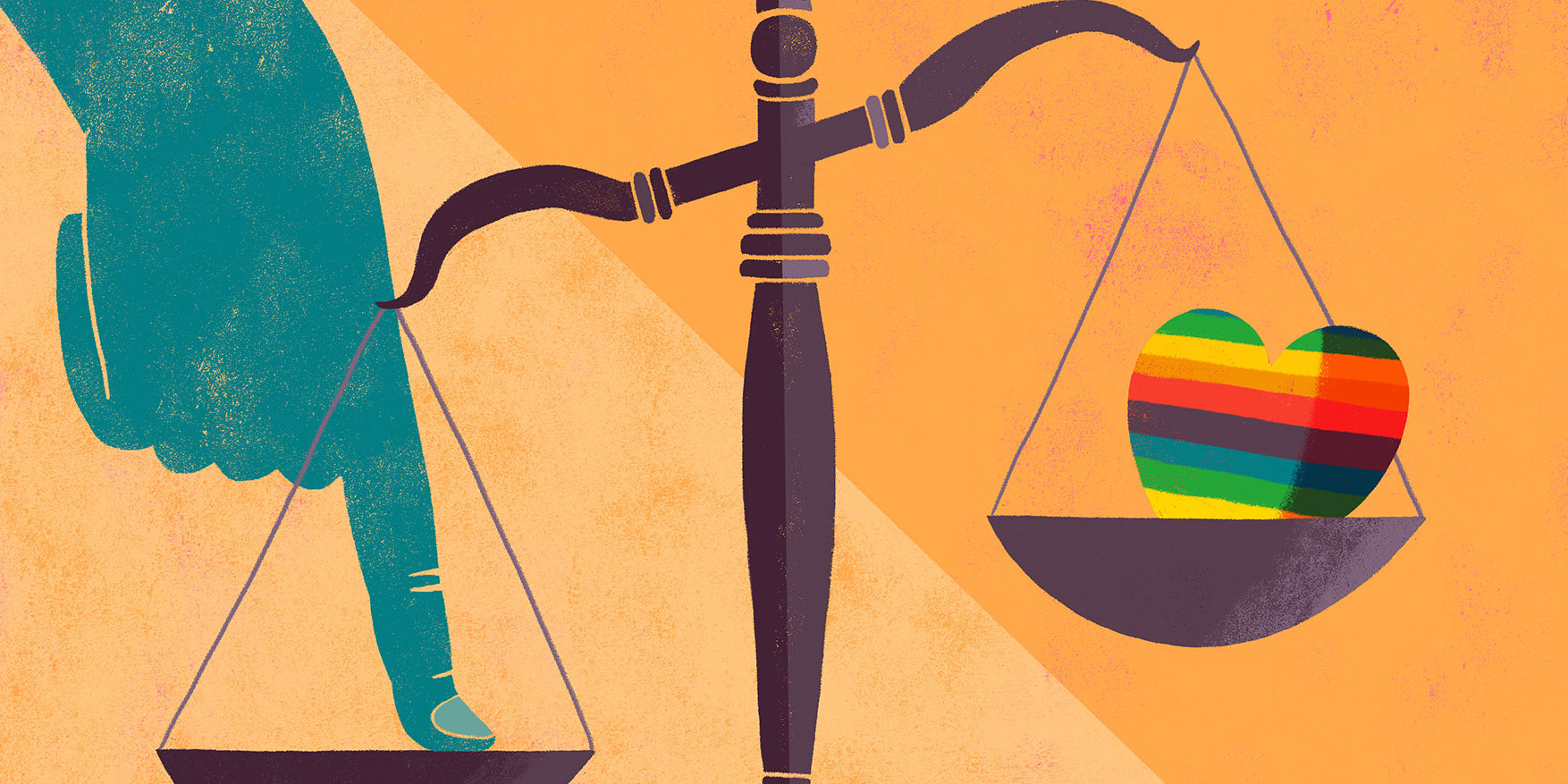
The life expectancy of transgender people is less than 40 years, and the vast majority resort to sex work to survive, exposing themselves to multiple forms of violence and abuse. There is no longer room for indifference; to remain silent is to side with the oppressors.
With the debate on the Comprehensive Trans Law, our country has a historic opportunity to begin recognizing the dignity of a population that bears the weight of stigma and multiple violations. Navigating this process requires acknowledging that what is treated as “deviance” is not inherent to lifestyles, but rather a label imposed by those in power to negatively condemn the behavior of others. Respect, from the Latin respicere , suggests “looking again,” overcoming the dialogical void of those who have renounced communication by negating or ignoring another who challenges or makes them uncomfortable.
Beyond the imperative of self-sufficiency and the meritocratic discourse that characterize our time, humans are always relational beings, and the gaze of others shapes us from our earliest years. A gaze can embrace, contain, respect, and value, or it can also establish a dynamic of contempt that demands the other person alter their body to live out their gender identity and fit back into structures that accept only one way of being male and female, experiencing as their only possible destiny the exploitation and consumption of their own life by the very same people who condemn them in the public sphere, assuming forms of existence that are perversely despised and, in turn, legitimized by those in power, or traversing other imposed and denying paths that also destroy freedom.
[READ ALSO: Uruguay has the first state census of trans people]
The liberating perspective of interpersonal relationships should inspire our collective attitude towards the structures that consolidate and reproduce contempt, disdain, and inequality.
The central objective of ensuring the sustainability of life demands the challenge of acting from an ethic of care, recognizing the fragility of human life, caring for it among—and for—everyone, politicizing our existence through an analysis of our daily practices and challenging the obvious. The “natural” subject of our capitalist consumer society is what María José Capellín calls BBVAH (white, bourgeois, male, adult, and heterosexual); viewing the world exclusively from this perspective is to deny it to others.
The universality of rights is enshrined on paper but not in concrete realities, and that is why one way to guarantee it is to treat differently what is different and unequal, seeking to build true equality within diversity. This, as some of us conceive it, does not imply a banal or frivolous worship of difference, nor is it simply a new liberal contract, but rather a project of human dignity and social emancipation, and therefore the dismantling of relations of domination and exploitation. It is from this perspective that we also encourage legal changes and refuse to engage in a entrenched, entrenched approach to this discussion, from any position, in a superficial or simplistic way.
* psychologist and alternate deputy for the Socialist Party.
We are present
We are committed to journalism that delves into the territories and conducts thorough investigations, combined with new technologies and narrative formats. We want the protagonists, their stories, and their struggles to be present.
SUPPORT US

FOLLOW US
Related notes
We are present
This and other stories are not usually on the media agenda. Together we can bring them to light.