

HIV/AIDS in Chile: Between the worst figures in the region and the media spectacle
The new figures released by the Ministry of Health of the Government of Chile indicate that the upward trend in positive notifications - particularly among the younger population - continues to rise steadily.

Share

By Víctor Hugo Robles , from Santiago, Chile
In July 2017, all the alarm bells started ringing. Chile was losing the battle against HIV/AIDS, and official figures confirmed this alarming situation. While UNAIDS released the global report "Ending AIDS 2017," revealing worrying figures for the local reality, Chile was the Latin American country with the largest increase in new cases between 2010 and 2016. This contrasted sharply with the regional trend, where the figures had remained stable. In fact, the same report highlighted the reduction in transmission in El Salvador, Colombia, Nicaragua, and Mexico. Meanwhile, it mentioned the countries on the continent that had seen increases. These included Panama with 9%; Honduras with 11%; Costa Rica with 16%; Guatemala with 23%; and Chile in first place with 34%.
A little over a year after that upheaval, the situation has not improved. New figures released by the Chilean Ministry of Health indicate that the upward trend in positive cases—particularly among the younger population—continues its steady rise. According to information provided by the Public Health Institute (ISP), the agency under the Ministry of Health responsible for confirming positive cases nationwide, the monthly number of new cases fluctuates between 550 and 600. “In the first three months of 2018, the ISP was confirming around 600 new cases per month, which leads us to project that in 2018 we will have more than 7,000 new cases,” the Ministry of Health recently told the specialized press. During the first quarter of this year, the ISP confirmed a total of 1,660 new positive cases nationwide.
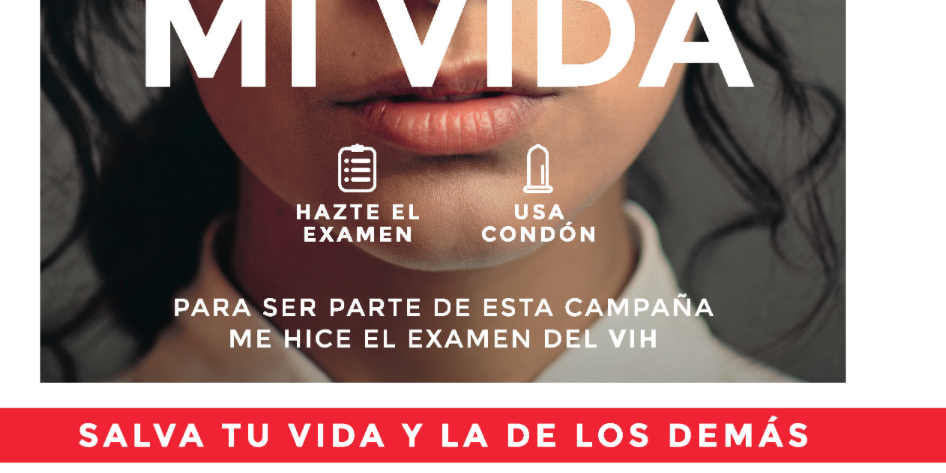
The reality is dramatic. “HIV is out of control,” experts are saying in the press. For this reason, the Chilean government, through the Ministry of Health, created and promoted a National HIV/AIDS Prevention Plan, launched in May, which is currently being implemented. This strategy will include, among other actions, facilitating rapid HIV testing in primary healthcare, distributing male and female condoms, creating new HIV/AIDS care centers within the public health network, and launching HIV/AIDS Prevention Campaigns—the most lacking and most demanded strategy by key populations, including men who have sex with men, transgender people, and sex workers.
The controversial campaign
Shortly before its controversial broadcast on national television, the first HIV/AIDS prevention campaign by the Ministry of Health under Sebastián Piñera's government had already generated a series of comments on social media and open rejection from leading social organizations of people living and working with HIV/AIDS in Chile. These included the Chilean HIV/AIDS Prevention Corporation ACCIONGAY, the Amanda Jofré Trans Corporation, the Maule National HIV Coordinator, and the Margen Foundation, among others. Similarly, Indigenous organizations grouped in the National Network of Indigenous Peoples (RENPO) have formally and openly expressed their displeasure.
The activists requested to see the campaign ad, but the Ministry of Health's communications team only offered to present a written timeline.
“This campaign was neither developed nor consulted with civil society, as has been the practice historically since the 1990s,” Vasili Deliyanis told Presentes. “The best public-private partnership in health has always been the fight against HIV/AIDS. In that context, the Ministry of Health’s campaign represents a setback because it destroys more than 20 years of work. We see it as contempt, a provocation, and a complete violation of the law, because community participation is guaranteed by various laws,” the activist added.
The “commercial that saves lives”
Last Sunday, September 2nd, at around 8:30 p.m., Televisión Nacional de Chile (TVN) – the public television channel – launched its controversial HIV/AIDS prevention campaign featuring thousands of young people participating in a “mass casting call” hosted by a well-known journalist from the state-run network who has openly acknowledged his homosexuality. Reactions on social media were swift, with various users describing the new production as a “reality show,” a “bland commercial,” or a “firefighter-style campaign,” the latter alluding to the campaign's central slogan: “The commercial that saves lives.”
Michael Díaz, executive secretary of the National HIV/AIDS Care Coordinator of Talca, wrote an opinion column for the El Desconcierto website stating: “It is possible that the campaign will pass without fanfare, which is a tragedy since a valuable opportunity is wasted for the issue to be analyzed and discussed within families, educational communities, and among active community organizations, as a matter of public interest, whose ultimate goal is to change risky behaviors and the consequent adoption of more responsible lifestyles; undoubtedly a very poorly designed strategy and even worse, very poorly implemented.”
The failed session of the Health Committee of the Chamber of Deputies
On Monday, September 3, Health Minister Emilio Santelices was scheduled to appear before the Health Committee of the Chamber of Deputies to present the National HIV/AIDS Plan and explain why the Chilean government did not send an official delegation to the 22nd World AIDS Conference, held last July in Amsterdam. To the surprise and dismay of all the parliamentarians and HIV/AIDS activists present, the minister failed to appear. Instead, he excused himself, stating that he had to attend the Senate Health Committee due to his controversial statements regarding pollution in the coastal city of Quintero, an area known in Chile as an “environmental sacrifice zone.”
Where are the rapid tests?
The session was held without the minister present, but with Ministry of Health officials standing in for Emilio Santelices. They presented figures and progress on the National HIV/AIDS and STI Plan, which includes—specifically—the launch of the HIV/AIDS prevention campaign. In this first phase, the campaign encourages young people to get tested. In this context, opposition members of parliament, such as the communist Karol Cariola and Broad Front member Miguel Crispi, criticized the lack of community participation in the prevention campaign. However, the public officials requested that any questions, doubts, and concerns be submitted through formal channels.
There was no response to the parliamentarians' questions, much less to the concern of Karol Cariola, who insisted on knowing the availability of the much-publicized rapid test throughout Chile's public health network since the campaign began airing in the media. "Where are the rapid tests?" the Communist Party (PC) parliamentarian asked repeatedly.
“We cannot validate these types of campaigns, which misinform the population by creating a false perception regarding the availability of methods to diagnose HIV in CESFAMs, a device that is not available, which is a serious irresponsibility,” said activist Michael Díaz.
A “novel advertisement”, says the Ministry of Health
On Monday, September 3, the Ministry of Health invited civil society organizations working on HIV/AIDS to an official event on September 5 in the La Florida district to present the National HIV Plan and the controversial prevention campaign, but the meeting was cancelled due to "scheduling reasons".
The Ministry of Health has not defended itself against the criticism; only this Tuesday, through its institutional website, did it promote the prevention campaign and explain its purpose: “The idea is to increase the number of people who get tested, and male and female condoms will also be distributed. We need to create spaces where people feel accompanied and supported, and facilitate access to rapid testing to expedite the treatment phase after confirmation. People need to overcome their fear of getting tested, as we estimate that half of the 70,000 infected individuals are unaware they have the disease,” says the Ministry of Health .
We are present
We are committed to journalism that delves into the territories and conducts thorough investigations, combined with new technologies and narrative formats. We want the protagonists, their stories, and their struggles to be present.
SUPPORT US

FOLLOW US
Related notes

We are present
This and other stories are not usually on the media agenda. Together we can bring them to light.