

#Guatemala Alert over a law against the rights of women and LGBTI people
The Law for the Protection of Life and Family prohibits sex education, condemns same-sex marriage, and penalizes women who have abortions with imprisonment. It has already received a favorable opinion in the Chamber of Deputies. Organizations marched in protest.


Share

By Rosario Marina from Guatemala.
The Guatemalan Congress is about to approve a bill called the Law for the Protection of Life and Family that threatens the rights of LGBTI people and women. Among other things, it prohibits any public or private educational institution from promoting sex education programs; condemns any content related to sexual diversity and what they call "gender ideology"; reaffirms the ban on same-sex marriage; penalizes women who have abortions; and prohibits the "teaching as normal" any behavior other than heterosexuality. The bill was proposed by a group of conservative members of Congress led by the president of the Women's Commission, Aníbal Rojas.
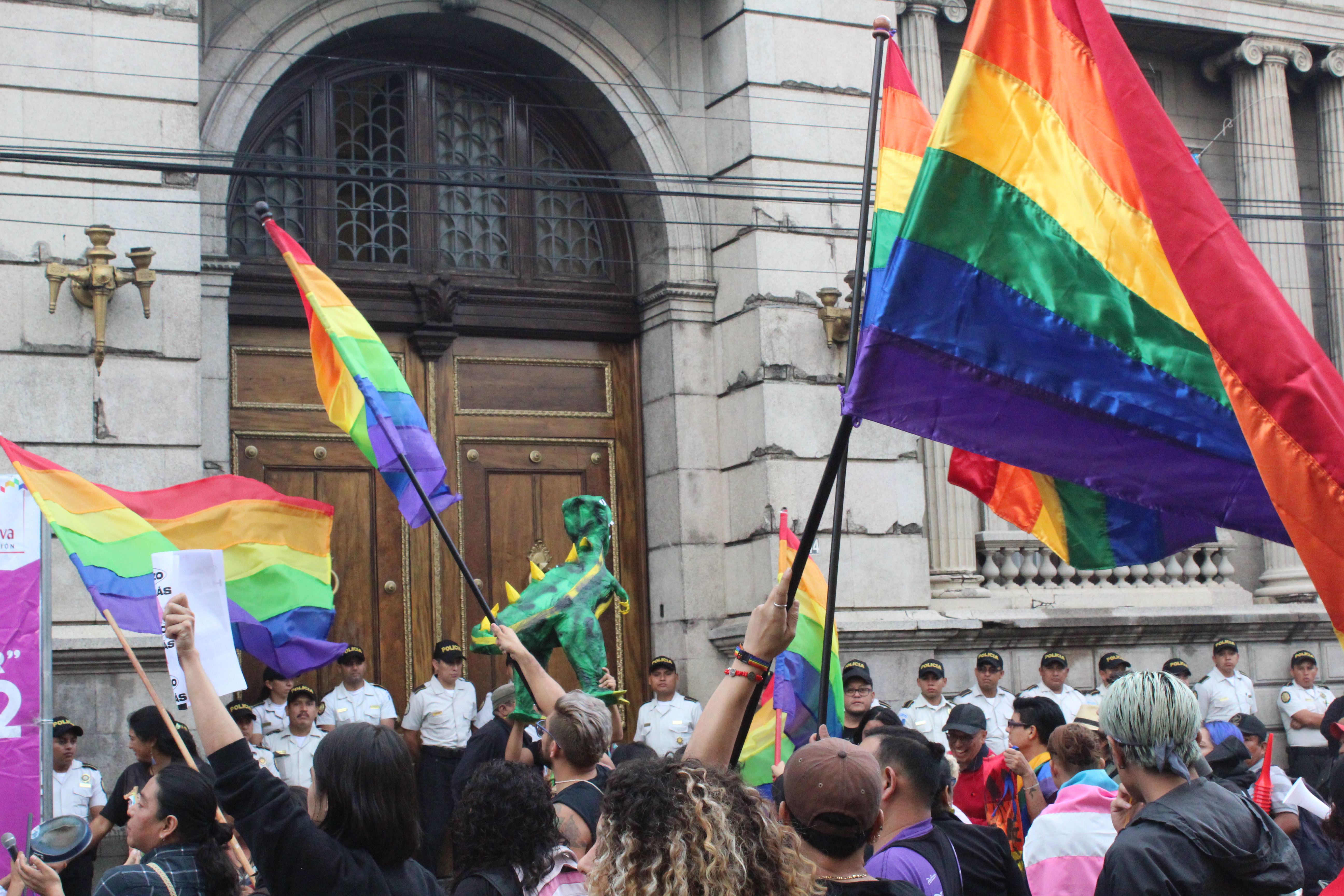
The country's LGBT community is preparing to file a collective injunction as soon as the law is passed. This could happen as early as this week. Meanwhile, organizations held peaceful demonstrations against the initiative, Bill 5272. On Tuesday at 2:00 p.m., more than 250 people gathered spontaneously in front of Congress, waving rainbow flags and playing drums.
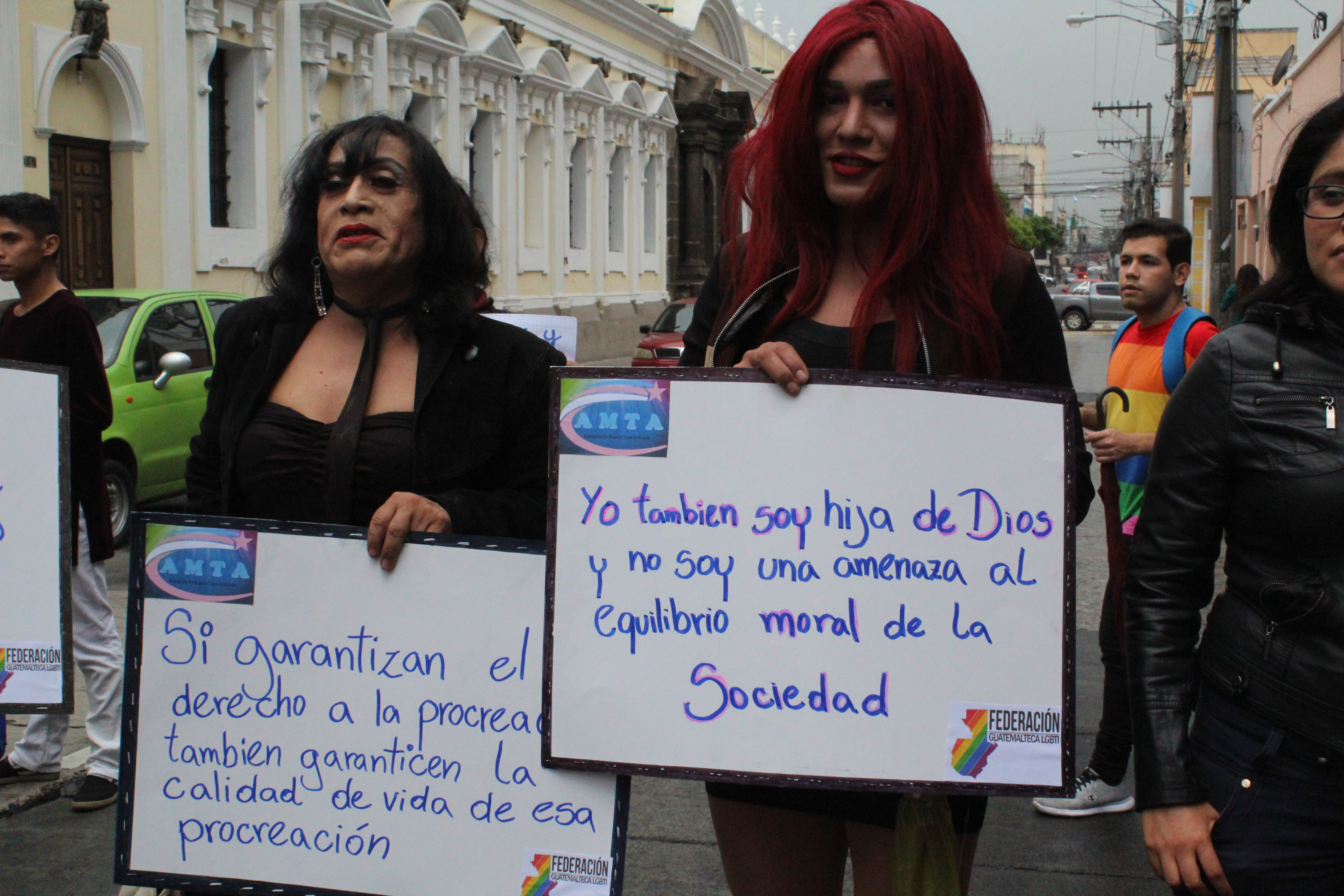
“Several organizations gathered to tell members of Congress and the president that this law violates the human rights of women and the LGBTI community,” Gabriela Dávila, from the organization Gente Positiva, explained to Presentes. Amidst cheers and applause, she recounted that on Friday, police arrived at a restaurant demanding the removal of the rainbow flag, and on Saturday, patrol cars attempted to shut down an LGBTI nightclub. “These acts of persecution concern us,” she insisted.
On November 4, 2012, Gente Positiva filed a complaint against the State of Guatemala before the Inter-American Commission on Human Rights (IACHR) for crimes against transgender women and gay men. If this initiative succeeds, the organization would again file a complaint against the State for promoting unconstitutional laws.
READ ALSO LGBTI activists from the region met in Guatemala: “We are facing a scenario that alarms us”
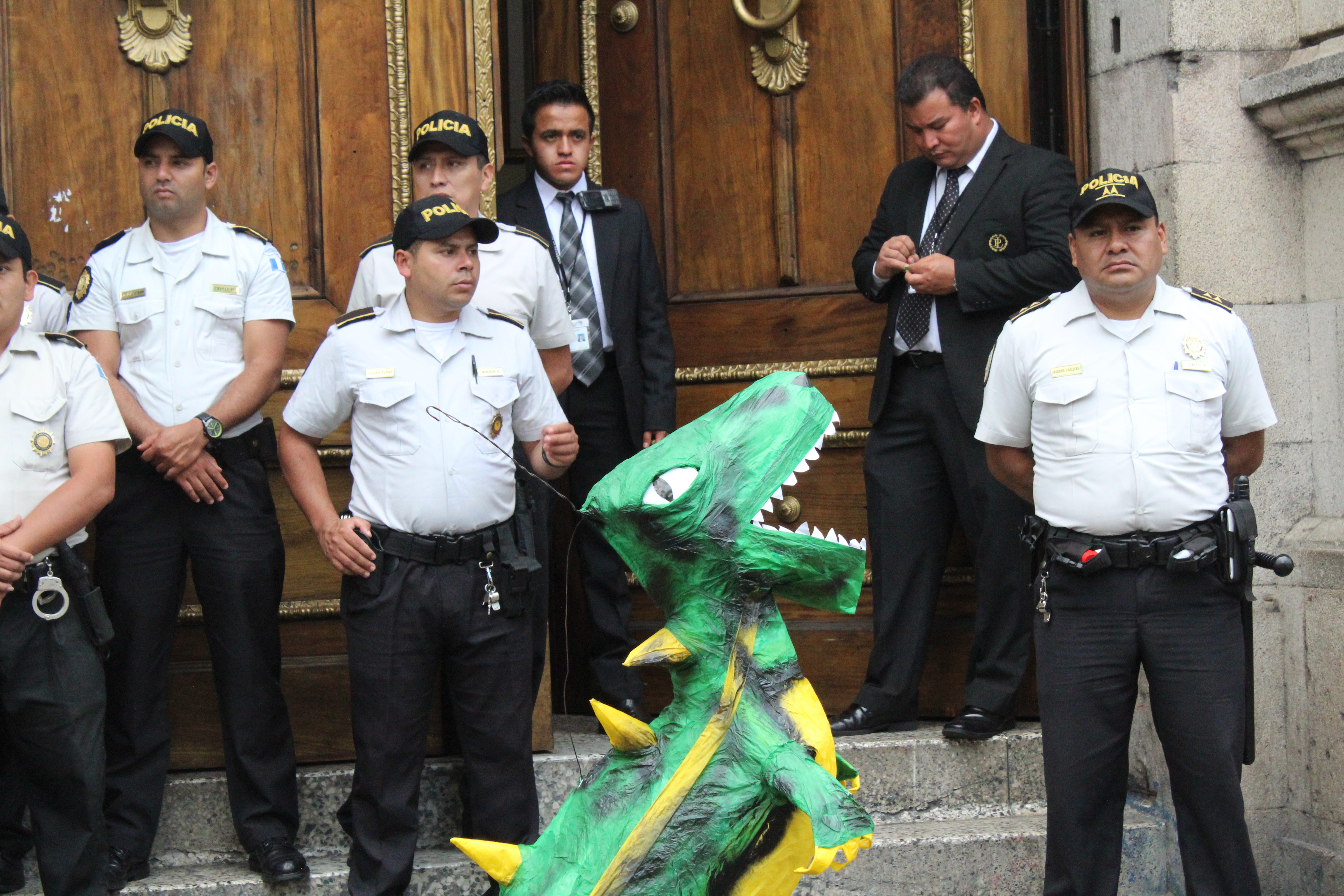
On a cloudy Tuesday, as more community activists joined the demonstration, police also increased their presence at the gates of Congress. However, the entire protest remained peaceful, as planned from the beginning. “We are peaceful protesters. And we know that uniformed personnel are also exploited,” Aldo Dávila of Gente Positiva announced through a megaphone. The crowd applauded.
A dinosaur piñata was placed in front of the main door to symbolize "the mentality of those who define the country's public policies," as a woman shouted into an open microphone.
Stacy Velazquez, from Redlactrans (Latin American Trans Network), a network made up of trans people from Latin America and the Caribbean, also expressed her concern about the "strong increase in conservative movements in the region."
Under the rain, which only succeeded in bringing out a bunch of umbrellas and colorful capes, a chant was superimposed: “If sick is what he seeks/ the answer is more than obvious/ sick is all he/ who suffers from homophobia.”
Regarding the law, Luis Eduardo Barrueto, from the organization Visibles, explained that "it is basically an attack against what conservative groups call gender ideology, it establishes prison sentences against women who have abortions, it establishes prohibitions for state institutions to provide comprehensive sex education, it establishes an explicit prohibition against same-sex marriage."
READ ALSO “Unstoppable”: the book that tells us about LGBTI rights in Latin America
Reaction from the Human Rights Ombudsman's Office
Last week, the Guatemalan Human Rights Ombudsman's Office issued a statement regarding the progress of the initiative. Ombudsman Augusto Jordán Rodas Andrade wrote: “The State's failure, through any discriminatory treatment, to comply with its obligation to respect and guarantee human rights generates international responsibility.”
The letter concludes by stating that the Congress of the Republic must "refrain from enacting laws that have the consequence of preventing the free exercise of the rights recognized in the Constitution and in international instruments ratified by the State of Guatemala."
The reference is to Article 4 of the Political Constitution of the Republic of Guatemala, Article 26 of the International Covenant on Civil and Political Rights, and Article 24 of the Inter-American Convention on Human Rights.
 In an interview with Presentes, Kendra Avilés, from the feminist organization Incide Joven, explained: “We have been following this initiative since it was presented last year, when it received a favorable ruling with modifications. Initially, all the articles that violated human rights had been removed. The conservative representatives were not happy with those modifications, so in June of this year they presented a ruling that violates all rights.”
That is why they filed an appeal with the Constitutional Court almost two months ago, but it was not processed because the initiative had not been approved.
After an hour and a half of peaceful demonstration, Congresswoman Sandra Morán, who has championed and defended initiatives for the rights of the LGBT community, addressed the crowd: “We must stand together to achieve this and much more. As citizens, we need to fight for this country, not just for our own rights. Thank you, comrades. And the struggle continues.”
More activists spoke into the open microphone. They sang. They shouted, "Yes, we did it!" They demanded the resignation of President Jimmy Morales.
After an hour, the crowd began to disperse. People greeted each other, full of hope. Umbrellas and colorful flags were folded away, until the next day of struggle.
We are present
We are committed to journalism that delves into the territories and conducts thorough investigations, combined with new technologies and narrative formats. We want the protagonists, their stories, and their struggles to be present.
SUPPORT US

FOLLOW US
Related notes



We are present
This and other stories are not usually on the media agenda. Together we can bring them to light.