

Diana Sacayán, National Quota Project: “This law will break down stigmas”
The National Front for the Diana Sacayán Law presented a bill yesterday in the Argentine Congress seeking to establish a 1 percent quota for transgender, transsexual, and gender-diverse people in the national public administration. The event took place in the Annex of the Chamber of Deputies. Little…

Share

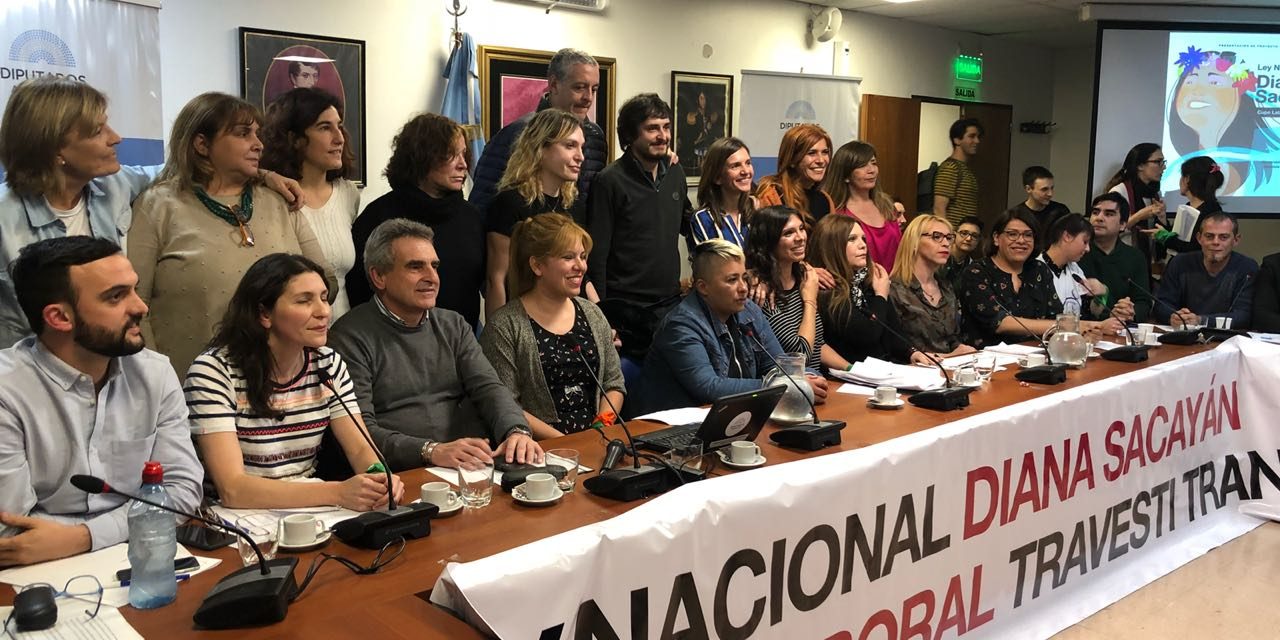
The National Front for the Diana Sacayán Law presented yesterday in the Argentine Congress the project that seeks to institute a job quota of 1 percent of the positions in the national public administration for transvestite, transsexual, transgender and trans masculinity people.
The event took place in the Annex of the Chamber of Deputies. Shortly after 6:00 p.m., activists from the Front began speaking about the need and urgency of debating and passing the trans and travesti employment quota law. Nora Cortiñas, a member of the Mothers of Plaza de Mayo, joined the audience.
Florencia Blasi, representing Infancias Libres, said that “six years after the approval of the Gender Identity Law, it is essential to support the rights that have been won with public policies.”
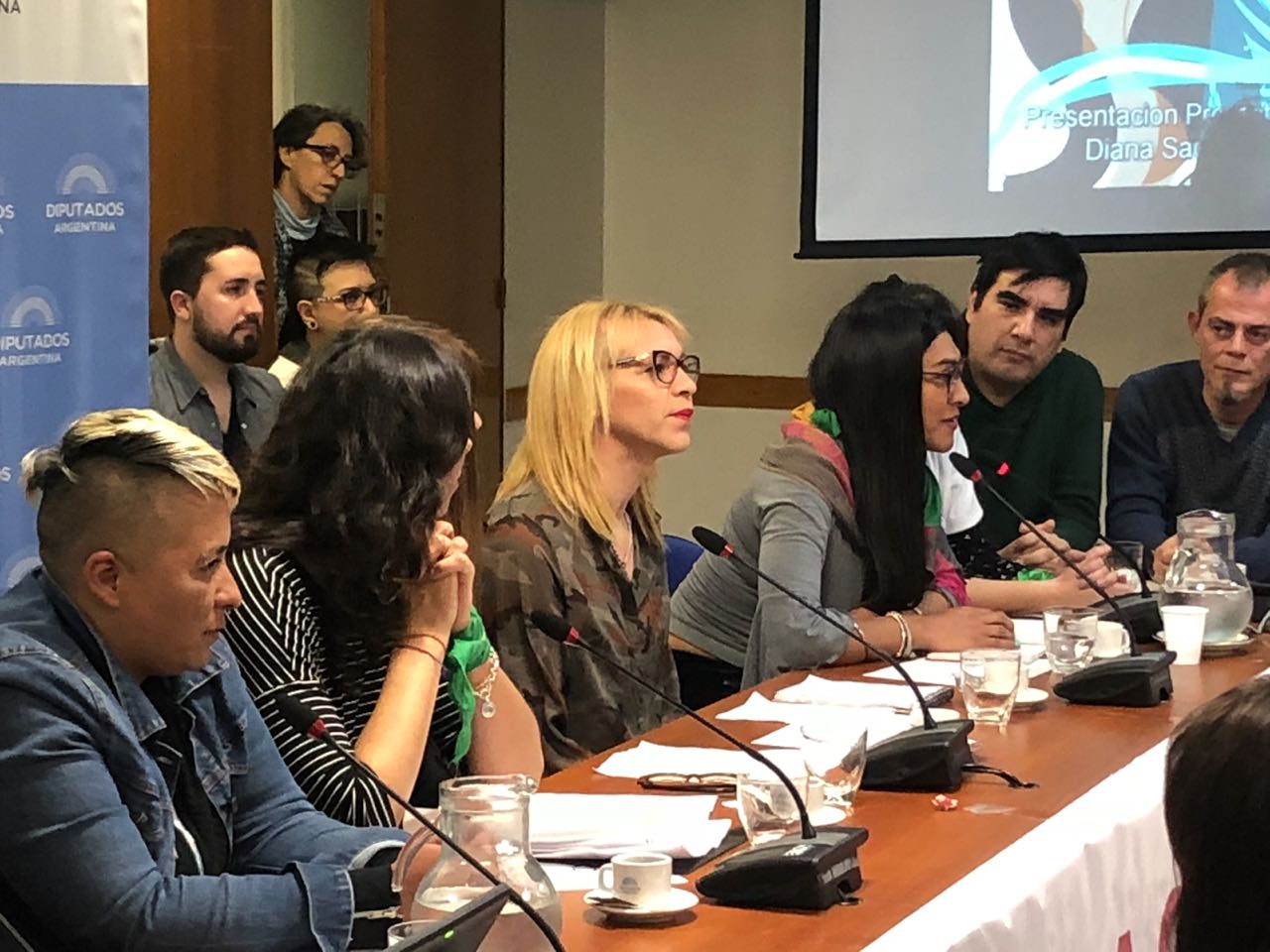 Lourdes Arias of La Cámpora Diversia: “The right to a decent job is the great debt that society owes us, which has thrown us into prostitution as the only way to survive.”
Trans activist Pía Ceballos spoke about the living conditions of trans women in northern Argentina. “Our lives become more difficult in conservative provinces, where we are mired in extreme structural poverty, discriminated against by society, and raped by the security forces,” she said. She added, “Many of us are here hoping to find our first job and, why not, to be able to afford a coffin, because we are violated even in death. That is why Congress must strongly approve this law that will redress years of neglect. We will never go back to jail,” she declared.
Breaking social stigmas
“This law aims to break down the social stigmas that weigh on our bodies. We are not objects, we are subjects of rights. This law must be implemented so that prostitution stops claiming the lives of our sisters,” said trans activist Ivana Gutiérrez of Conurbanos por la Diversidad (Suburbanites for Diversity).
[READ ALSO: MAP: This is the trans job quota in Argentina]
Agustina, representative of the Association for an Equal World of Mar del Plata, said: “Being a transvestite in Argentina is to be condemned to death by the culture of patriarchy and heteronormativity.”
Also speaking were activists Martín Canevaro, from 100% Diversity and Rights, and Marcelo Suntheim representing the Argentine Homosexual Community (CHA).
Sasha Sacayán, Diana's brother and an activist with MAL (Anti-Discrimination Liberation Movement), said that Diana was a victim of hatred, adding to the violence that "transvestite and trans people experience every day." He added, "We give up our sisters and comrades to demonstrate the extreme vulnerability of the transvestite and trans community."
Background of the law
Congresswoman Mónica Macha, who promoted the project in the Lower House, said that the national project has as its precedent the Diana Sacayán trans quota law that was approved in the province of Buenos Aires in 2015 and that Governor María Eugenia Vidal has not yet regulated, therefore it is not applied.
Diana conceived this law to address the highly vulnerable situation of the trans and travesti population: over 86% engage in prostitution as their sole means of survival, and their average life expectancy is less than 35 years. The majority face structural obstacles to accessing formal employment, such as a lack of real opportunities, stigmatization, and violence.
 The support of the deputies
 The support of the deputies
The Diana Sacayán National Law initiative was presented at the request of National Deputy Mónica Macha (Unidad Ciudadana), but already has cross-party support from legislators of the Frente para la Victoria (FPV), Cambiemos, Evolución Radical, Peronismo para la Victoria, Protectora and Unión Cívica Radical
“Employment quotas are a necessity for the trans community due to the difficulties they face in finding work. The violence they are exposed to and their average life expectancy of less than 35 years are important factors to consider when approving such quotas,” Congressman Agustín Rossi told Presentes.
“The trans quota is a debt of democracy. The transvestite and trans community has always fought for social causes throughout Argentine history, which is why we are committed to that struggle in the terms that Diana Sacayán proposed,” Congressman Leonardo Grosso told Presentes.
We are present
We are committed to journalism that delves into the territories and conducts thorough investigations, combined with new technologies and narrative formats. We want the protagonists, their stories, and their struggles to be present.
SUPPORT US

FOLLOW US
Related notes

We are present
This and other stories are not usually on the media agenda. Together we can bring them to light.