

Honduras: Amidst the violence, the fight for marriage equality
The courts have accepted a constitutional challenge seeking to invalidate Article 112 of the Honduran Constitution. This article states that “Marriage and civil unions between persons of the same sex are prohibited. Marriages or civil unions between persons of the same sex celebrated or recognized under the laws of other countries shall not be valid in Honduras.”

Share

By Fernando Reyes, from Tegucigalpa
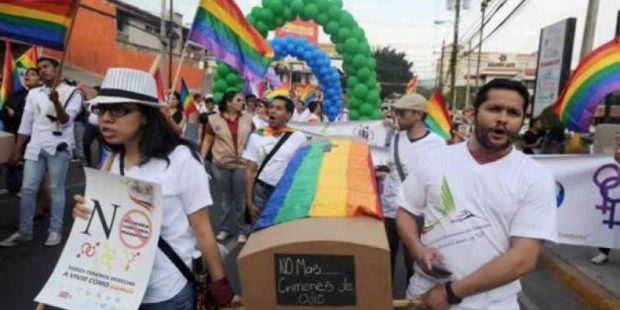
Photo: dayagainsthomophobia.org
In the second quarter, something unprecedented happened for the LGBTI community in the history of Honduras: the courts accepted a constitutional challenge seeking to invalidate Article 112 of the Honduran Constitution. This article states that “ Marriage and civil unions between persons of the same sex are prohibited. Marriages or civil unions between persons of the same sex celebrated or recognized under the laws of other countries shall not be valid in Honduras.”
The appeal was filed by the lesbian organization Cattrachas and sets a precedent for establishing the next steps in the fight for sexual diversity in Central America. It is closely linked to the recent advisory opinion requested by Costa Rica and issued by the Inter-American Court of Human Rights in early 2018. This advisory opinion was a historic step in recognizing that member countries must adopt binding measures in favor of the rights of LGBTQ+ people, including marriage equality and gender identity.
[READ ALSO: Why Honduras is one of the most dangerous places to be LGBTI]
The opinion came amid a political crisis in Honduras over the illegal reelection of candidate Juan Orlando Hernández. According to the Office of the High Commissioner for Human Rights, at least 22 people were killed in a few weeks. This is compounded by the persistent fragility of human rights, due to high levels of violence and insecurity, widespread social conflict, and impunity for those in government.
So far, the Honduran Court has not issued a ruling, but among the organizations a possible refusal is presumed, in addition to the resistance of other state bodies.
[READ ALSO: Honduras: The trans candidate fighting against discrimination and violence]
If the State refuses to comply with the recent advisory opinion and issues an unfavorable ruling on the appeal, it would set the first precedent for the country to resort to international bodies.
This resource is considered a valuable opportunity because it is a legal tool that seeks to declare unconstitutional an article that violates a fundamental law of a State.
In the media, this appeal of unconstitutionality did not have much resonance despite the typical provocations of religious leaders, accompanied by hate messages on social networks, and the opinions of political actors aligned with the government as disinformation agents.
The organizations have been able to use strategies beyond media outreach and avoid unnecessary debates, achieving openness in advocacy processes at the international level through the recent visit of the Special Rapporteur for Human Rights and the recognition of social mobilization during May 17, the Day against Homophobia, Transphobia and Biphobia.
Religious groups and resistance
In Honduras, the actions of fundamentalist Catholic and evangelical religious groups have made progress in maintaining restricted access and disinformation on topics considered "progressive or Western agendas" in the country, even going so far as to prohibit emergency contraception, abortion, same-sex marriage and adoption.
[READ ALSO: Being indigenous and LGBT in Honduras: the two flags of Gaspar Sánchez]
In response to the advisory opinion, various politicians from different branches of government expressed their refusal to facilitate the process in Honduras. Media reactions focused on the constitutional provisions against marriage and adoption in Articles 112 and 116, as well as asserting the country's autonomy over future binding actions, including the Court's advisory opinion .
Among Honduran sexual diversity organizations, not all consider same-sex marriage a priority, as they believe that the risk to the lives of LGBTI people is more important.
We are present
We are committed to journalism that delves into the territories and conducts thorough investigations, combined with new technologies and narrative formats. We want the protagonists, their stories, and their struggles to be present.
SUPPORT US

FOLLOW US
Related notes
We are present
This and other stories are not usually on the media agenda. Together we can bring them to light.