

Why June 28th is LGBT+ Pride Day
On June 28, 1969, a group of LGBT people resisted mistreatment and arbitrary arrests at the Stonewall Inn nightclub in New York City. For two days, they barricaded themselves, raised their voices, and fought against the police who were trying to repress them. Since then, June 28 has been declared International LGBT Pride Day.


Share

On June 28, 1969, a group of LGBT people resisted mistreatment and arbitrary arrests at the Stonewall Inn nightclub in New York City . They spent two days barricading themselves, raising awareness, and fighting against the police who were trying to repress them. Since then, June 28 has been declared International LGBT Pride Day.
It was 1969, and in New York City, the Stonewall Inn wasn't just a gay bar; it was a refuge. Located in Greenwich Village, this establishment, run by the Italian mafia, welcomed trans people, lesbians, and gay men. While outside, McCarthyist persecution sought to protect the "normal family" from the communist and anarchist threat, and from anyone whose actions offended morality, inside, Diana Ross played.
June 27, 1969 , could have been just another night at the Stonewall Inn: the unbridled dancing of dissident identities could have been interrupted at any moment by a police raid. Anyone wearing clothing of the opposite sex would be stripped naked in the bathroom and then arrested. The usual story: the bribe, the arrest, the end of the party with a police car.
“Is anyone going to do something?” a lesbian shouted as the police began to violently assault them again. Without much premeditation, but fueled by exhaustion and the accumulation of abuses, resistance was born. It was drag queens and transvestites who, with defiant shouts, refused to be arrested. It was already the early morning of June 28th; the rebellion had begun, and nothing would ever be the same.
The lesbian credited with this first act of fury against institutional violence was Stormé DeLarverie . Charles Kaiser recounts this in his book, "The Gay Metropolis: The Landmark History of Gay Life in America." Stormé was a Black lesbian, the daughter of a Black mother and a white father, and one of the first drag kings to perform on legendary stages like the Jewel Box. She was a member of the Stonewall Veterans Association (SVA) and died at the age of 93 in 2014.

Word of mouth was the social network of the moment. While trans people, gays, and lesbians refused to yield to police power, outside, those who had been kicked out of the bar joined the people who had been warned to resist.
“We all had a collective feeling that we’d put up with enough crap. It wasn’t anything tangible that someone had said to someone else; it was more like everything that had happened over the years had finally built up on that specific night and in that specific place, and it wasn’t an organized demonstration (…). It was time to reclaim something that had always been taken from us,” explained Michael Fader , one of those present at the uprising.
 Myths and barricades

It was two days of barricades, visibility, and fighting against the police who tried to repress them. They were trans, gay, and lesbian people rejected by society. They were Black, Latinx, and poor. And it was they who initiated what is considered the genesis of the LGBTQ+ struggle and pride. No one before had confronted persecution and repression in this way.
There's a romanticized view, so to speak, that some of this fury stemmed from the community mourning Judy Garland's suicide. The actress from 'The Wizard of Oz' had died, and they, the outcasts who recognized each other by the code name 'Dorothy's friend', were left orphaned and wouldn't tolerate repression that night.

“That’s a myth,” trans activist Sylvia Rivera explains in her 1971 essay : “We were involved in many struggles, I and other trans people. (…) The only reason they tolerated us in their ranks was because we were on the front lines, we had nothing to lose. You had rights, we had nothing to lose.”
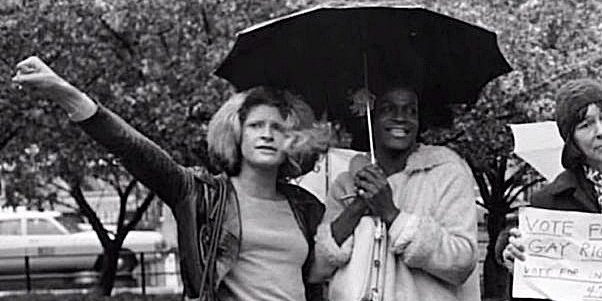
Sylvia (1951–2002), along with Marsha P. Johnson (1945–1992), were two trans leaders who were at the forefront during the Stonewall riots. They continued to advocate for LGBT rights, and above all, to denounce how the community forgot and ignored trans identities.
Proud and invisible fighters
LGBT organizations, activists, and the press have historically rendered Sylvia Rivera and Marsha P. Johnson invisible. Even Hollywood did so: in 2015, the film 'Stonewall' depicted blond, white, cisgender gay men leading the uprising. The boycott of this film was heard. Today, a bill protecting trans identities bears the name of Sylvia Rivera, one of the pioneers of Pride.
Before June 28, 1969, there had been acts of resistance by LGBT people; Stonewall wasn't the first, but it was the most visible and iconic. It was a time when being homosexual was considered a 'sexual deviation' and was even punishable by law.
The Stonewall Inn riots arose in response to the harassment and disrespect shown to transgender, gay, and lesbian people. They occurred within a climate of violence, exclusion, and invisibility for the LGBTQ+ community. They emerged from classist aggression where some identities seemed to be valued more than others.
What happened at the Stonewall Inn was a revolt, an act of disobedience and justice carried out by trans people, drag queens, Black people, Latinas, lesbians, gay men, and more. That is the pride that continues to demand rights today.
]]>
We are present
We are committed to journalism that delves into the territories and conducts thorough investigations, combined with new technologies and narrative formats. We want the protagonists, their stories, and their struggles to be present.
SUPPORT US

FOLLOW US
Related notes

We are present
This and other stories are not usually on the media agenda. Together we can bring them to light.