

Historic ruling: Marcelo Lepe's killers convicted of hate crime
Chilean courts have found the killers of Marcelo Lepe, a young man shot dead in 2016 on the streets of the San Bernardo district, guilty. Juan Carlos Altamirano and Constanza Opazo Rondanelli were convicted of "simple homicide" with the aggravating circumstance of discrimination based on sexual orientation.

Share

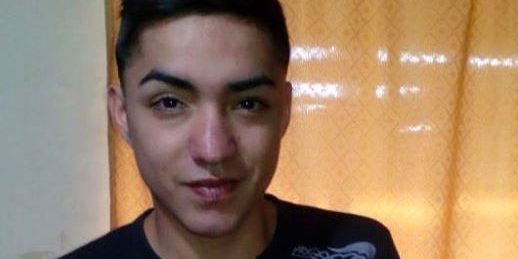
Chilean courts have found the killers of 20-year-old Marcelo Lepe guilty. He was shot in 2016 on the streets of the San Bernardo district. Juan Carlos Altamirano and Constanza Opazo Rondanelli were convicted of simple homicide with the aggravating circumstance of discrimination based on sexual orientation. “This is a landmark verdict because this aggravating circumstance has never been applied before. It is the first time the Zamudio anti-discrimination law has been applied in the homicide of an LGBTQ+ person. We expect the sentence to be around 15 years for the homicide and 540 days for the injuries inflicted on his mother,” the family's lawyer, Macarena Car, told Presentes.
The full ruling and sentences handed down by the Oral Criminal Court of San Bernardo will be read on Thursday, June 7. San Bernardo's chief prosecutor, Gamal Massú, also emphasized the "historic" nature of this verdict and highlighted the vulnerability of the LGBTI community in Chile.
[READ ALSO: #HateCrimes2017 Justice, an outstanding debt for LGBT victims in Chile]
The trial lasted ten days and was marked by lengthy arguments—the Ministry of the Interior itself was a plaintiff in the case—and threats: armed men patrolled the courthouse doors. There, the court recalled who Marcelo Lepe was and how his murder had sparked outrage within the LGBTI community and raised concerns about the effectiveness of the so-called "Zamudio Law."
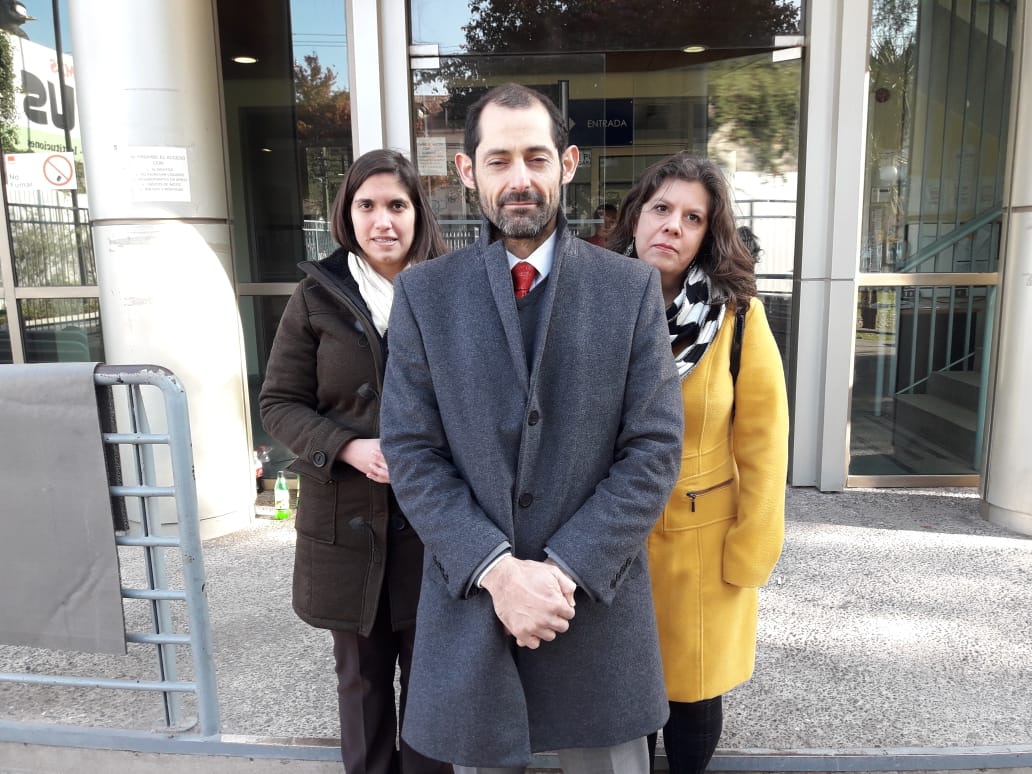
Prosecutor Gammal Massú, the family's lawyer Macarena Car (right) and the lawyer from the Ministry of the Interior, Camila Barros.
In her closing argument on Wednesday, May 30, the prosecuting attorney, Car, said: “The murder of Marcelo Lepe was an act motivated by his sexual orientation and by the fact that he belonged to a minority within the wide variety of people who make up sexual minorities in our country and the world. To understand the victim's perspective on the day of the events, the Court does not need to imagine itself as any homicide victim in any place, but rather as Marcelo Lepe, a 20-year-old with incomplete secondary education, a street vendor with a low income, who lived with his mother and who was not only homosexual but also a transvestite; therefore, by symbolically expressing himself as another sex, he lived the same life as a transsexual.”
The testimonies
On Tuesday, February 16, 2016, Marcela Parraguez sat with her son Marcelo and her eight-year-old daughter watching the Turkish telenovela "Kara Para Ask" at the home she shared with her mother, Rosa Gaete. They lived in an apartment building in the Villa Angelmó neighborhood of San Bernardo. Later, around 2:00 a.m., Marcela and Marcelo went out to buy drinks at a store located directly across from their building. There were several conflicting accounts of what happened next—the events that cost Marcelo his life—and these accounts were precisely what emerged during the oral trial.
On one side was the version presented by Marcelo's mother and the prosecution: it was a hate crime motivated by the young transgender woman's sexual orientation. The public defenders for the two accused, Juan Carlos Altamirano Matus and Constanza Opazo Rondanelli, argued that it was a "fight without discriminatory undertones," a crime linked to "drug use."
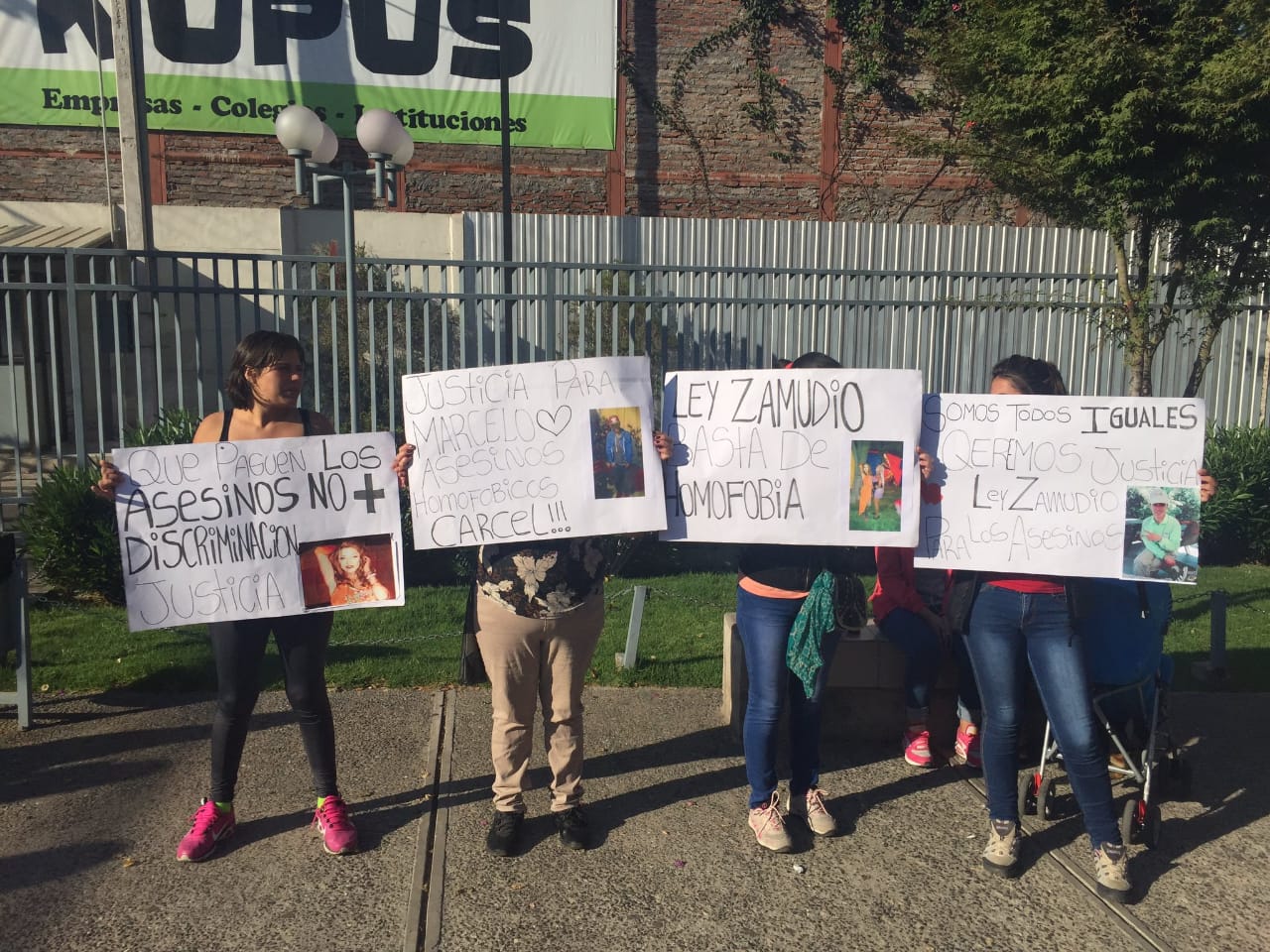 The police report from the night of the crime states that “the victim, Marcelo Velius Lepe Parraguez, arrived at El Pino Hospital, brought by his grandmother in a taxi. He was admitted with a serious gunshot wound, life-threatening (…) The grandmother, Rosa Gaete Manríquez, stated that at the corner of Avenida Colón and Ducaud, in San Bernardo, her daughter, Marcela Parraguez Gaete, the victim's mother, was fighting with two women whom the grandmother knew and described as 'Rucia' and 'Pamela.' A fight broke out, and the victim went to his mother's defense, intervened, and was shot by an unknown individual. This individual then fled the scene with both women.”
During the funeral of Marcelo, known among his friends in the community as "pestañitas" (little eyelashes) because of his long and beautiful eyelashes, different LGBTI organizations in the country such as Fundación Zamudio, Movilh and the Movement for Sexual Diversity MUMS, demanded truth and justice in this hate crime.
Marcelo, harassed in the neighborhood for being gay and a transvestite
Unlike some other countries, the Chilean Penal Code does not define what constitutes a hate crime. However, since 2012, following the brutal murder of the young gay man Daniel Zamudio , the Anti-Discrimination Law 20.609 has included the aggravating circumstance of hate, established in Article 12 No. 21 of the Penal Code, which states: "21. Committing the crime or participating in it motivated by the ideology, political opinion, religion or beliefs of the victim; the nation, race, ethnicity or social group to which they belong; their sex, sexual orientation, gender identity, age, parentage, personal appearance or the illness or disability they suffer."
This aggravating circumstance requires that the motive for the crime be precisely what makes the victim different. According to lawyer Car: “It was established through witness statements that Marcelo was gay, that he dressed as a woman, that there was a group of people in the neighborhood who mocked him and shouted at him—even on the day of the events—specific epithets such as “faggot,” “queer,” “you think you’re a woman but you’ve got a dick.”
 They called Marcelo "little eyelashes"
The aggravating circumstance of sexual discrimination established in the Zamudio Law was finally included by the court in the communication of the verdict made on Thursday, May 31, 2018.
“The outcome is a result of the efforts of the plaintiffs, the prosecution, and the police, along with a court that listened carefully to the evidence. We argued for the existence of premeditation, which is a legal debate, and also the aggravating circumstance of discrimination motivated by hatred. The court determined that premeditation was not present, but the aggravating circumstance of hatred had more merit and a greater likelihood of being established. This is the first time a court of law has accepted the aggravating circumstance of hatred related to sexual orientation in a homicide case, convicting the two defendants for the murder of Marcelo Lepe Parraguez and the injuries inflicted on his mother,” Prosecutor Massú told Presentes.
“Irreparable damage”
José Luis Díaz, an activist with the Network of Psychologists for Diversity and an expert witness for the Lepe family, recounted to Presentes his experience during the grueling days of the oral trial. “One of the things that most interested the judges was determining whether it was a hate crime. I told them about various investigations I've participated in that demonstrate the degree of vulnerability of the LGBTI population, especially in a country where conservative forces have been established to remove or minimize the rights of this population.”
[READ ALSO: #CHILE: One year later, Nicole's hate crime remains unpunished]
Díaz pointed out that “we are facing a society that discriminates, not only against the victim but also against the victims who accompany them, as is the case with Marcela, the victim's mother.” The expert denounced that no one offered her social or psychological support for the irreparable harm caused. “What is needed here is the support of a multidisciplinary team that can address the family in all its aspects,” he added.
Marcela Parraguez, the victim's mother, visibly emotional as she left the courthouse, could only manage to declare: "I feel calmer, more rested, because justice was finally done."
We are present
We are committed to journalism that delves into the territories and conducts thorough investigations, combined with new technologies and narrative formats. We want the protagonists, their stories, and their struggles to be present.
SUPPORT US

FOLLOW US
Related notes


We are present
This and other stories are not usually on the media agenda. Together we can bring them to light.