

Chile: A hair salon offers scholarships to transgender people: “We are here to empower”
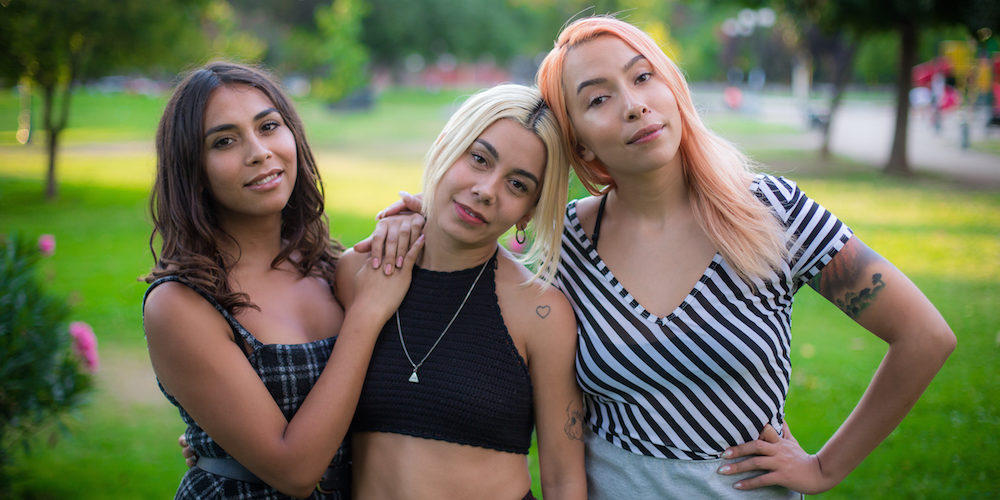
In a corner of Providencia, very close to Inés de Suárez Park in Santiago, Chile, there's a hair salon almost hidden on the second floor of an old building. It's not just any hair salon. It's an alternative and inclusive space, run by three cheerful young women. In addition to offering the classic services of a beauty salon, they provide exclusive and free image consulting and support to transgender people.

Share

By Airam Fernández, from Santiago, Chile. Photos: Josean Rivera. In a corner of Providencia, very close to Inés de Suárez Park in Santiago, Chile, there's a hair salon almost hidden on the second floor of an old building. It's not just any hair salon. It's an alternative and inclusive space, run by three cheerful young women. In addition to offering the classic services of a beauty salon, they provide exclusive and free image consulting and support to transgender people. “It would be naive to think that appearance doesn't matter. Even more so when you're assigned a gender you don't feel represented by,” says Alexa Soto, one of the women behind Petite Salon. She speaks from personal experience. At 23, she began her transition while working at another hair salon. Now 26, she says she's happy to lead a project like this alongside Sofía Sepúlveda (28), whom she met while working at another salon, and Mariela Siri (28), a former client. They've known each other for almost three years. Today, they're best friends. Partners, moreover, after pooling savings and efforts for a dream.
The "Petite Scholarship"
For the past eight months, since they opened the shop, Alexa and Sofía, both professional stylists, have been handling the work, while Mariela coordinates the logistics. They spend their days surrounded by mirrors, makeup, scissors, and hair dye, in a space decorated with colorful wigs, lots of plants, art books, manga, magazines, and even a printed compilation of selfies which Kim Kardashian posted on Instagram. Alma, Alexa's pet, has a special corner in the living room. From there they began to organize and promote the "Petite Scholarship," known in the community as the "Trans Scholarship." “They were both a great support at the beginning of my transition because they’ve known me for a long time. Since we know it’s a very difficult process, we thought that with our work we could help people in my community,” says Alexa. “And just as we were there for her, supporting her, we want to do the same for other trans people, who are ultimately the least heard and most misunderstood,” adds Mariela.
An open call
The scholarship program began in November. They posted the call for applications on the hair salon's Instagram account and on their personal accounts, with an open invitation. “We don't really have a very formal selection process. We just ask them to tell us a little about their story and why they think they need our help. That's the only filter, because we don't even ask for a photo,” explains Mariela. This way they assess priorities and schedule appointments. “The idea is not to leave anyone out,” says Sofía. So far, 15 trans people have received guidance. Most are just beginning the transition process. And it's not a one-time thing. If their hair grows back too quickly or if they want to touch up their eyebrows, for example, they can always come back.“We want to show them how to enhance their own beauty.”
Last year they served a six-year-old girl. So far, she's the only trans person who hasn't come through the scholarship program. Her mother found out about the work they did at the salon but didn't enroll her; instead, she brought her as a regular client. It's one of the most beautiful moments Alexa cherishes in her profession. "They had let her hair grow very long, so we cut it beautifully, tailored to her features. When she arrived, she was incredibly shy, but as soon as her mother told her I was trans, hoping she'd open up, it was an amazing change in attitude," she recalls. The girls have identified a pattern among those who have come through the scholarship: they all want long, thick hair. “Our job is to help them understand that this isn't so easy to achieve. So we give them a haircut that promotes healthy growth and is harmonious. We also shape their eyebrows and explain what would suit them in the future, based on their face shape, because what we want is to teach them how to enhance their own beauty without negating the efforts they've already made to beautify themselves,” says Sofía.
A safe space for the trans community
Hair salon appointments are organized in groups of two. They decided on this approach from the beginning because they were very nervous about taking this step the first time. “We had no idea what the meeting would be like, if it would be awkward, or even if anyone would be willing to contact us. That's why we thought that if they came in pairs, it would be easier to break the ice,” says Mariela. Now they see it as a strategy that works to expand the community and build connections between trans people who probably wouldn't have met otherwise. After the beauty session and makeover, they have lunch together. “We're very interested in making it a more human encounter, so we sit down to talk, eat, have a drink, share our experiences, ask them to tell us how they feel, I tell them my story, and we try to make it a really cool time, like being among friends,” says Alexa. All three agree that they want to make Petite Salon a safe space for the trans community in Chile, where community rights are limited, as the gender identity law has not yet been approved and same-sex marriage is not legal. They want the salon to become a point of reference for the community, a place that validates all questions and doubts, beyond just giving good haircuts and shaping pretty eyebrows, Alexa concludes: “We are here to empower. We want those who come here to leave with the confidence that they can become the person they want to be.”
We are present
We are committed to journalism that delves into the territories and conducts thorough investigations, combined with new technologies and narrative formats. We want the protagonists, their stories, and their struggles to be present.
SUPPORT US

FOLLOW US
Related notes



We are present
This and other stories are not usually on the media agenda. Together we can bring them to light.