

Lohana Berkins: transvestite fury, always
Today marks two years since the death of Lohana Berkins, the iconic trans activist and human rights leader from Argentina. This afternoon, at 6 PM, a tribute will be held in Plaza de los Dos Congresos in Buenos Aires.

Share

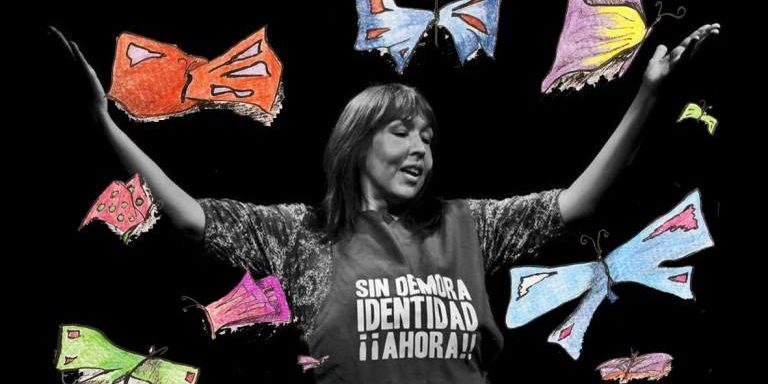
By Agencia Presentes Photos: Ariel Gutraich Today marks two years since the death of Lohana Berkins, a leading trans activist and human rights advocate in Argentina. This afternoon, at 6:00 PM, a tribute will be held in Plaza del Congreso in Buenos Aires. Berkins was born in Pocitos, in the province of Salta. In 1994, she founded the Association for the Struggle for Transvestite and Transsexual Identity (ALITT), from which she championed the visibility of the right to gender identity. She was one of the main driving forces behind the Gender Identity Law, approved by the National Congress on May 9, 2012. She was a candidate for national deputy and worked as an advisor in the Buenos Aires City Legislature for the Communist Party. She is considered the first trans woman to hold a government job. She played a pivotal role in the recognition of transvestite and trans rights: she enrolled at Normal School No. 3 to become a teacher. Unable to do so under her own name, she filed a complaint with the Buenos Aires Ombudsman's Office. Ultimately, the office ordered the authorities to respect her gender identity.

The drive to change the world
“The engine of change is love. The love that was denied us is our driving force to change the world. All the blows and contempt I suffered are nothing compared to the infinite love that surrounds me now. Trans Fury Forever,” wrote the historic leader of the trans community in her farewell letter, which was shared by her friend, activist Marlene Wayar. A year ago, she left a legacy of struggle and commitment to human rights that earned her the recognition of political and social leaders. Her name is a symbol of the LGBTQ+ community and of working women. She once said: “I don’t feel that because I wear makeup and use feminine mannerisms, I am a woman. Nor am I a man because I have certain genitalia. I am myself: I am from Salta, Black, fat, from the outskirts of town, of Bolivian origin. It is not only transvestism that gives me my identity.” "Let no one cry at my funeral"
A complicated case of hepatitis C weakened her. Her wish was to return home, but she never made it. She asked that no one cry and that cumbia music be played at her funeral. “I would urge all people, regardless of their sexual orientation, gender identity, nationality, ethnicity, or race, to dare to live on their own terms; otherwise, what would be the point of life? On my tombstone, I would write: Here lies the happiest trans woman in the world,” she had said. “In Lohana, all struggles converge: trans, feminist, political, and for the right to legal abortion. She was a political subject who showed the world that all people are political subjects,” reflected Marlene Wayar, to whom the activist, in that same letter, expressed: “I pass the torch to you.”
 "Let no one cry at my funeral"
Trans mom
Alma Fernández, a transvestite activist and leader, wrote this poem for her.
Lohana
Hold me, trans mama, hold me. Because the sirens frighten me. Set the pace for me in this parade. Because you've already gone in glitter, and I still have to dance. Hold me, trans mama, hold me. The chongos come and go, the vultures eat your flesh. Even while you were alive, they were killing you! Hold me, trans mama, hold me. On this side, everyone's crying because you opened my eyes, and I have a drum full of dreams. Hold me, trans mama, hold me. The sea extinguished your warrior light. The goddess of the sea will take your hand. Beautiful, gifted, and consorts, seahorses will accompany you to your hills and winds. Hold me, trans mama, hold me. Because I admired you, and today I can't stop feeling this trans fury!
 Trans mom
Lohana in her own voice
In these interviews compiled by El Observatorio de Salta, Lohana Berkins talks about the sanction of the gender identity law, its application and the exaltation of the “T”. ]]>We are present
We are committed to journalism that delves into the territories and conducts thorough investigations, combined with new technologies and narrative formats. We want the protagonists, their stories, and their struggles to be present.
SUPPORT US

FOLLOW US
Related notes
We are present
This and other stories are not usually on the media agenda. Together we can bring them to light.