

Inter-American Court of Human Rights: States in the region must guarantee gender identity and marriage equality
The Inter-American Court of Human Rights (IACHR) yesterday declared, in a landmark decision, that the rights of same-sex couples and transgender people are protected by the Human Rights Convention.

Share

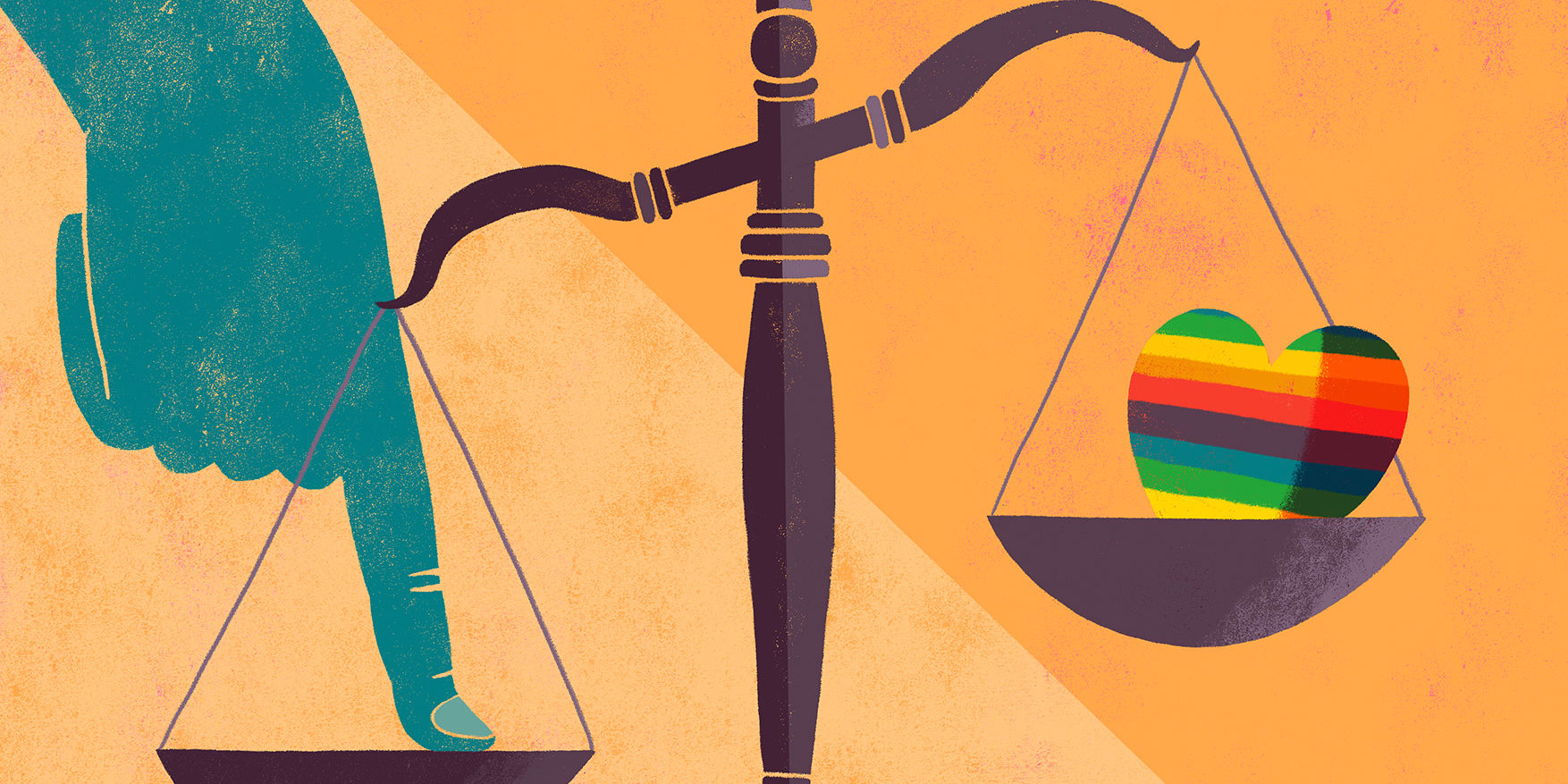
Illustrations: Florencia Capella The Inter-American Court of Human Rights (IACHR) stated yesterday, in a historic decision, that The rights of same-sex couples and transgender people are protected by the Human Rights Convention. But it also ordered the signatory states to guarantee its full exercise. “It’s a great day for human rights in the region. We are thrilled and happy because it’s a historic ruling. It guarantees the rights of LGBTI people and states that gender identity and same-sex marriage are protected by the Human Rights Convention,” Greta Pena, President of 100% Diversity and Rights, told Presentes. In 2017, Pena traveled to Costa Rica and participated in one of the Court’s hearings in San José on this issue. “It was an honor to be able to go and share the Argentine experience. We explained that gender identity does not have to be proven. And we said that even with laws passed, and however good they may be, institutional barriers persist,” Pena said. Sentence in the Inter-American Court of Human Rights (Costa Rica, May 2017). This is what often happens in Argentina, where, despite having a Gender Identity Law, transgender people encounter numerous obstacles when trying to access services such as healthcare. “This issue was addressed by the Inter-American Court of Human Rights, which stated that even when these rights are guaranteed, states must strive to remove institutional barriers to full access,” Pena told Presentes.
The impetus: the Costa Rica consultation
Yesterday, through a In the document, the Inter-American Court of Human Rights communicated the Advisory Opinion Regarding state obligations related to name changes, gender identity, and rights arising from same-sex relationships, as requested by Costa Rica. After the decision was announced, Costa Rican Vice President Ana Helena Chacón stated that the That country's government will recognize same-sex marriageIt was she who sent the inquiry to the Court two years ago. On May 18, 2016, Costa Rica submitted a request for an advisory opinion to the Inter-American Court of Human Rights regarding the interpretation and scope of certain articles of the American Convention on Human Rights. It asked the Court to rule on two specific issues: the legal recognition of gender identity and the property rights of same-sex couples. The Court's decision, announced yesterday, went far beyond that specific request.[READ MORE: For the first time, the Inter-American Court requested an opinion on LGBTI rights]
Gender identity: based on the principles of Argentine law
“This is the first time the Inter-American Court of Human Rights has ruled on gender identity. In doing so, it states that the right is enshrined in the Convention and must be guaranteed. And it breaks with the biological paradigm.” Another relevant aspect of the ruling issued yesterday by the Inter-American Court of Human Rights, says Pena, is that it incorporates the principles that guide Argentine law on this matter. “Because for the Court, these rights are protected as long as they adhere to principles of depathologization. The ruling states, among other things, that in the case of gender identity change, it must be a swift administrative process. These are rights that do not require medical or judicial authorization, only free consent. Furthermore, it indicates that unions between people of the same sex must be treated the same as those that apply in that country to other people.” This clarification by the Inter-American Court of Human Rights takes into account the situation in several countries where people, in theory, can access limited rights regarding gender identity because they are required to meet prerequisites such as health certificates or undergo surgery. “Another very important aspect of the Court’s opinion is that the rights it guarantees are not exhausted in themselves, but rather lay the foundation for access to housing, work and health, for example, for trans people,” Pena said.What did the Inter-American Court of Human Rights say about same-sex marriage?
“The Court considered that the family bond that may arise from the relationship of a same-sex couple is protected by the American Convention. Therefore, it held that all property rights derived from the family bond of same-sex couples must be protected, without any discrimination with respect to heterosexual couples,” the Inter-American Court of Human Rights reported yesterday in a statement. She warned that this obligation of states “transcends the protection of purely property rights and extends to all human rights recognized for heterosexual couples.” “This reaffirms that true equality of rights implies that all citizens must have access to the same legal framework that exists in each country. This is important because there are countries that want to grant rights, for example, property rights, but not rights related to children,” Pena pointed out.
Countries in the region with marriage equality
The Inter-American Court of Human Rights (IACHR) is the highest court of justice on human rights matters for the countries that have signed the American Convention on Human Rights (Pact of San José, Costa Rica). Its rulings are binding on the member states of the Organization of American States (OAS) that recognize the Court's jurisdiction: Argentina, Barbados, Bolivia, Brazil, Chile, Colombia, Costa Rica, Ecuador, El Salvador, Guatemala, Haiti, Honduras, Mexico, Nicaragua, Panama, Paraguay, Peru, the Dominican Republic, Suriname, and Uruguay. Of these, only Argentina, Brazil, Colombia, Mexico, and Uruguay have laws guaranteeing marriage equality. Table: Countries with equal marriage laws, Ilga-LAC, May 2017.
In January 2018, the Same-sex marriage is the law in 25 countries around the worldThe last to join, in 2017, were Australia and Germany.
Table: Countries with equal marriage laws, Ilga-LAC, May 2017.
In January 2018, the Same-sex marriage is the law in 25 countries around the worldThe last to join, in 2017, were Australia and Germany.
Church and State: each on its own.
Another crucial aspect of the Court's decision is its stance on the religious question. The Court observed that “opposition to same-sex marriage is sometimes based on religious or philosophical convictions.” It stated: “Such convictions cannot condition what the Convention establishes regarding discrimination based on sexual orientation. Thus, in democratic societies, there must be mutually peaceful coexistence between the secular and the religious; therefore, the role of States and of this Court is to recognize the sphere in which each resides, and in no case to force one into the sphere of the other.” The Advisory Opinion was adopted on November 24, 2017, but was notified yesterday. Among the members of the Inter-American Court who signed the ruling is Eugenio Zaffaroni. “This opinion signifies support and a boost for the LGBTI movements throughout the Americas,” Pena remarked. “To begin demanding processes so that these laws for equality are implemented in all countries.”We are present
We are committed to journalism that delves into the territories and conducts thorough investigations, combined with new technologies and narrative formats. We want the protagonists, their stories, and their struggles to be present.
SUPPORT US

FOLLOW US
Related notes


We are present
This and other stories are not usually on the media agenda. Together we can bring them to light.