

Honduras: The trans candidate fighting against discrimination and violence
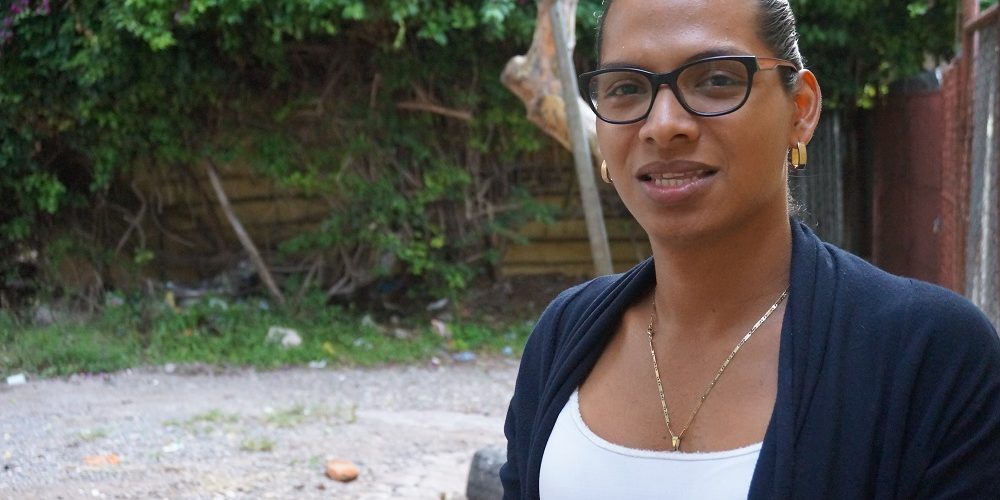
Rihanna Ferrera Sánchez is a trans woman and a candidate for Congress in the elections to be held on November 26 in Honduras. The activist from the Cozumel Trans Association is currently facing an electoral system that denies her the right to use her gender identity in the election.

Share

By
Jennifer Avila Reyes, from Tegucigalpa. Photos: JAR.
Rihanna Ferrera Sánchez is a trans woman and a candidate for Congress in the elections to be held on November 26 in Honduras. The activist from the Cozumel Trans Association is currently facing an electoral system that denies her the use of her gender identity in the race. This week, she filed an appeal with the Supreme Court of Justice. She is demanding that the ballot display the name with which she identifies. As a result of situations like this, tensions are rising in a country where two members of the LGBTQ+ community who were running in previous elections have already been murdered. And two trans women who ran for office in previous elections had to flee the country due to death threats.
The electoral process in Honduras is unfolding in a tense atmosphere. It is the first time that a president, Juan Orlando Hernández (National Party), has opted for reelection, violating the Constitution by invalidating, through the Supreme Court of Justice, the articles that mandate term limits and penalize reelection. It is also the first time that several political parties have joined forces in an alliance to confront him: the Opposition Alliance Against the Dictatorship, which is also opening up participation to members of the LGBTI community in elected office.
In this election, five candidates from LGBTI groups are running for elected office in Tegucigalpa, the capital of Honduras, and in San Pedro Sula, the country's second largest city. Rihanna Ferrera Sánchez, coordinator of
Cozumel Trans , is one of them. The trans activist is running as a candidate for the Innovation and Social Democratic Unity Party (PINU) in the Alliance. However, she is facing a legal battle with the Supreme Electoral Tribunal because she is not allowed to appear on the ballot under the name Rihanna Ferrera, but rather under the name listed in the National Registry of Persons database.
 This is a clear violation of her right to choose her self-perceived gender identity. But this decision also poses a risk to her life. As a result of this problem, Rihanna says, a wave of hate speech has been unleashed, spreading through various media outlets. This has led to death threats against her via text messages and social media.
“The rights of the LGBTI community have always been violated”
“Since March, I have been submitting a request to the Supreme Electoral Tribunal (TSE) asking how a transgender person whose gender expression is female but whose name is registered as male would be registered. To solve this problem, the TSE says it would have to be a legal process in the National Registry of Persons,” she explains. Rihanna says she went with her lawyers to have her birth certificate information recognized as confirming that she is the same person listed on her identity card and all other documents. “However, when I went to the Civil Registry, they ignored the request. They wouldn't accept it because they said Rihanna is a female name and doesn't correspond to my male sex,” she says. She asks, “If there are men in Honduras named Guadalupe, why don't they accept Rihanna? The rights of the LGBTQ+ community have always been violated.” Now she has filed an appeal with the Supreme Court of Justice to have the marginal information accepted.What does the Supreme Electoral Tribunal say?
When asked about this situation, Marco Ramiro Lobo, alternate magistrate of the Supreme Electoral Tribunal, told Presentes: “Unfortunately, the Electoral Law and the Law of the Supreme Electoral Tribunal do not allow us to change the names of people registered in the National Registry of Persons. To register people with the name they want, it would require an amendment to the electoral law.” What about the right to participate? “We recognize her right to participate. Even in the photograph, she will appear as she currently does; we have no objection to that. But regarding the name, the law prohibits it. This will be decided by the National Congress with a two-thirds majority of the representatives for the reform to be enacted. And so that it can be done in future electoral processes.”“A political context has been created against an LGBT candidate.”
Rihanna maintains that the magistrates believe they have done a great deal by including her photograph on the ballot, but that rejecting her name is an act of discrimination by the current government. “They have trampled my dignity on the ground. Seeing the comments I give in interviews, there is an incitement to hatred and violence, especially from religious discourse. They could kill me. A political climate has been created against an LGBT candidate in Honduras,” she stated. Honduras is one of the most dangerous countries for LGBTQ+ people. In the last 10 years, 262 LGBTQ+ people have been murdered. After the 2009 coup, two political activists running for elected office were killed.[READ MORE: Why Honduras is one of the most dangerous countries for LGBTI people]
Due to the constant threats received by Cozumel Trans for their work defending the rights of the community, the organization coordinated by Rihanna has been granted precautionary protection measures by the Inter-American Commission on Human Rights (IACHR). These measures obligate the Honduran State to provide special protection. The Inter-American Commission on Human Rights (IACHR) strongly condemned in August of this year the attacks against LGBTI activists in Honduras, starting from attempted murder of David ValleFrom the Center for LGBTI Development and Cooperation (Somos CDC). In April, Valle had requested protection measures for LGBTI leaders from the Technical Committee of the Protection Mechanism for Human Rights Defenders in Honduras. The IACHR urged “the Honduran authorities to adopt effective measures to prevent, investigate and punish this pattern of violence.”.LGBTI political participation in Honduras
According to a study by National Democratic Institute According to a study conducted in Honduras this year, the LGBTI community has undergone a long process to gain political participation, hampered by a lack of political will from governments and the prioritization of the health agenda in the sector. “In Honduras, the 1982 constitutional reform paved the way for strengthening citizen participation and democracy within its institutions. However, regarding the visibility of LGBTI agendas, prior to 2004 there were no real expressions of systematized participation, either socially or politically, much less in terms of organizational strengthening,” the report states.[READ MORE: Being indigenous and LGBT in Honduras, the two banners of Gaspar Sánchez]
Since the 1990s, the emergence of HIV/AIDS and the lack of state action to prevent and address the problem led to the appearance in the country of organizations such as the Violeta Collective in Tegucigalpa and the Sampedrana Gay Community in the city of San Pedro Sula. Although these had LGBTI agendas, their priority was specifically the prevention and care of HIV/AIDS in all its expressions, strengthening only their impact in the health sector,” the report explains. In 2002, the first openly LGBTI organizations emerged in the country. They demanded legal recognition from the State for their work in promoting and defending the rights of lesbians, gays, bisexuals, and transgender people. One of the impediments that the State cited at the time was that approving legal status for LGBTI people would open the door to debates such as same-sex marriage and adoption by same-sex couples, according to those interviewed by the National Democratic Institute in the report. Later, to prevent this—and to protect its interests—the State amended Articles 112 and 116 of the Constitution during the process of granting legal status to certain entities. It established that in the country marriage will always be between a man and a woman, and that adoption applications must meet the same requirements.Violence against LGBTI activists
The first instance of political violence against an LGBTI person was that of human rights defender Walter Tróchez. In 2009, he took on a role as an ombudsman and, being openly gay, denounced irregularities at polling stations. On December 2 of that year, he was kidnapped. Days later, after escaping his captors, he denounced the kidnapping as being motivated by his denunciations. Just 11 days later, he was kidnapped again, tortured, and brutally murdered. His death diminished the expectations of LGBTI people's participation in the country and sowed fear and distrust in the exercise of their civic rights. In 2012, journalist Erick Alexander Martínez Ávila, who had also publicly declared his sexual orientation, was a pre-candidate for a seat in Congress representing the department of Francisco Morazán in the internal elections of the Liberty and Refoundation Party (LIBRE), running for the Popular Revolution Force (FRP) faction. He announced his candidacy on May 1, 2012, at a Labor Day demonstration. Days later, he was tortured and murdered.
The trans leaders who had to flee
In June 2012, Martínez Ávila's alternate candidate, Erick Martínez Vidal, also openly gay, decided to participate in the 2012 elections. He was accompanied by trans leader Arely Victoria Gómez as his alternate candidate. A similar decision was made in San Pedro Sula by trans leader Claudia Spellman, with gay leader Josué Hernández as her alternate. Victoria and Claudia had to register under their birth names because they were not allowed to use their chosen names. This situation complicated their electoral process and led to them being subjected to all kinds of accusations and discrimination in the media, with their campaign proposals being ignored. Victoria and Claudia had to flee the country due to death threats they received after being exposed during that election.[READ MORE: Advancement of LGBTI political leadership in Latin America and the Caribbean]
Rihanna is currently experiencing the same situation. At 28 years old, despite her vulnerability, she says she chose to run for office because decision-makers have never considered them as a community. “The community has been excluded, murdered, and discriminated against. Religious groups themselves have unleashed a wave of violence against us. However, we have also had achievements: making trans people visible and changing our identity documents to reflect our gender identity as women,” she says. According to the study by the National Democratic Institute, a key factor hindering the political participation of LGBTI people is the lack of laws, public policies, or affirmative action by the government. In other words, the absence of political will has resulted in limited opportunities for them to enjoy full citizenship.The challenge: to confront sexism in political parties
“Honduran society, influenced by religious discourse, doesn't want an LGBT person in Congress because they associate it with same-sex marriage and adoption by same-sex couples. They believe the country's economy will decline and their interests will be affected. But the situation in the country hasn't improved for any sector.” A woman is killed every 14 hours, and human rights violations have increased.”"That's what Rihanna explains. And she cites the report that identifies safety as the most serious problem identified by the LGBTI community and a priority on political agendas." “According to research, the community's primary demand is security. Secondly, they want jobs, education, access to healthcare, housing, and loans. The gender identity law is very important for the trans community, but people want security first. How can we have an identity law if we're going to be killed? The issue of same-sex marriage came up around point 14; there isn't as much interest because life is prioritized, since it has been violated. This situation teaches us that The LGBTI community seeks the same rights as all citizens."No more impunity, no more corruption, we want access to fundamental rights," she demands. One of the main challenges for this candidate is to include an LGBTQ+ agenda in the Alliance's government plan that addresses the community's need for security and the demand for zero discrimination in the workplace. “There has been openness, but sometimes I have felt excluded in some places. It has been a great challenge to confront a sexist, discriminatory sector within the political parties. But Thanks to the support of the LGBT community, my trans colleagues and I have managed to get included in a government plan.”. Rihanna says that although she should have withdrawn months ago after so much hate speech, threats, and rejection against her, she's still there. She believes her community needs representation in the National Congress. “They're not going to remove me easily, with the barrier of registering under a legal name that I don't even recognize when they insult me. I should already be locked in my house, but no, that gives me strength. I'm doing this for my trans and LGBTQ+ community. And here I am, present, firm, and strong.” ]]>We are present
We are committed to journalism that delves into the territories and conducts thorough investigations, combined with new technologies and narrative formats. We want the protagonists, their stories, and their struggles to be present.
SUPPORT US

FOLLOW US
Related notes
We are present
This and other stories are not usually on the media agenda. Together we can bring them to light.