

How to act in cases of institutional violence: they presented a guide with resources
What should we do when we witness or are victims of violence? How should we respond to various situations of police abuse? The Guide to Action Against Violence by Security Forces, presented on October 17th at the Annex of the Chamber of Deputies in La Plata (Buenos Aires Province), is the response of various human rights organizations and community groups to these questions. It was developed by the Provincial Network for Human Rights and incorporates proposals prepared by the Office of the Prosecutor for Institutional Violence (PROCUVIN), the Center for Legal and Social Studies (CELS), and the Collective for Legal Research and Action (CIAJ).

Share

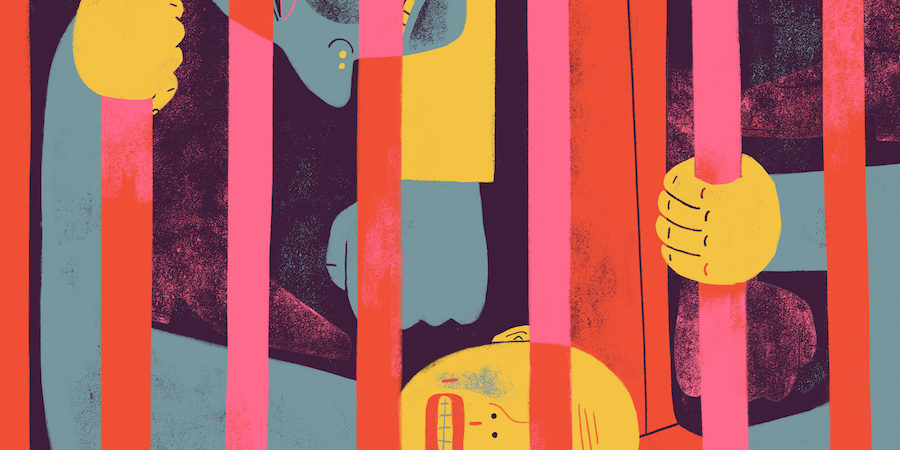
Illustration:
Florencia Capella. What should we do when we witness or are victims of violence? How should we act in the face of various situations of police abuse? The Guide for Action Against Violence by Security Forces, presented on October 17th at the Annex of the Chamber of Deputies in La Plata (Buenos Aires Province), is the response of various human rights organizations and community groups to these questions. It was developed by the Provincial Network for Human Rights and incorporates proposals prepared by the Office of the Prosecutor for Institutional Violence (PROCUVIN), the Center for Legal and Social Studies (CELS), and the Collective for Legal Research and Action (CIAJ).
It is a practical guide for action, with recommendations, suggestions, and guidelines that aim to provide tools for specific cases of institutional violence. That is, "structural practices of human rights violations by officials belonging to security forces, armed forces, prison services, judicial operators, and healthcare providers in contexts of restricted autonomy and/or freedom." While these measures can be directed at any citizen, they disproportionately affect young people, those from low-income backgrounds, and minorities, such as migrants or members of the LGBT community ,” the authors warn in the introduction.
[READ MORE: Lesbian activists arrested before #8M, closer to trial]
The Network explained that the guide began development in December 2016, when they met with the directors of the Office of Institutional Violence of the Public Prosecutor's Office (PROCUVIN). Many of the organizations were concerned about the increase in institutional violence in the province of Buenos Aires, which had even been reported to international bodies.
[READ MORE: The UN demands that Argentina put a stop to the persecution of transvestites and trans people]
“This guide aims to provide guidance to people whose rights are limited or violated by the actions of security forces and police. Today, neighborhoods and the entire territory of Buenos Aires are saturated with local or municipal police officers and national security forces such as the Coast Guard and the Gendarmerie.” “Every day we see vehicle checkpoints or procedures in the most populated areas, but in working-class neighborhoods, the practice of demanding documents at any hour, searching backpacks, entering schools, boarding buses, and carrying out what they call 'routine checks' has become commonplace,” describes Raquel Witis, mother of Mariano Witis, who died a victim of institutional violence, in the prologue. Also participating was Rosa Bru, mother of Miguel, a journalism student at the National University of La Plata who disappeared in 1993 and was murdered by police officers from the city's ninth precinct.
[READ MORE: We must fight against police and judicial impunity]
The guide "seeks to encourage swift and coordinated intervention for action and/or advice—through social activists and/or human rights organizations, social and/or political and/or labor organizations, community leaders, students, among others—in response to cases of institutional violence within the Province of Buenos Aires."
What is institutional violence?
"When we speak of violence perpetrated by security forces, we are referring to specific situations," the guide explains. These include various elements:
1) actions or omissions (intimidation, harassment, torture, etc.)
2) public officials (who are the ones who carry out the described actions or
give their consent)
3) situations of restriction of autonomy and freedom (situations of detention, internment, instruction, etc.).
Some of the people who worked on the guide, systematizing contributions and information: lawyer Martin Fiorenza from Lomas de Zamora, along with Natalia Barrerio from Almirante Brown, Nano Alvarez from La Plata, Maria Nazábal from Tandil, Lorena Herrera from Chascomús, Gustavo Moreno from Tres de Febrero, Jorge Jaunarena from La Plata and Raquel Witis. The final correction was carried out by the Procuvin.
We are present
We are committed to journalism that delves into the territories and conducts thorough investigations, combined with new technologies and narrative formats. We want the protagonists, their stories, and their struggles to be present.
SUPPORT US

FOLLOW US
Related notes
We are present
This and other stories are not usually on the media agenda. Together we can bring them to light.