

Why Honduras is one of the most dangerous places to be LGBTI
In the last 10 years, Honduras has been the scene of crimes against 262 people from the LGBTI community. This is the number of homicide victims reported by the lesbian organization Cattrachas.

Share

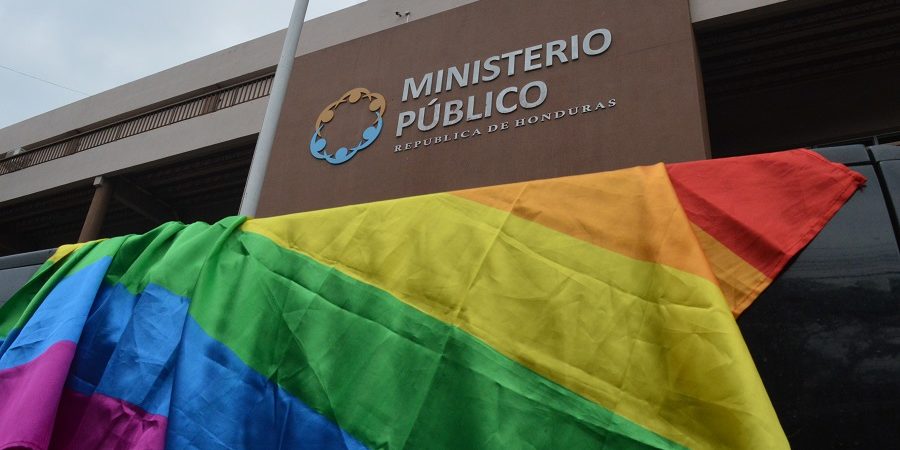
Jennifer Avila Reyes , reporting from Tegucigalpa. Photos: JAR and interviewees' archives. In the last 10 years, Honduras has been the scene of crimes against 262 members of the LGBTI community. This is the number of homicide victims reported by the lesbian organization Cattrachas . The Public Prosecutor's Office is responsible for providing official figures on this matter through its office of crimes against vulnerable groups. However, it does not release them. LGBTI organizations in this country denounce the negligence of state security, investigative, and judicial agencies, which increases impunity and violence against them. This makes Honduras one of the most dangerous countries in the region for LGBTI people.
[READ More: Being Indigenous and LGBT in Honduras: Gaspar Sánchez's Two Flags]
Yánez was a trans woman and, lacking other employment options, a sex worker. Three members of the national police attacked her in broad daylight while she was offering her services on the streets of San Pedro Sula. They murdered her. The crime was committed in 2003, but it wasn't until 14 years later that one of the police officers, Carlos Iván Contreras, who was a fugitive, was captured. The lack of investigation and involvement of the security agencies that should be responsible for investigating these crimes is one of the most worrying aspects, Vienna Ávila, a lawyer with the Feminist Association of Trans Women (AFET), told Presentes . This is especially concerning given the scarcity of available statistics. Vienna Avila, activist of the Feminist Association of Trans Women (AFET).
What happened to the hate crimes office?
Given the lack of knowledge and awareness regarding hate crimes, in 2014 the Public Prosecutor's Office created the Sexual Diversity Homicide Unit. It operated within the institution, in San Pedro Sula and Tegucigalpa, and had the support of LGBTQ+ civil society groups. An assigned prosecutor received visits from organizations that monitored the cases. It also had the support of other countries, including the United States Embassy and the European Union. But it only lasted a year. Vienna Ávila, who worked with the LGBTQ+ homicide unit, explains that cases are now referred to the High-Impact Crimes Unit within the Public Prosecutor's Office. This unit also handles the murders of human rights defenders, journalists, Indigenous people, lawyers, and environmentalists. They call it the "Vulnerable Groups" section. With the support of a project to strengthen the Honduran justice system (called EuroJusticia, and sponsored by the European Union, AFET, and other LGBTQ+ organizations), they continue to pressure this unit not to shelve or close the cases.Hate in numbers
 From 2008 to May 2017, 262 people were victims of homicide and murder in Honduras due to their sexual orientation and/or gender identity. Only 46 cases went to trial. Of those, 9 resulted in acquittals and only 15 resulted in convictions.
Of the total number of murders against the LGBTI population, 23 have been against lesbian women, 153 against gay men, and 84 against transgender people. The departments in the northwestern region are the most violent, followed by Tegucigalpa, according to the lesbian organization Cattrachas. This organization has developed the only observatory of LGBTI deaths in Honduras . Given the lack of transparency in government agencies, it collects data from media outlets.
From 2008 to May 2017, 262 people were victims of homicide and murder in Honduras due to their sexual orientation and/or gender identity. Only 46 cases went to trial. Of those, 9 resulted in acquittals and only 15 resulted in convictions.
Of the total number of murders against the LGBTI population, 23 have been against lesbian women, 153 against gay men, and 84 against transgender people. The departments in the northwestern region are the most violent, followed by Tegucigalpa, according to the lesbian organization Cattrachas. This organization has developed the only observatory of LGBTI deaths in Honduras . Given the lack of transparency in government agencies, it collects data from media outlets.
“Being a protected witness is a death sentence”
“Our struggle is to institutionalize this unit. To ensure it functions properly, because it is essential, regardless of any existing shortcomings. As civil society organizations, we are responsible for training prosecutors and forensic doctors,” explains Vienna Avila. Avila visits the High-Impact Crimes Unit to follow up on cases. “We often fulfill the role of the State,” she explains. Yanez's case is not just about an unpunished crime; it reveals a pattern. Avila asserts that the LGBTI community is being victimized by the very same justice system operators: police officers, investigative police agents, both before and during the reporting process. “It’s a real hassle having to go to the police station because they revictimize people there. If there’s a death in the street, in the area where our colleagues work, nobody wants to be a witness. The protected witness status in this country is a death sentence. So the prosecutor’s office says they don’t know what to do because the witnesses don’t want to talk,” Avila explains.Silence from the Public Prosecutor's Office
Present He attempted to access sources within the Public Prosecutor's Office in San Pedro Sula and Tegucigalpa. In San Pedro, the response was that the unitIt still works, and even Avila could confirm that. But they couldn't give information about figures or cases because that information is centralized by the prosecutor's office. In Tegucigalpa, sources said the director of prosecutors does not give interviews and is the only one who can answer questions on the matter. Information was requested via email. At the time of publication, after several attempts, the Public Relations and Transparency Department of the Public Prosecutor's Office had still not provided the information. “Within this unit, there’s only one prosecutor, and now there are so many cases. When something isn’t going to be effective and isn’t going to produce the indicators that were set out to be, people have to make things up. I’m not saying that lawyers shouldn’t investigate. But we started the unit focused solely on sexual diversity; it should have continued with that focus. It only lasted a year, from 2014 to 2015, when it survived as a diversity unit. Then they said: it’s not going to give us any figures on solutions,” Avila criticizes.“It is our identity that affects us”
Kendra Jordany is a trans woman and human rights defender. She asserts that without the intervention of organizations working within state institutions, cases of violence and murder against the LGBTQ+ community would remain unsolved and shelved. Families, she says, don't always pressure the authorities. Sometimes they don't even claim the bodies from the Forensic Medicine Institute. Kendra Jordani, trans activist.
“We have had to mourn many of our colleagues. Sometimes we have to refrain from continuing to press for the investigation because there are families who don't want the LGBTI community to get involved. They don't want it to be known,” she explained.
Kendra and Vienna argue that individualizing this unit will ensure attention is paid to this situation of violence against the LGBTQ+ community. “Even if it’s just for statistical purposes, we must add that we are transgender women. If we aren’t recognized as such, in the event of a death, it could be classified as femicide, which is not the same thing. We also don’t want to be lumped in with human rights defenders. It’s our gender identity that affects us. From the moment we step outside, we are already being made vulnerable. Then add to that the sex workers. And there are others who are lawyers, journalists, so they can’t put me all in one category,” Avila explains, as if she were speaking about her own death.
And he concludes: “If you look closely, most cases involve a process, and most of the people involved are within the justice system: police officers, investigators, that kind of people. It’s rare to find people outside these institutions. So who is killing us? Who is violating our rights? The very same justice system operators.”]]>
Kendra Jordani, trans activist.
“We have had to mourn many of our colleagues. Sometimes we have to refrain from continuing to press for the investigation because there are families who don't want the LGBTI community to get involved. They don't want it to be known,” she explained.
Kendra and Vienna argue that individualizing this unit will ensure attention is paid to this situation of violence against the LGBTQ+ community. “Even if it’s just for statistical purposes, we must add that we are transgender women. If we aren’t recognized as such, in the event of a death, it could be classified as femicide, which is not the same thing. We also don’t want to be lumped in with human rights defenders. It’s our gender identity that affects us. From the moment we step outside, we are already being made vulnerable. Then add to that the sex workers. And there are others who are lawyers, journalists, so they can’t put me all in one category,” Avila explains, as if she were speaking about her own death.
And he concludes: “If you look closely, most cases involve a process, and most of the people involved are within the justice system: police officers, investigators, that kind of people. It’s rare to find people outside these institutions. So who is killing us? Who is violating our rights? The very same justice system operators.”]]>
We are present
We are committed to journalism that delves into the territories and conducts thorough investigations, combined with new technologies and narrative formats. We want the protagonists, their stories, and their struggles to be present.
SUPPORT US

FOLLOW US
Related notes

We are present
This and other stories are not usually on the media agenda. Together we can bring them to light.