

The Women's Parliament now has its first trans member
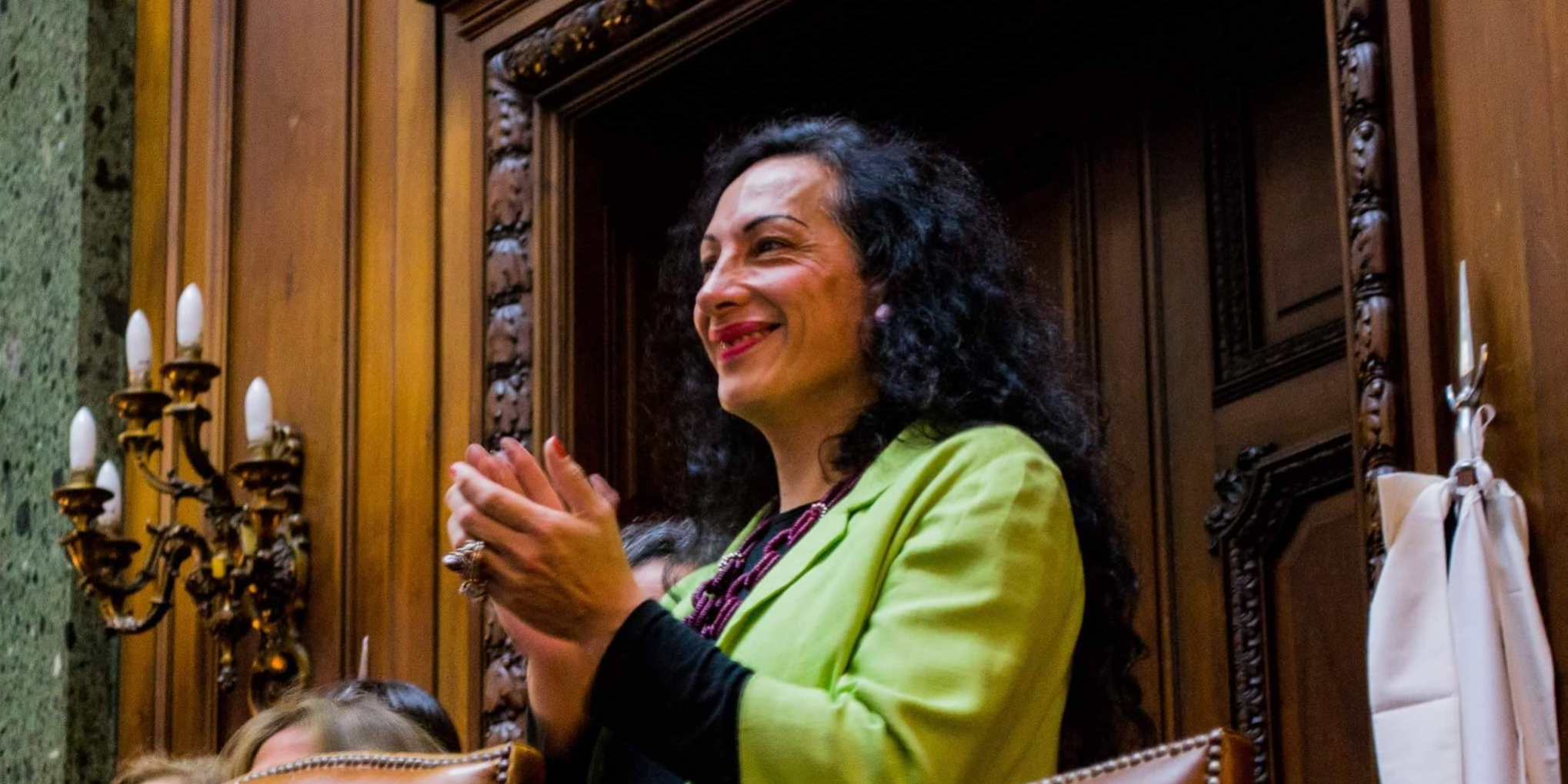
Paula Arraigada is the first trans woman to be elected to the Women's Parliament of the Buenos Aires City Legislature. An LGBT rights activist, she is also a pre-candidate in the primary elections.

Share

Paula Arraigada is the first transgender woman to serve on the Women's Parliament of the Buenos Aires City Legislature. An LGBT rights activist, she is also a pre-candidate in the primary elections. Paula Arraigada is 48 years old and a member of the National Militancy Movement. She is also a pre-candidate for national deputy on the Citizen's Unity list headed by Daniel Filmus. She was elected to the Women's Parliament along with Nelly Minyersky (president), Julia Contreras (vice-president), Natividad Obeso (secretary), Emelina Alonso (member, like herself), and Mariana Vieyra (alternate member). “This renewal of authorities forges new expectations regarding gender issues, accompanied by a generational shift and the representation of all femininities,” Arraigada told Presentes. The Women's Parliament was created in 2011 and is composed of a maximum of 60 representatives from civil society organizations, positions that are renewed annually. Its purpose is to foster women's participation in discussions to promote their agenda in the Legislature with the ultimate goal of implementing public policies to eliminate all forms of gender discrimination in the Autonomous City of Buenos Aires. From there, diagnostic actions, reports, resolutions, publications, and monitoring are carried out. Among the new authorities, who took office last week, is the trans activist.
-You are the first trans woman to join it.
Yes, and it wasn't easy at all. Although a trans candidate participated in the 2016 election—and ran again—she wasn't elected. This year, ten of us were nominated by different social and political organizations, and five candidates and one alternate were elected by vote. I'm among the top four in terms of votes. The organizations had been calling for a renewal that reflected diversity, one that considered and included all forms of femininity.-How did you get to that place?
– There were many obstacles put in my way by the parliamentary establishment and other organizations. Even ATE Género didn't respond when I asked for help. I had to run through another organization because mine was missing a bureaucratic requirement. Thanks to the Develar Civil Association and its president, Fernanda Strático, I was able to run. And I was elected. Personally, I came from the neighborhood and from the need to find answers to various problems by building networks with other organizations that have a gender perspective and work in different disciplines. That's how I got into Parliament before, and it was an enriching experience because there are many women with the same concerns. And now I'm in.[READ MORE: #ELECTIONS2017: Who are the LGBT candidates and what do they propose ?]
-How did you experience the election?
-Because of everything I was telling you, it was a very tense and anxious moment, but also very emotional when the votes were counted and I saw that I was there. And that the old politics—sexist, patriarchal, and sometimes homophobic even within women's organizations—couldn't stop me. I represent not only a gender, but also a social class, grassroots activism, the real working class. But I also represent a desire. And in all those ways, I represent a voice that needs to be heard, because it is never dominant.-What is your assignment about?
-It's about being the link between social organizations and the implementation of the laws they promote, whether by advising legislators or by collaborating as an overseer of existing laws. This is the task of Parliament, since we act collectively, not individually.-What are your goals?
My goal is to respond to the needs of organizations and act as a catalyst for addressing their requirements. The first objective, after my own personal experience, is to modify the requirement that organizations must have legal status to register, which excludes grassroots, neighborhood-based organizations. We are concerned about femicides and transphobic murders, the precarious working conditions of trans workers, and the increase in poverty among vulnerable communities. Within our collective, we will continue to support the Trans Employment Quota and the "Recognizing is Repairing" law—a law providing reparations for LGBTI people who are victims of institutional violence—which would give us a better quality of life.-How were you received?
The organizations welcomed me very well because, in fact, they voted for me. Some of the larger political organizations were a little bothered by my grassroots, popular approach, but that's part of politics. In any case, I have the highest expectations because I believe it will be a period of hard work and progress.We are present
We are committed to journalism that delves into the territories and conducts thorough investigations, combined with new technologies and narrative formats. We want the protagonists, their stories, and their struggles to be present.
SUPPORT US

FOLLOW US
Related notes



We are present
This and other stories are not usually on the media agenda. Together we can bring them to light.