

Frida Center: "They are left exposed when they make decisions about their lives and their bodies"
The Frida Integration Center provides shelter to transgender, transvestite, and cisgender women experiencing homelessness in Buenos Aires. One of its coordinators, Florencia Montes Paez, spoke with Presentes about the relationship between gender, sexuality, class, and the right to housing. Today, this center has twice as many people on its waiting list as last year.

Share

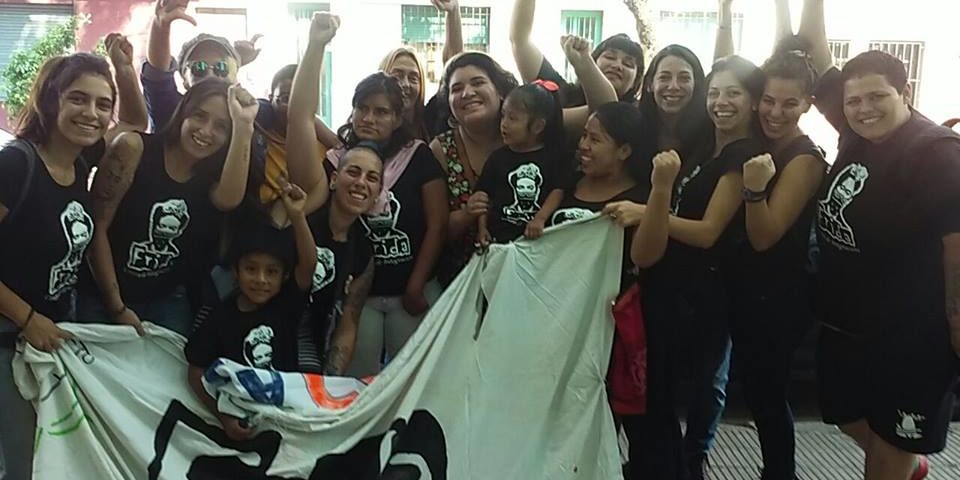
The Frida Integration Center provides shelter to trans, transvestite, and cisgender women experiencing homelessness in the City of Buenos Aires. One of its coordinators, Florencia Montes Paez, spoke with Presentes about the relationship between gender, sexuality, class, and the right to housing. Today, this space has twice as many people on its waiting list as last year. By María Mansilla. Photos: Frida Integration Center. What do sexual rights have to do with access to housing? The answer is the foundation of the Frida Integration Center , which is celebrating its second anniversary. In the City of Buenos Aires, "El Frida" is the only place for trans, transvestite, and cisgender women, with or without children, experiencing homelessness that complies with city law: it provides comprehensive support with 24-hour open doors. It shelters, listens to, and learns from them. It's being managed by the groups No tan distintas and Proyecto 7. While organizing the variety show for the celebration—on Saturday, July 17—they await the results of the first People's Census of Homeless People, which was conducted this year in the City of Buenos Aires. We interviewed Florencia Montes Paez, one of the coordinators.
-In their manifesto they say that addressing the issue of sexualities is key to considering the right to housing. How would that link together?
-When El Frida was founded, the gender identity law was already in effect. We never considered that trans women couldn't be involved. It was a learning experience because they brought a wealth of knowledge about how they perceive themselves, the complexities they face in accessing the public health system to carry out their transition, and the specific discrimination they suffer in public institutions. In the space of gender and sexuality, we engage in debate and deconstruct discourses that are deeply ingrained in society and that we all carry with us. There are trans women who are ethically, politically, and ideologically positioned; they are clear on how to fight from a perspective of diversity. We also wonder why these bodies are thrown into the street and left out of the housing, education, and health systems.–The Frida Center is in a state of permanent assembly. What are the debates taking place there today?
Our community is made up of the residents—the women who have beds and live in the center—the graduates—who left because they solved their housing problems—and those on the waiting list—who There are 205, double the number from a year ago- When we started, we knew that beyond what could be planned in institutional terms, the girls were going to be the protagonists. The richest part of the collective experience here has to do with the contribution of the comrade from another country, the trans lesbian, the cis comrade who escaped from a trafficking network. These specificities are valuable contributions when they are shared within a generous group of women. It is our obligation to discuss these things, to think in terms of class, gender, and sexuality in order to account for the complexity of the world into which we are supposed to integrate..-Does homelessness increase gender-based violence?
All types of violence are intensifying. Our companions are forced into conditions of economic poverty and, worse, emotional poverty. One common factor is loneliness. And another is that they are often left exposed when they make a decision regarding their life, their body . Among the atrocities they experience, they emphasize how the police make them feel violated. If you analyze it, this word relates to an animalistic reaction of baring one's claws, of making the other feel attacked. Our companions experiencing homelessness are very easy targets for the police, and even more so if they are trans and migrant women . The paradox is that within the center, the richness of the collective experience stems from these very specificities.-The results of the People's Census conducted by NGOs and Buenos Aires organizations . What are your expectations?
 We are pleased to have carried it out because it's a way to comply with Law 3706, which requires a thorough annual survey to develop specific policies. However, the main focus isn't on the numbers themselves. Frida, for example, isn't a large center; the number of people we serve isn't what defines us. What interests us is discussing approaches to addressing the problem of extreme vulnerability, thinking about solutions from a perspective that isn't paternalistic or patriarchal, but rather one that empowers our colleagues in the decision-making process . We are hopeful because the survey reflects data on health, education, violence, subsidies, and access to programs. And we want to debunk the narratives surrounding people experiencing homelessness. They are not responsible for their situation, we are convinced! In a surplus-rich society like Buenos Aires, it's an atrocity, a massacre, that people are forced to live on the streets.

-Are we heading towards a cultural shift, or are the dissemination of some of the achievements of LGBTIQ people merely spasms of issues that generate impact?
These gains arise from the experiences of people who lacked access to rights. Popular sectors manage to place them on the agenda, generating subjectivity, thought, and other forms of agency. And they demonstrate the fruits of collective organization.

We are present
We are committed to journalism that delves into the territories and conducts thorough investigations, combined with new technologies and narrative formats. We want the protagonists, their stories, and their struggles to be present.
SUPPORT US

FOLLOW US
Related notes

We are present
This and other stories are not usually on the media agenda. Together we can bring them to light.